
REVIEW · CHICAGO
Explore Chicago’s Indoor Mushroom Farm Experience
Book on Viator →Operated by Four Star Mushrooms · Bookable on Viator
Mushrooms have a secret city life. This Chicago indoor mushroom farm tour shows how gourmet mushrooms are grown in a high-tech, controlled environment, then packaged for local customers. You’ll learn the whole workflow—from preparing substrate to watching fruiting happen—without needing a science degree.
I especially liked the step-by-step production story, including how raw substrate gets bagged and sterilized, inoculated, and staged for incubation. I also enjoyed how the tour connects the operation to Chicago’s food scene, explaining how mushrooms move into retail and wholesale across Chicagoland.
One consideration: this is an adult-leaning working facility tour. If you’re bringing young kids, plan on them being curious about equipment and movement around a farm setup (and you’ll want to keep expectations realistic in the grow-room areas).
In This Review
- Key Highlights You’ll Actually Care About
- Entering Four Star Mushrooms’ Indoor Production World
- How The 90-Minute Visit Flows (And Why Timing Matters)
- Stop 1: Chicago’s Indoor Farm Tour Step-By-Step
- Substrate Prep: Bagging and Sterilizing
- Inoculation and Incubation: Making Growth Start
- Grow Rooms and Fruiting: Seeing the Payoff
- Packaging for Retail and Wholesale
- What Regenerative Agriculture Means in a Mushroom Context
- How This Facility Connects to Chicago’s Restaurant Scene
- Price and Value: Is $20 Worth Your Time?
- Who Should Book This Indoor Mushroom Farm Tour (And Who Should Skip)
- Practical Tips Before You Go
- Should You Book This Indoor Mushroom Farm Tour?
- FAQ
- How long is the indoor mushroom farm tour?
- Where does the tour meet in Chicago?
- What does the tour cost?
- Is the tour offered in English?
- What is the maximum group size?
- Can I get a full refund if I cancel?
Key Highlights You’ll Actually Care About
- A production walkthrough that runs about an hour inside a busy indoor operation
- Controlled environment agriculture explained in plain language, from start to finish
- Grow rooms and fruiting stages shown so you can connect the steps you learned
- Retail and wholesale packaging made part of the story, not an afterthought
- Regenerative agriculture angle, tied directly to how mushroom cultivation fits
- Small group size (max 25), which makes it easier to hear answers
Entering Four Star Mushrooms’ Indoor Production World
This isn’t a museum display of mushrooms. You’re stepping into a real, high-tech indoor production facility run with a very controlled process. In a city like Chicago, that matters: it’s a way to grow food with consistent conditions rather than betting everything on outdoor seasons.
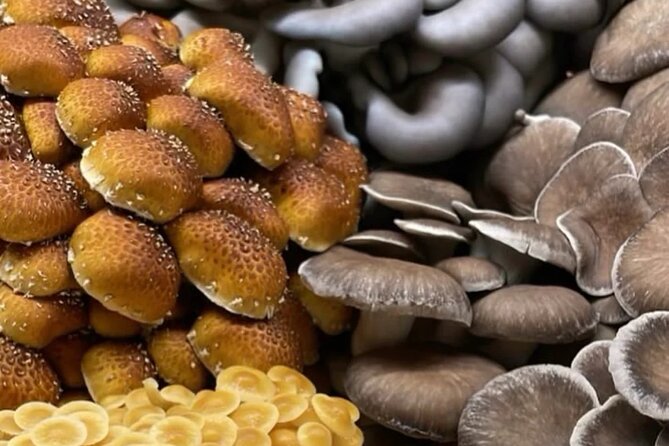
At Four Star Mushrooms, the focus is specialty gourmet mushrooms. That means the tour is built around the details of cultivation—how they prepare the growing material, how they manage stages, and how the finished product gets packaged. If you’ve ever wondered how mushrooms go from a bag of material to something you’d actually cook, this answers that question.
I found the tone practical. You’re not just told that mushrooms grow—you’re shown the steps that make growth possible. That’s why the visit feels more like a behind-the-scenes food factory tour than a casual stroll.
How The 90-Minute Visit Flows (And Why Timing Matters)
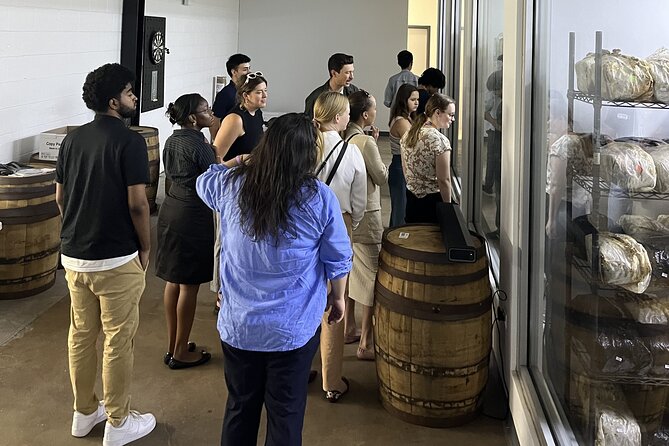
The total experience runs about 1 hour 30 minutes. The cultivation tour segment is about 60 minutes, with the rest of the time used for check-in, moving between areas, and getting oriented.
That timing is ideal if you want something substantial but not exhausting. You also avoid the trap of a short tour that only gives highlights. Here, you get enough time to follow the process like a chain: sterilize, inoculate, incubate, fruit, package.
You’re also tied to a specific start time: 12:00 pm. The meeting point is 320 N Oakley Blvd, Chicago, IL 60612. Because the operation has a working schedule, it helps to show up with a little buffer so you can focus once the tour begins.
Stop 1: Chicago’s Indoor Farm Tour Step-By-Step
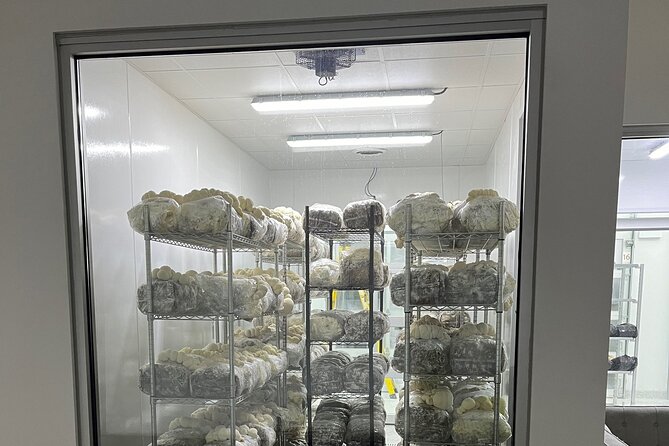
The heart of your visit is the behind-the-scenes tour of a specialty indoor mushroom producer. The experience is designed to show you the cultivation process from start to finish, with real stages you can visualize as the tour moves along.
Here’s the production flow you should expect to see:
Substrate Prep: Bagging and Sterilizing
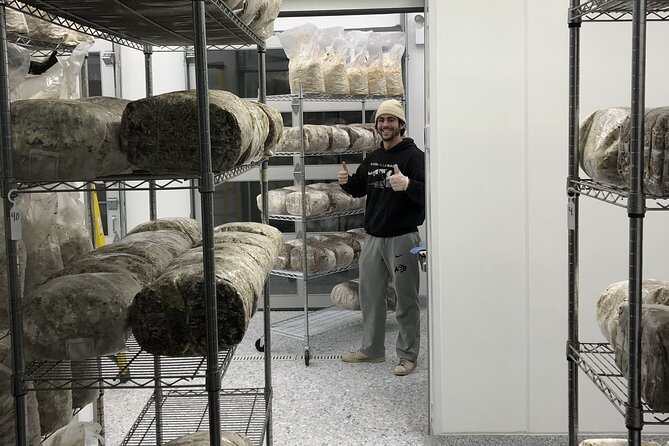
You start with the raw growing material—what they call the substrate. The tour explains how that material is bagged and sterilized. This step is essential because it sets the stage for safe, predictable growth.
From a visitor standpoint, this is the moment when mushrooms stop being mysterious. Sterilization and handling aren’t just technical jargon; they explain why mushroom cultivation works as a system instead of a gamble.
Inoculation and Incubation: Making Growth Start
Next comes inoculation. That’s where the process gets very specific: the substrate is prepared to begin mushroom development.
Then you move to the incubation stage, where the growth environment is controlled. Even if you don’t memorize every detail, you’ll walk away understanding that mushroom farming is a sequence. One step prepares for the next.
Grow Rooms and Fruiting: Seeing the Payoff
After incubation, you visit the grow rooms where fruiting happens. This is usually the most visually satisfying part of any cultivation tour, because you can finally connect what you learned in the earlier steps to what’s actually happening.
What I liked about this section is that it turns the earlier science into something you can see. It’s easier to understand why sterilization and incubation matter when you’re standing near the stage where mushrooms form.
Packaging for Retail and Wholesale
The tour doesn’t stop at harvesting. You also see how the product is packaged for retail and wholesale customers throughout Chicagoland.
That matters because it shows the end of the chain: not just growing, but delivering. You learn how the farm fits into the wider local supply system, so the operation feels connected rather than isolated.
What Regenerative Agriculture Means in a Mushroom Context
The tour also covers regenerative agriculture and how mushroom cultivation can play a critical role. The key point is that mushrooms are not treated as a random crop—they’re framed as part of a broader agricultural approach.
In practical terms, regenerative agriculture is about improving how food systems work over time. When a tour explains it alongside a working production process, it helps you see why indoor cultivation can be discussed in sustainability terms, not just as a novelty.
You’ll leave with a better understanding of the logic behind their approach, even if you don’t share the same farming philosophy today. The value here is learning the reasoning that connects production steps to the larger environmental conversation.
How This Facility Connects to Chicago’s Restaurant Scene
One thing that made this experience feel especially relevant is the way the operation connects to the restaurant scene in Chicago. Instead of treating mushrooms like a niche hobby, the tour places the product inside a real food ecosystem.
You’ll hear how their output supports retail and wholesale throughout Chicagoland. That’s the practical bridge between indoor agriculture and what ends up on menus. It also helps you understand why a facility like this invests in consistency and quality control.
If you like cooking, this is the kind of tour that changes how you shop. You start thinking about sourcing and process. And if you eat out a lot, it’s a reminder that the ingredients behind a dish often come from complex, behind-the-scenes work.
Price and Value: Is $20 Worth Your Time?
The tour costs $20.00 per person. For an indoor production walkthrough, that price lands in the “seriously fun” category rather than a “pay just to see a display” category.
You get a full narrative of cultivation—from substrate preparation to grow rooms and packaging—plus an explanation of regenerative agriculture. And you’re not dealing with a huge crowd; the experience has a maximum of 25 travelers, which makes it easier to stay engaged and ask questions.
Is it a bargain if you’re only interested in mushrooms as food? Maybe not. But if you like food systems, cooking curiosity, or simply enjoy seeing how things are made, this is strong value. It’s a hands-on-feeling tour without the hands-on mess.
Who Should Book This Indoor Mushroom Farm Tour (And Who Should Skip)
This is best for adults and older kids who like how things work. The tour runs like a guided explanation through a working facility, so attention matters more than novelty.
I’d also recommend it if you’re:
- a foodie who wants the ingredient story behind what you eat
- the type who enjoys behind-the-scenes production processes
- curious about controlled environment agriculture and sustainability ideas
For younger children, keep expectations realistic. In at least one tour scenario, a family brought kids who were curious and wanted to touch equipment like a forklift. The key detail: they didn’t touch, and the visit still worked. That tells you the staff likely focuses on keeping visitors safe, but you should still plan for an adult-leaning environment.
If your group includes very young kids who can’t handle confined indoor spaces or sustained explanations, you might consider a shorter, simpler option elsewhere.
Practical Tips Before You Go
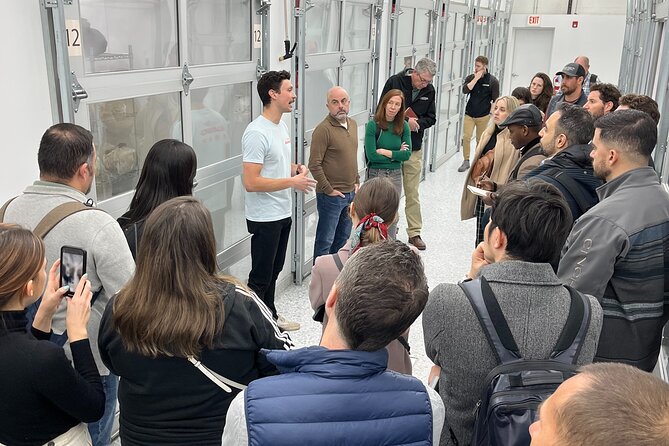
You’ll receive a confirmation at booking and get a mobile ticket. The tour is offered in English, so it’s straightforward if you prefer not to rely on translation.
Here are the practical things that help the experience go smoothly:
- Arrive at the meeting point on 320 N Oakley Blvd with enough time to find parking or public transit options.
- Since the experience ends back at the meeting point, plan your next stop nearby.
- Expect an indoor working environment, not a quiet classroom.
Also note the demand signal: it’s commonly booked about 23 days in advance. If you’re traveling during a busy stretch, booking earlier gives you more time to lock in your schedule.
Should You Book This Indoor Mushroom Farm Tour?
Yes, I think you should book it if you want a real-food production story in a city setting. The value is in the full sequence: substrate prep, inoculation, incubation, grow rooms, and packaging—plus a sustainability conversation tied to mushroom cultivation.
Skip it only if you’re looking for a casual, kid-at-playground experience. This is a working facility tour with a grownup focus. For most people, that’s a plus: you’ll walk out with real understanding, not just a few photos.
If you’ve ever wondered how indoor farms actually work (instead of just hearing the idea), this is one of the more direct, practical ways to learn in Chicago.
FAQ
How long is the indoor mushroom farm tour?
The experience is about 1 hour 30 minutes total, and the mushroom tour portion is about 60 minutes.
Where does the tour meet in Chicago?
The tour meets at 320 N Oakley Blvd, Chicago, IL 60612, USA.
What does the tour cost?
It costs $20.00 per person.
Is the tour offered in English?
Yes, the tour is offered in English.
What is the maximum group size?
The tour/activity has a maximum of 25 travelers.
Can I get a full refund if I cancel?
Yes. You can cancel up to 24 hours in advance for a full refund.