REVIEW · CHIANTI
Cooking Class on a Family Farm in Chianti with Lunch
Book on Viator →Operated by Cofferi1242 - Camilla Romoli · Bookable on Viator
A Chianti farm day beats another food tour. This small-group cooking class (up to 20 people) puts you with a real family host, then walks you through pasta, bread dough, and a full meal using farm-grown ingredients. You’ll start with a quick meet-and-greet and a look around the property, including an olive grove and a field where saffron is grown.
What I really like is how practical it feels: you’re not just watching pasta happen. You’ll learn dough, shape options like tagliatelle and ravioli, and how to turn versatile dough into bread and schiacciata. The other big win is the al fresco lunch (weather permitting), with local wine and the farm’s olive oil while you eat under vineyard views. One thing to consider: the drive up can be bumpy and tricky, since the meeting spot is reached via a dirt road.
In This Review
- Key highlights you’ll feel right away
- Entering Cofferi 1242: saffron fields, olive trees, and how the day starts
- Pasta, herbs, and olive oil: what you actually learn step by step
- Homemade pasta dough and shaping skills
- Ravioli, tortelloni, and the filling logic
- Bread, schiacciata, and why versatile dough is the real takeaway
- Building a full Chianti meal: appetizers to dessert (and wine along the way)
- The sample menu you can expect
- Second-course and side dish flexibility
- Wine and olive oil aren’t decorations
- The lunch part: outdoor garden eating with vineyard views
- Price and value: is $175.43 per person worth it?
- Logistics that matter: the dirt road, finding the spot, and what to bring
- Who should book this Chianti cooking class?
- Should you book it?
- FAQ
- What time does the cooking class start?
- How long is the experience?
- Where is the meeting point?
- What languages is the class offered in?
- How many travelers are in the group?
- Is lunch included?
- What dishes will you make or learn to cook?
- Is there a cancellation option?
Key highlights you’ll feel right away
- Meet your host on the farm: a warm start with conversation before you cook
- Farm tour with real ingredients: olive grove and saffron fields are part of the experience
- Hands-on pasta making: dough, then shaping into favorites like tagliatelle and ravioli
- Bread and schiacciata dough skills: learn the base so you can cook at home later
- Garden lunch with wine: you’ll eat what you make, outdoors when weather allows
- Small group pace: max 20 travelers, so questions and hands-on help stay realistic
Entering Cofferi 1242: saffron fields, olive trees, and how the day starts
The class starts around 10:30 am, and it’s timed so you’re not immediately thrown into cooking. Before the hands-on part begins, you’ll meet your host and settle in with a quick chat. It’s a small detail, but it matters: you’ll be comfortable asking questions when the flour starts flying.
Then you’ll get a short walk around the property. This is where the day turns from lesson to context. You can admire the olive grove and see the field where saffron is grown, which helps you understand why Tuscan cooking tastes the way it does: ingredients aren’t just ordered or packaged, they’re harvested from nearby land.
At the same time, don’t expect this to feel like a museum tour. It’s more casual and practical—enough to connect dots, without slowing the day down. You’ll also pick up a sense of where your ingredients will come from: herbs from the garden, and the farm’s extra virgin olive oil.
Practical note: figuring out the location can take a bit of effort. One helpful pattern is to verify directions in advance and allow extra time, especially if you’re driving yourself.
Pasta, herbs, and olive oil: what you actually learn step by step
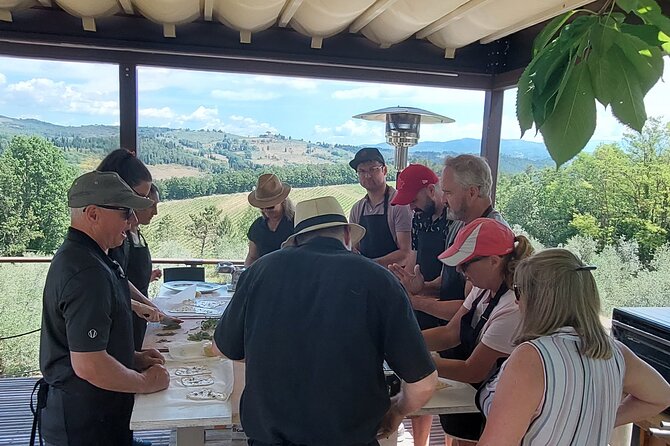
After your farm introduction, you’ll move into the cooking core. The focus is homemade pasta and classic shapes, with instruction built around technique you can repeat later.
Homemade pasta dough and shaping skills
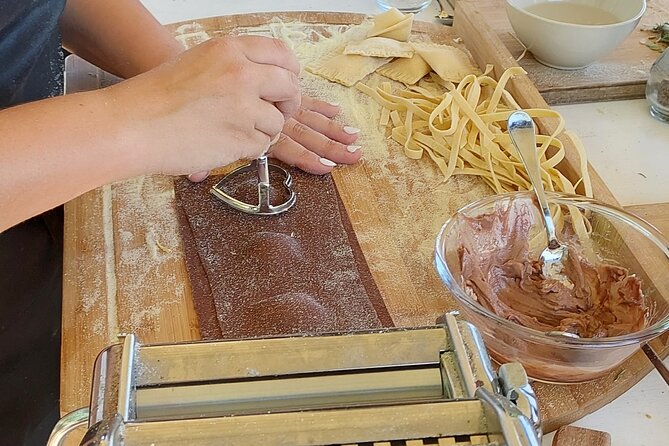
You’ll learn to make pasta dough and work it into shapes. The lesson includes:
- Making the pasta dough using herbs from the garden
- Adding extra virgin olive oil into the process
- Shaping pasta into types such as tagliatelle and ravioli
The nice part here is that the class isn’t only about one finished dish. You learn the base skills—dough handling and shaping—so you’re not dependent on a single recipe.
Ravioli, tortelloni, and the filling logic
The menu example includes homemade ravioli and tortelloni served with sage butter and parmesan. The filling details matter, because they teach the flavor pattern: fresh ricotta, parmesan, lemon zest, and seasoning like sage, parmesan, and pepper.
That combination is classic for a reason. You’ll notice it balances creamy with bright. Lemon zest in particular keeps ricotta from feeling flat, and sage ties it back to the herbs you were using earlier.
Bread, schiacciata, and why versatile dough is the real takeaway
You’ll also learn how to prepare dough for bread and schiacciata. This is a smart skill for home cooks because versatile dough lets you pivot—different shapes, different toppings, different outcomes—without starting from scratch every time.
Even if you don’t make pasta at home immediately, schiacciata and bread dough skills are the kind you use again and again. The class gives you enough technique to feel confident, not just lucky.
Building a full Chianti meal: appetizers to dessert (and wine along the way)
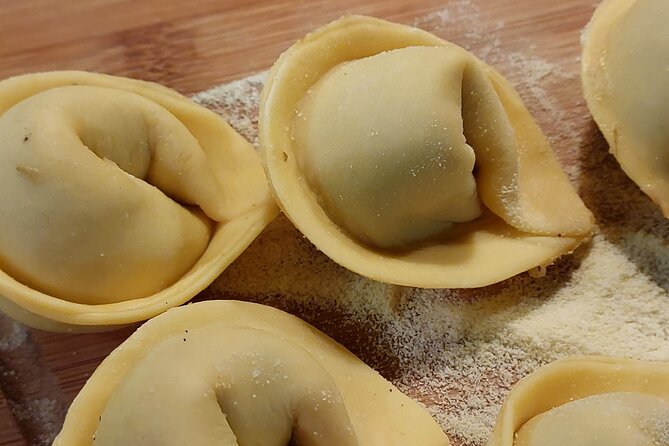
This is a full-meal cooking experience, not a “one course and done” class. You’ll work through a menu that covers multiple parts of a meal—appetizers, first courses, second courses, side dishes, and dessert.
The sample menu you can expect
The provided sample menu includes:
- Homemade ravioli and tortelloni with sage butter and parmesan
Ravioli are filled with fresh ricotta, parmesan, and lemon zest, seasoned with sage, parmesan, and pepper
- Homemade tagliatelle
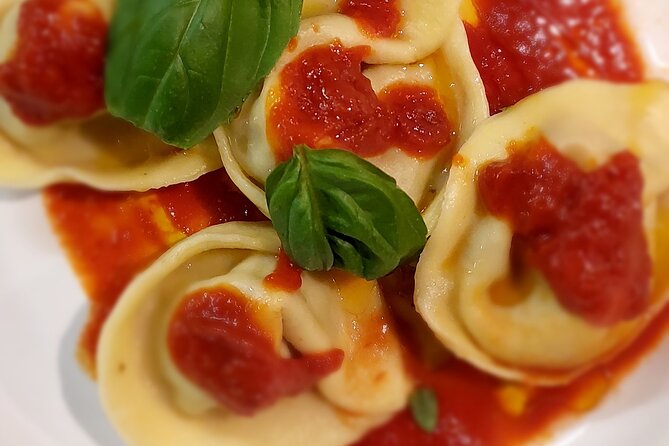
Served with fresh tomato sauce or fresh courgette pesto
- Apple pie with crumble
That dessert piece is more than a sweet finish. It also signals something about the class style: you’ll see both savory technique and how the same ingredient comfort (fruit, butter, crumble) fits into a farm-driven day.
Second-course and side dish flexibility
While the sample menu is specific, the overall structure is consistent: you’ll be cooking across several parts of a meal. In at least one group experience, guests also mention zucchini and cheese skewers plus focaccia-style bread. So if you’re thinking you’ll leave with a “best of” toolkit, that tracks with how the class tends to unfold.
Wine and olive oil aren’t decorations
You’ll sip local wine throughout the meal, and the description notes Chianti may be included. You’ll also taste olive oil as part of the process. This is one of those add-ons that actually helps your cooking: when you understand what your olive oil tastes like and what the wine brings, your instincts sharpen for balancing salt, acid, herbs, and richness.
And yes—you should expect to eat a lot. This kind of hands-on class is designed for you to enjoy the results without rationing.
The lunch part: outdoor garden eating with vineyard views
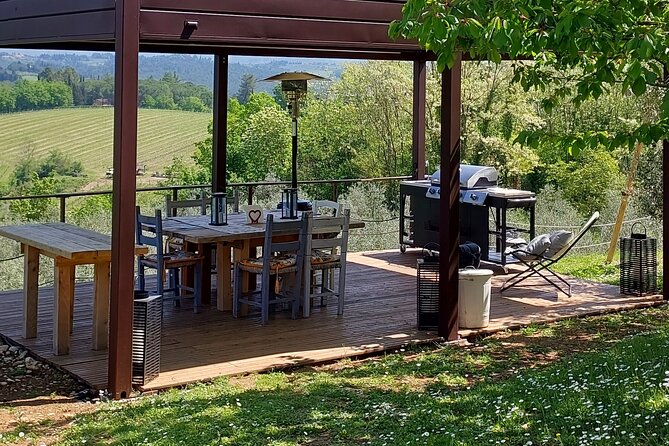
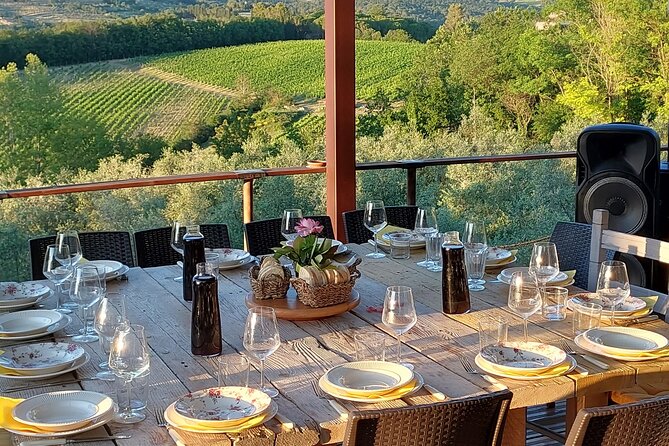
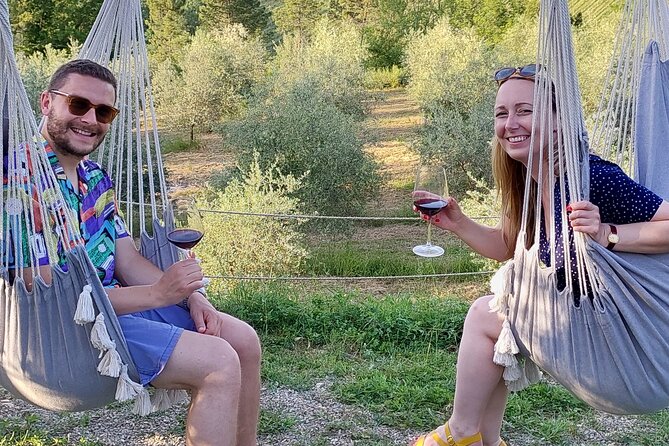
After the cooking, you’ll eat outdoors if the weather permits. The setting is described as a garden overlooking vineyards and olive trees, with an expansive feeling—farm property sitting on a hill, surrounded by woods and countryside.
This is where the day slows down naturally. You’ve spent hours kneading, shaping, and timing steps. Then you sit and eat your own work while the Tuscan countryside does its thing. If you’re the kind of traveler who likes “productive” days that still feel restful, this hits the target.
Also, this is the moment where the meal feels like a shared event. You’ll likely talk with others in the small group because you’ve all been working at the same stations, tasting the same olive oil, and comparing notes on how your ravioli held up.
Price and value: is $175.43 per person worth it?
At $175.43 per person for about 4 hours, the value depends on what you want out of the experience.
Here’s why it can feel fair:
- You’re paying for a true hands-on lesson: pasta dough, shaping, and dough for bread and schiacciata
- You get a farm tour, including a look at the olive grove and saffron growing area
- You eat a full menu you helped prepare, plus you taste local wine and olive oil
- The group size stays small (max 20), which usually means you get more attention while cooking
- You leave with recipe help; one owner practice mentioned is sending recipes by email after the class
When it might not match your expectations:
- If you’re hoping for a polished “food show” setting, the vibe can be more rustic. One experience described rougher areas around an outdoor space and a kitchen that wasn’t spotless in every corner. The host and teaching still sounded strong, but if aesthetics are your priority, you may want to mentally budget for farm reality.
My take: if you want real technique and ingredients tied to the land, this price makes sense for a 4-hour, family-run, farm-based day.
Logistics that matter: the dirt road, finding the spot, and what to bring
One practical warning shows up in the details: the drive can be rough. Expect a dirt road with potholes. If you’re in a low sports car, don’t. One clear tip from the experience notes is to allow extra time, and to verify directions carefully so you’re not stressed when you arrive.
Also, because lunch is al fresco when weather permits, you’ll want to dress for outdoor conditions. Wear shoes you can stand in for a while, and bring layers if you tend to run cool.
Finally, this is an English-offered class and a maximum of 20 travelers. That’s helpful if you’re traveling without Italian, since you’ll still be able to follow steps and ask questions while working at your station.
Who should book this Chianti cooking class?
You’ll love this if you want:
- A hands-on cooking day that teaches repeatable technique
- A small-group experience tied to farm ingredients (olive oil, herbs, saffron fields)
- A relaxing Tuscany moment that ends with what you cooked in a garden setting
It may not be for you if:
- You expect a perfectly manicured, hotel-style patio or a spotless kitchen environment at all times
- You’re highly sensitive to rough roads or last-minute arrival stress (the location approach can be tricky)
This class looks especially good for mixed-age groups, including families with kids, because the instruction style is designed to be patient and practical while keeping everyone involved in the making and tasting.
Should you book it?
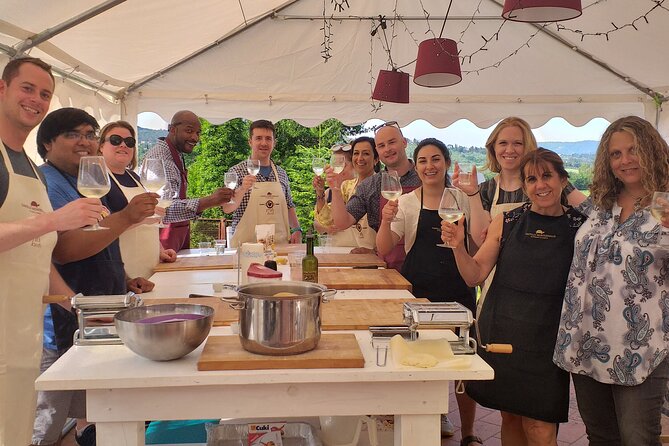
I think you should book this Chianti farm cooking class if you’re aiming for a day that feels like local life, not a conveyor belt of tastings. The combination of farm tour (olive grove and saffron), real pasta and dough instruction (tagliatelle, ravioli, bread, schiacciata), and a full lunch with wine makes it a strong use of time in Tuscany.
If you do book, do yourself a favor: confirm directions early, plan for a bumpy approach road, and go in expecting a family farm setting, not a staged restaurant patio.
FAQ
What time does the cooking class start?
The class starts around 10:30 am.
How long is the experience?
It lasts about 4 hours.
Where is the meeting point?
The meeting point is Cofferi 1242 – Cooking Class-Olive Oil-Saffron, Via dei Cofferi, 12 Loc, 50026 Il Ferrone FI, Italy.
What languages is the class offered in?
The class is offered in English.
How many travelers are in the group?
The group size is capped at a maximum of 20 travelers.
Is lunch included?
Yes. You’ll enjoy lunch outdoors if weather permits.
What dishes will you make or learn to cook?
You’ll make homemade pasta and learn pasta shapes such as tagliatelle and ravioli. You’ll also learn dough for bread and schiacciata, and the sample menu includes ravioli or tortelloni with sage butter and parmesan plus apple pie with crumble.
Is there a cancellation option?
Yes. You can cancel for a full refund up to 24 hours before the experience’s start time.