REVIEW · CANTERBURY
Merino Farm Experience
Book on Viator →Operated by Scotty B Tours · Bookable on Viator
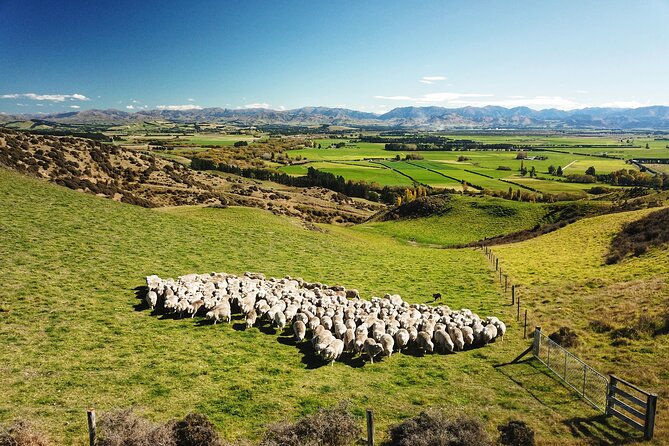
Sheep, views, and hands-on wool in 90 minutes. On the Merino Farm Experience in Canterbury, you get a guided walk on a working property run by the same family since 1884, with chances to touch super-fine merino wool and enjoy panoramic hilltop views over the southern Alps and nearby rivers. It’s a real dose of kiwi rural life, with animals and farm work at the center of the day.
I love how close you get to the fiber itself: in the woolshed, you learn how the sheep are shorn and you can feel the wool. I also really like that the tour isn’t just farm animals in a field; it includes a hilltop viewpoint and a garden walk that make the whole stop feel varied and practical.
One thing to consider: this is an outdoor working farm walk, so you’ll want decent shoes and a bit of flexibility for weather and the pace of farm life.
In This Review
- Key highlights you’ll care about
- Entering a Merino Farm Built for Real Work
- Your guide and the family-feel on this working property
- Field time: sheep (and sometimes cattle) in the Hurunui Hills
- Woolshed learning: shearing, touching wool, and why it matters
- Hilltop panoramas over southern Alps and rivers
- Dogs, pet sheep, and the fun part you can actually do
- Flowers and vegetables gardens: a calm shift in pace
- Time, group size, and how this tour feels in practice
- Price and value: is $58.95 worth it?
- Who should book the Merino Farm Experience
- Should you book this Merino Farm Experience?
- FAQ
- How long is the Merino Farm Experience?
- How much does the tour cost?
- Where do I meet for the tour?
- What’s the maximum group size?
- What will I see during the tour?
- Do I get to touch the wool?
- Are working dogs included?
- Is feeding the pet sheep part of the experience?
- Can I arrange a private tour?
- Is cancellation free if I change my plans?
Key highlights you’ll care about
- Super-fine wool, hands-on: you can touch the wool and see how it’s tied to the bigger process
- Family operation since 1884: your guide is part of the farm’s daily rhythm, not a script
- Hilltop panoramas: you’ll travel up for wide views of the southern Alps and rivers
- Working dogs up close: you’ll see them doing their job, then meet them in person
- Pet sheep feeding and selfies: yes, you can feed them and take pictures
- Flowers and vegetables garden walk: a refreshing, calm pocket after animal time
Entering a Merino Farm Built for Real Work
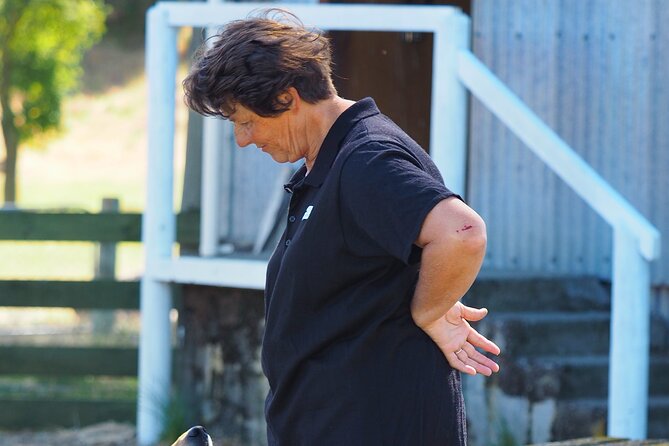
The Merino Farm Experience starts in Hurunui Hills country, near Canterbury, where farm life is the main event. You meet your host at 1038 Karaka Road, Hurunui 7385, and the tour loops back to the same spot when you’re done. The whole thing runs about 1 hour 30 minutes, so it fits nicely if you’re moving around the Canterbury area and want something more personal than a long bus day.
What makes this visit feel different is the setting: you’re not looking at sheep like they’re museum pieces. You’re walking alongside a working farm where merino sheep and sometimes cattle roam the fields, and the family guides you through what they do day to day. The vibe is relaxed, and with a maximum group size of 8, you’re more likely to get real back-and-forth than just listen and watch from a distance.
If you want a farm experience that’s mostly about animals, wool, and the way rural families live with the land, this one hits the mark.
Your guide and the family-feel on this working property
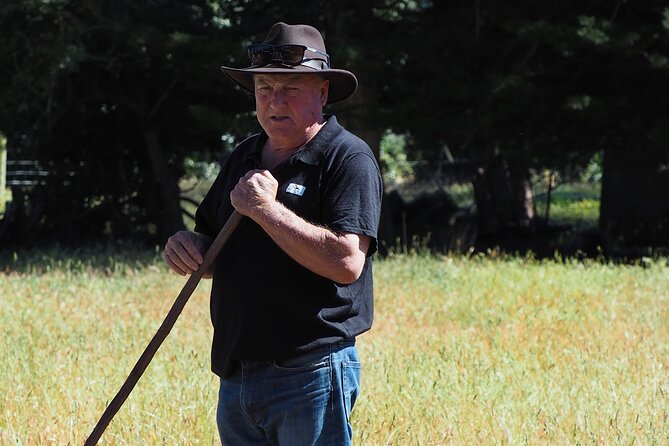
You’ll be met by Scotty, Terry, or Maria, depending on the day. Maria in particular stands out in the way she shares details and keeps the tour warm and welcoming, with lots of actual insight rather than general facts. Scotty and Terry also keep things friendly and straightforward, which matters because farm tours are best when questions are easy to ask.
I like that the hosts aren’t trying to make farm work sound dramatic. They explain it as a lived routine: the animals, the wool, the spaces around the property, and the way different parts of the farm connect. When the guide lives on the property or runs it as an operator, it changes the whole feel. You notice it when people talk about their dogs, their sheep, and their woolshed like it’s simply part of the day.
This matters for your experience because you’ll likely leave with more than photos. You’ll understand what you actually saw—why the sheep are there, what wool work looks like, and how everything fits into a working farm schedule.
Field time: sheep (and sometimes cattle) in the Hurunui Hills
The first part of your tour is all about getting your bearings on the farm. You’ll start with field views of the animals, and it’s exactly what it sounds like: watching sheep grazing and moving through their working day. Sometimes you may also see cattle roaming the fields, which adds variety if you’re hoping to see more than one type of animal.
The practical value here is simple. You get context before you step into the woolshed. Seeing the sheep in their pasture makes the wool part click faster, because you understand that the wool you touch later comes from live animals doing natural, everyday behavior.
A small note: animal tours are never perfectly predictable in exact sightings. That’s part of the charm. If you go in expecting farm life to be real and slightly variable, you’ll enjoy it more.
Woolshed learning: shearing, touching wool, and why it matters
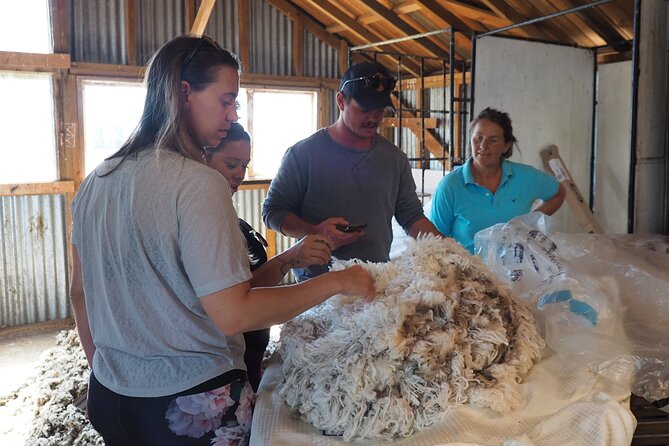
The woolshed stop is one of the main reasons to book this tour. You’ll go to the woolshed to learn how the sheep are shorn, and you also get to touch the wool—specifically the super fine wool the farm produces. This is hands-on learning, and it’s usually the moment when people switch from taking pictures to actually paying attention.
Here’s why I think this is good value: touching the wool makes the information stick. You can feel the difference, and then the guide’s explanation of shearing makes sense in a very physical way. It’s one thing to hear the words merino and fine wool; it’s another to feel what super fine wool means.
If you’re the type who likes craft and materials—how something becomes a product—this is your payoff. You’ll see the farm-to-fiber connection in a concrete way, and you’ll leave with a better sense of what the wool becomes after shearing.
Hilltop panoramas over southern Alps and rivers
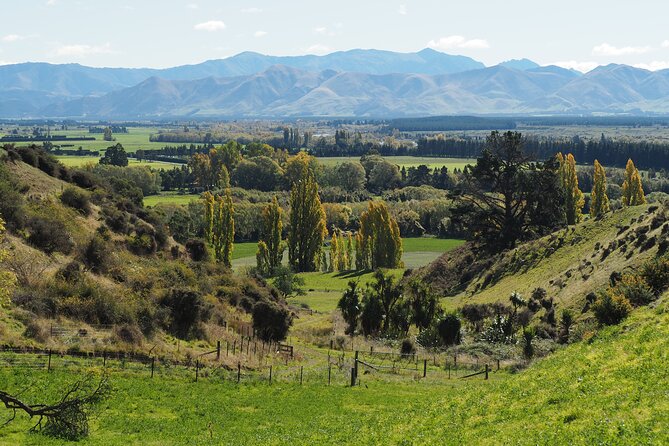
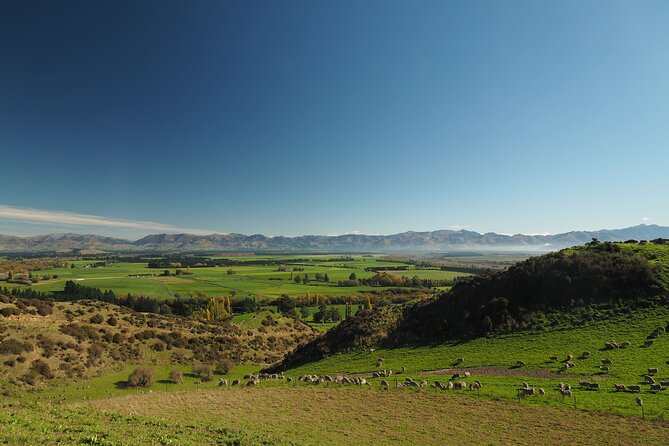
After wool and animals, the tour climbs to the top of the farm for panoramic views. This is the scenic breather built into the day, and it’s timed in a way that you don’t feel rushed at the start. You’ll look out over the southern Alps and rivers, with big open space that’s hard to replicate in a town setting.
I like hilltop viewpoints in farm tours because they give you scale. Once you see the wider country, the sheep fields stop looking like a single patch of grass and start looking like part of a bigger system. It’s easier to understand why farm families choose these areas and how the geography shapes their daily work.
Bring a camera (or phone) and give yourself a couple minutes to just look before you start snapping. The views are the kind that reward a slow pause.
Dogs, pet sheep, and the fun part you can actually do
This tour isn’t only educational. It’s also genuinely fun, and the animal interaction is the proof.
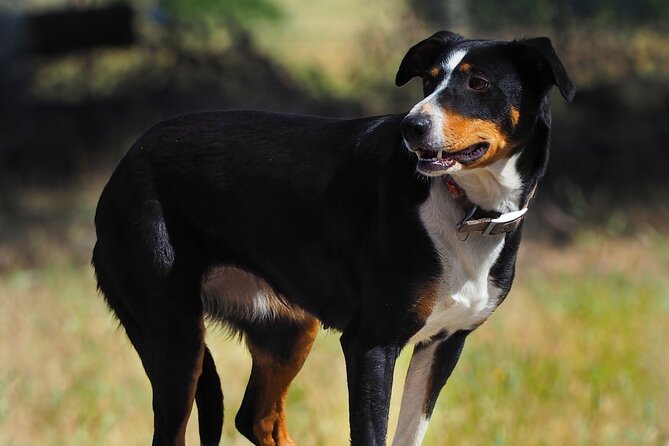
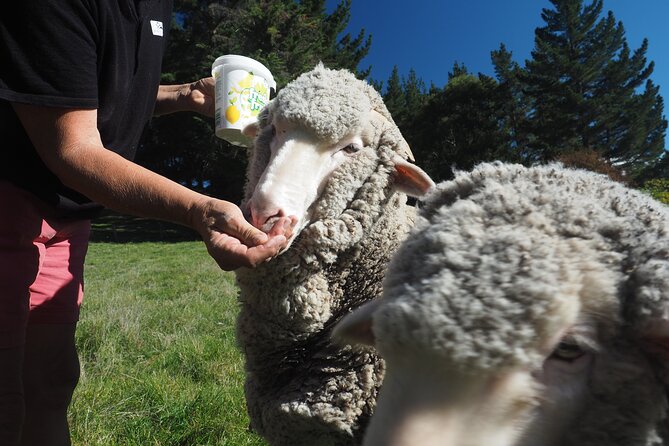
You’ll meet working dogs, which gives you a peek into how farm dogs support the operation. It’s one of those details you might not think about until you see it in action and recognize the purpose behind it. Then you’ll meet pet sheep—yes, you can feed them, touch their wool, and take pictures.
That feeding and selfie time is a big deal for your enjoyment, especially if you like getting close to animals in a safe, supervised way. It’s also a great reset from the woolshed learning, because now you’re not just observing—you’re participating in a gentle way.
Practical tip: keep your attention on your guide and follow their pace. Farm animals respond best when you act calmly and don’t try to turn this into a free-for-all.
Flowers and vegetables gardens: a calm shift in pace
One of the nicest surprises is the garden walk. You’ll visit house gardens, both flowers and vegetables, and you’ll see how the family uses space around the home as well as the working parts of the property. It’s not a huge garden maze, and that’s the point. It gives your eyes and brain a break after animal time, and it adds a more human, lived-in side to the tour.
I like that this section makes the experience feel well-rounded. Many farm visits focus only on animals and equipment. Here, you also see the domestic rhythm—what people grow, how they organize the property, and how the home and farm life sit next to each other.
If you’re traveling with someone who likes gardens or just wants a slower, quieter moment, this stop is a win.
Time, group size, and how this tour feels in practice
The experience lasts about 1 hour 30 minutes. That duration is ideal for most people because it’s long enough to include fields, woolshed learning, a hilltop viewpoint, dogs, and a garden walk—without becoming a half-day commitment.
Group size stays small, with a maximum of 8. That matters more than it sounds. In a small group, your guide can slow down when you want to ask questions, and you’re not stuck far away from key moments like wool touching or pet sheep feeding.
You’ll want to plan for outdoor walking the whole time. Wear shoes you’re comfortable in and be ready for changing weather. Farm experiences tend to feel better when you’re dressed for the ground and the elements, not for photos only.
Price and value: is $58.95 worth it?
At $58.95 per person, this isn’t the cheapest thing on the Canterbury list—but it’s also not trying to sell you an all-day spectacle. For the time given (about 1 hour 30 minutes) and the small maximum group size, I think the pricing makes sense because you get several distinct parts in one visit: farm field time, woolshed learning, a hilltop scenic stop, working dog encounters, pet sheep feeding and photos, plus a garden walk.
The real value isn’t just that you see animals. It’s the combination of touching the wool and learning the shearing process from the people who run the farm. Those hands-on moments are hard to recreate in a quick self-guided stop, and that’s where your ticket money turns into actual understanding.
It’s especially good value if you enjoy practical, tactile experiences—seeing how things work and being close enough to feel it. If you’re only chasing big-ticket scenery and don’t care about wool or farm work, you might feel the focus is narrower than some broader sightseeing options. But for a true kiwi farm taste, it’s priced like an experience, not a generic tour.
Who should book the Merino Farm Experience
This tour fits best if you want a real working farm setting, not a staged attraction. You’ll likely enjoy it if you:
- like animals and animal interaction (including feeding pet sheep)
- care about materials and how products connect to natural sources
- want a small-group guide experience with time for questions
- want a mix of farm work plus views and gardens
It’s also a strong choice for families or multi-generational groups who can enjoy a calm, hands-on pace. Service animals are allowed, and the tour notes that most people can participate, which usually means the overall experience isn’t overly technical or difficult.
Private tours can be arranged by request, which is a good option if you want extra flexibility or a quieter pace for your group.
Should you book this Merino Farm Experience?
I’d book it if you want something specific: a close-up farm visit where you touch super fine merino wool, learn about shearing in the woolshed, meet working dogs, and still get panoramic views and a garden walk. The small group size and family-run feel are the difference-makers here, and they help the experience feel personal without feeling overproduced.
Skip it only if you’re looking for pure city-style sightseeing or you don’t have interest in how wool and farm life connect. If you do care about that—and you’re okay with outdoor walking—this one is a smart use of time in Canterbury.
FAQ
How long is the Merino Farm Experience?
It lasts about 1 hour 30 minutes.
How much does the tour cost?
The price is $58.95 per person.
Where do I meet for the tour?
You start at 1038 Karaka Road, Hurunui 7385, New Zealand, and the tour ends back at the meeting point.
What’s the maximum group size?
The experience has a maximum of 8 travelers.
What will I see during the tour?
You’ll see sheep, and sometimes cattle, plus you’ll visit the woolshed, get hilltop views, meet working dogs, walk through flower and vegetable gardens, and meet and feed pet sheep.
Do I get to touch the wool?
Yes. You visit the woolshed and can touch the super fine wool.
Are working dogs included?
Yes. The tour includes time to meet the farm’s working dogs.
Is feeding the pet sheep part of the experience?
Yes. You can feed the pet sheep, and you can take pictures.
Can I arrange a private tour?
Private tours can be arranged by request.
Is cancellation free if I change my plans?
Yes. Free cancellation is available up to 24 hours in advance for a full refund.