REVIEW · PHNOM PENH
Phnom Penh Kampot Kep Tour “Pepper Farm, Salt Field, Crab Market”
Book on Viator →Operated by Cambodia Tourist Car · Bookable on Viator
A long day? Yes. But it’s the kind with pepper farms, salt fields, and seafood. The Phnom Penh Kampot Kep Tour weaves Kampot pepper agriculture and coastal Cambodia into one smooth loop.
I especially like the stop at La Plantation, where you see how Kampot pepper moves from the field to processing. I also like that the day mixes “pretty postcard stuff” with real context, including Secret Lake (Brateak Krola Lake) and the hard-to-forget story behind it.
One thing to keep in mind: it’s a long, full schedule, and the route to Phnom Chhngok Cave Temple involves winding dirt roads that can feel tiring. Also, the salt fields only run in the dry season, so your timing matters.
In This Review
- Key highlights you’ll remember
- Phnom Penh to Kampot in one day: the pace and the point
- The 7:30am start, pickup, and why the early hours help
- Iron Bridge and old Kampot-era sights: easy beginnings before the countryside gets real
- Phnom Chhngok Cave Temple: views, winding roads, and a pre-Angkorian stop
- Brateak Krola Lake (Secret Lake): a dam you’ll understand more after you see it
- La Plantation pepper farm in Kampot: seeing how Kampot pepper is made
- Salt fields in dry season: what you’ll see depends on timing
- Kep Beach photo stop and the crab market: seafood culture you can use
- Price and logistics: is $89 good value for this route?
- What could make or break your day
- Who should book this Phnom Penh Kampot Kep day trip
- Should you book this tour?
- FAQ
- What time does this tour start?
- How long is the Phnom Penh to Kampot and Kep day trip?
- Will I be picked up from my hotel?
- Is there a guide on the tour?
- What sights are included besides the pepper farm?
- Are the salt fields included year-round?
- Are meals included in the price?
- What’s included in the $89 price?
- Is the tour refundable if I cancel?
Key highlights you’ll remember
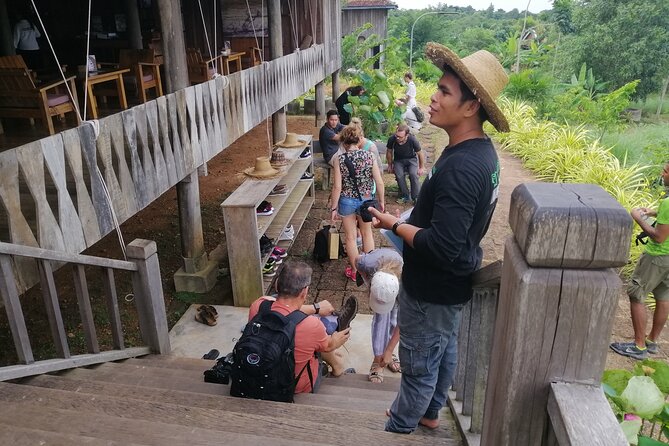
- La Plantation (Pepper Farm): a social and sustainable family project tied to Kampot pepper production and processing
- Secret Lake / Brateak Krola Lake: a man-made dam with Khmer Rouge-era history you can’t ignore
- Phnom Chhngok Cave Temple: countryside views plus a cave temple stop off the main roads
- Salt fields in dry season: a seasonal chance to see how salt production works
- Kep crab market: watch the catch come in, then bargain for seafood for your own meal plan
Phnom Penh to Kampot in one day: the pace and the point
This tour is built for people who want the highlights of Kampot and Kep without planning a whole road trip. You’ll leave Phnom Penh early, ride south in an air-conditioned vehicle, and keep moving through the countryside toward the coast.
The payoff is variety. You’re not just doing temples or just doing beaches. You get farming (pepper and salt), a major historical stop, then a seafood culture stop at Kep. It’s a strong day if you like your sightseeing to have something practical attached—like how a product is made, or how a market works.
You can also expect a real local logistics feel. The driver is the steady thread through the day, and the schedule keeps you from having to figure out transfers or where to eat.
The 7:30am start, pickup, and why the early hours help
The tour starts at 7:30 am. You’ll be picked up from your hotel in Phnom Penh Capital, then transferred about 160 km to Kampot, with the drive taking roughly 3 hours.
Here’s why I like this structure: leaving early usually means you spend more of the day at the stops and less of the day stuck in slow timing. It also helps you reach the pepper farm and other outdoor points before the heat gets heavy.
By the end, the same driver brings you back to your hotel in Phnom Penh City, or drops you in Kampot or Kep if you’re staying there. That reduces your last-mile hassle, which is a big deal on a day that’s already long.
Small note from real-world experience in this kind of trip: even with a typical duration of 8 to 10 hours, the day can run a bit longer. The upside is you get breathing room at the stops rather than the “rush-through” feeling.
Iron Bridge and old Kampot-era sights: easy beginnings before the countryside gets real
Once you arrive in Kampot town, the first “starter dose” is the Iron Bridge. It crosses the Kampot River and traces back to the French colonial era, which gives you an immediate sense of how the region was shaped over time.
From there, you move into old building territory and then head toward Phnom Chhngok Cave Temple. This is a good sequence because it ramps gently. You get a recognizable landmark first, then you shift into temple and countryside roads.
The main thing to watch here is time and comfort. The cave temple access goes off the main road, and that matters later when you feel the dirt-road switch.
Phnom Chhngok Cave Temple: views, winding roads, and a pre-Angkorian stop
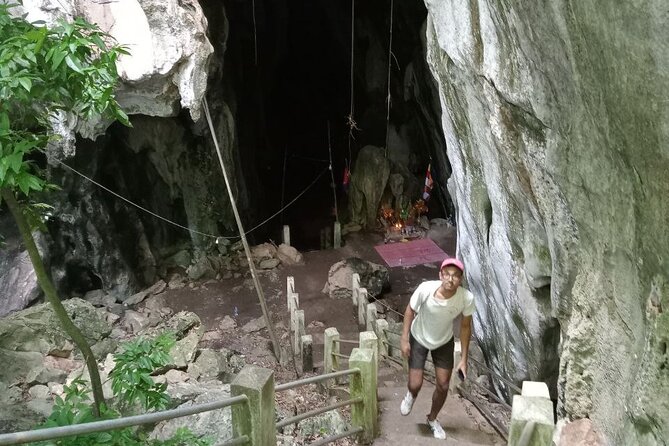
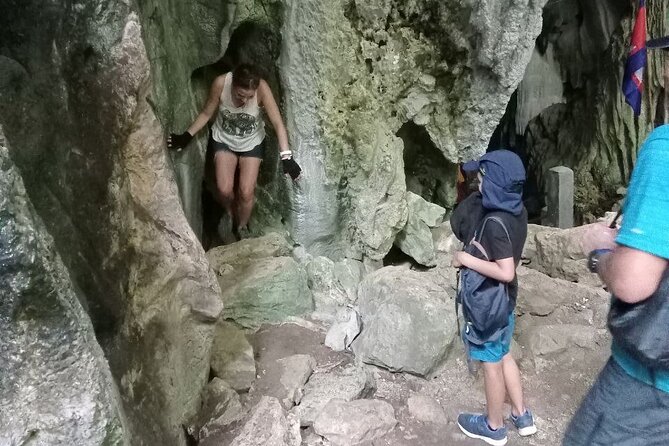
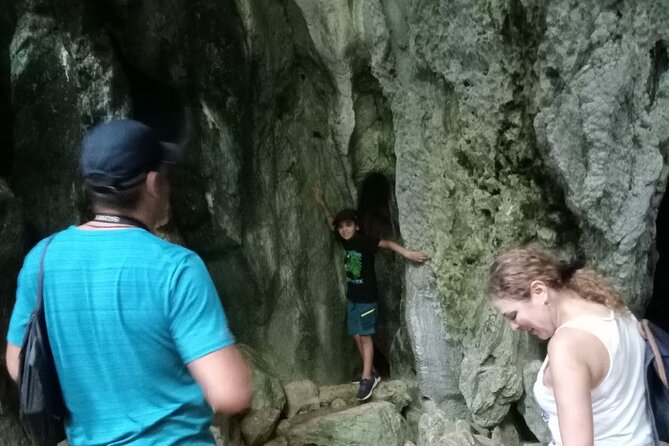
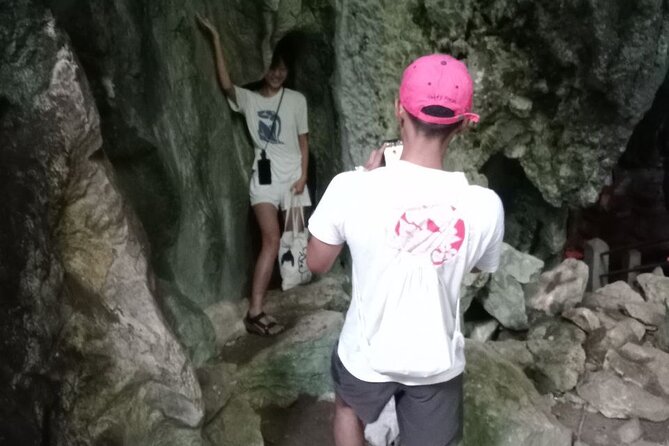
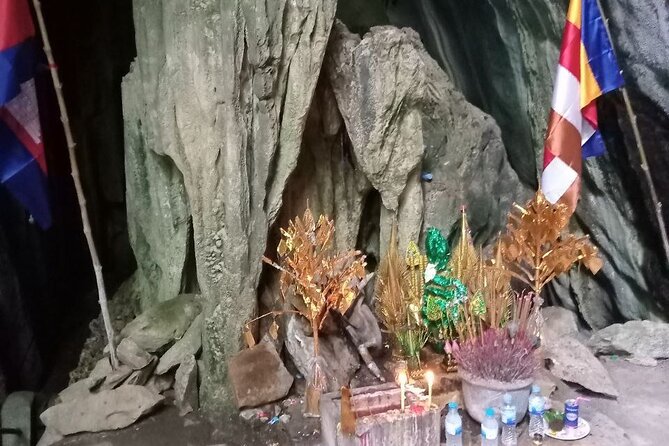
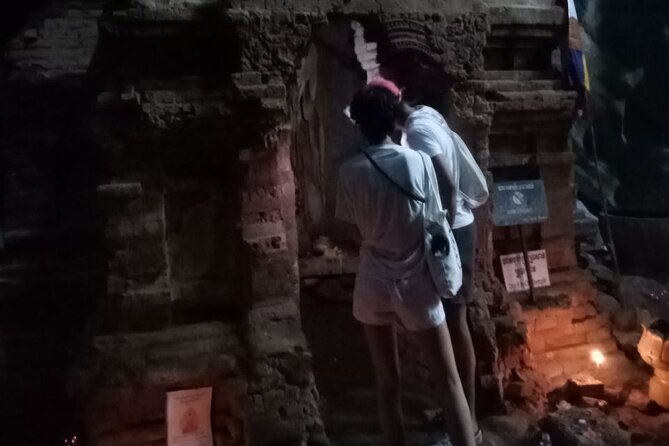
Phnom Chhngok Cave Temple is described as Pre-Angkorian, so you’re not only looking at a scenic detour—you’re making a historical-shaped stop. You’ll also get countryside views along the way, which is part of why this works as a one-day tour.
The tradeoff is the journey itself. Traveling to the temple involves winding dirt roads, and that can be tiring if you’re sensitive to bumpy rides. If you’re the type who easily gets road-sick, plan to take it easy, sit back, and keep your focus on the scenery rather than fighting the road.
Once you’re there, the temple time is about 1 hour. That’s long enough to slow down, take photos, and enjoy the setting, but short enough that it doesn’t swallow the whole day.
Brateak Krola Lake (Secret Lake): a dam you’ll understand more after you see it
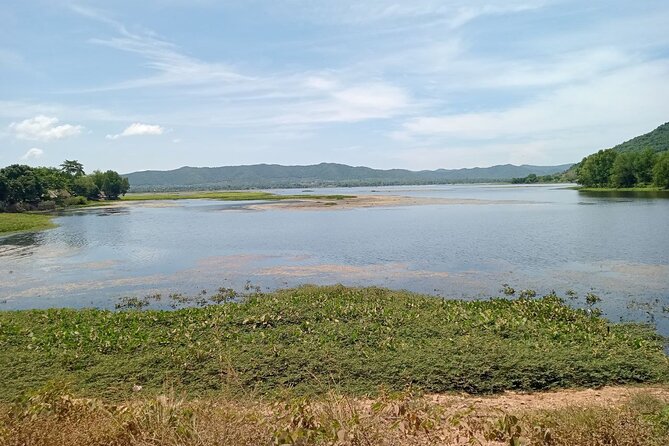
This stop is brief—around 15 minutes—but memorable. Brateak Krola Lake, often called Secret Lake, isn’t really a natural lake. It’s a dam-created reservoir.
What makes it emotionally heavy is the background: during the Khmer Rouge era, a dam was built using slave labor. You’ll be seeing the result of a painful chapter, and that’s why I like that the tour doesn’t hide the story. Even a quick stop can change the way you look at a place.
If you’re the type who likes context, take a moment here. Read the surroundings as more than scenery. The water is here because people forced labor shaped it, and the “quiet view” is part of the contrast.
La Plantation pepper farm in Kampot: seeing how Kampot pepper is made
This is the heart of the day for many people, and it’s easy to see why. At La Plantation, you’re entering a social and sustainable family project built around traditional farming and modern processing.
You’ll meet an English or French-speaking guide during this section. That’s important: pepper production can be hard to interpret if you’re just wandering, and a guide helps you connect the dots between the plants, the harvesting style, and the end product.
Here are the pepper specifics that matter. The farm produces black, red, and white Kampot pepper. That range gives you a reason to care beyond souvenirs, because the varieties reflect how pepper is processed and handled after harvest.
I also like this stop because it’s hands-on in a “you can see the workflow” way. You’re not only being told stories; you’re walking through a production space and getting a practical feel for how a local product turns into something that sells far beyond Cambodia.
What to keep realistic: this is an included entrance stop with guide time, but you’re still on a fixed schedule. Come with curiosity and a willingness to learn fast, because the day moves on.
Salt fields in dry season: what you’ll see depends on timing
Salt fields are included in the concept of the day, but the timing is seasonal. They’re available only during the dry season.
That means your experience here isn’t guaranteed in the exact same way year-round. If you happen to travel during the dry season, you’ll likely get the full salt-field look. If not, you might still see related areas or a modified stop, depending on what’s operating at the time.
This is the main “season reality” check for the tour. It’s still worth it because you’re getting so much else—pepper farm, cave temple, Secret Lake, Kep market—but you should understand the salt part is weather-dependent.
If seeing salt production is a top goal, double-check your travel dates and make sure you’re comfortable with the possibility that the salt stop may be limited based on season.
Kep Beach photo stop and the crab market: seafood culture you can use
After the inland stops, you head toward Kep Beach for a photo, then on to the Kep crab market. This is where the day shifts from farms to food and local life.
At the crab market, the main value is how you watch the seafood culture work. You can see fishermen bring in their catch, and you can bargain with vendors to get the best price on seafood.
One practical takeaway: this is not just a market stop for scenery. It’s a place where you can build your own meal plan. Meals aren’t included, but the market gives you the ingredients and the local bargaining experience to go along with it.
If you want to eat well without overpaying, this is the stop where your price sense matters most. Ask questions, compare a couple of stalls, and be ready to negotiate—politely, but clearly.
And that Kep Beach photo moment? It’s short, but it gives you a visual “you made it to the coast” reset. It helps the day feel complete.
Price and logistics: is $89 good value for this route?
At $89 per person, this tour can feel like a fair deal—especially if you’re trying to avoid the hassle and cost of stitching together multiple rides.
The included basics you’re paying for:
- Air-conditioned vehicle for the long Phnom Penh to Kampot transfer
- English-speaking driver
- Entrance fees included
- Bottled water included
- English or French speaking guide at Pepper Farm only
Two things raise the value beyond just transportation. First, entrance fees are covered, so you don’t add extra tickets. Second, La Plantation includes a guide time block, which usually saves you time and confusion versus self-guiding.
What’s not included:
- Meals (so plan to budget for your crab-market lunch or snack)
- Tips for the driver (not included)
- Travel insurance (not included)
So I’d frame it like this: the $89 buys you a full-day “worked plan” with transport, tickets, and key guided time. If you’d rather do everything independently, the price might feel steep. If you want convenience plus structure, it usually lands well.
What could make or break your day
This tour works best when you match the day to your style. Here are the practical factors that affect how you’ll feel by 4 or 5 pm.
- Long day, moving schedule: It’s roughly 8 to 10 hours, and the day starts early.
- Road comfort: The dirt-road travel to Phnom Chhngok Cave Temple can be tiring.
- Season limits: Salt fields are available only during the dry season.
- Guide coverage is partial: The guide is specifically at Pepper Farm. Other stops are handled by the driver and your own pace.
On the positive side, the driver experience is clearly part of what people remember. In at least one case, Simon drove in a way that felt safe the entire time and provided plenty of water during the day. A comfortable car matters too—especially on a day like this where you spend hours in transit.
Who should book this Phnom Penh Kampot Kep day trip
Book it if you want:
- A one-day “greatest hits” loop connecting Phnom Penh with Kampot and Kep
- A strong food-and-agriculture angle (pepper and salt, then seafood market)
- Historical context mixed into sightseeing, not tacked on at the end
Skip it or consider another format if:
- You hate long drives and quick stops
- You can’t handle bumpy dirt-road travel
- You’re traveling outside the dry season and salt fields are your main must-see
This tour is also a good fit for couples and small groups who want one driver, one schedule, and fewer decisions.
Should you book this tour?
If your ideal Cambodia day includes pepper farms, a dam with real history, and a seafood market where you can bargain and eat what you pick, then yes, I’d book it. The included transport plus entrance fees plus guide time at La Plantation creates good value for a single-ticket day.
My only hesitation is the season and road comfort. The salt fields may not be operating the way you hope, and the cave temple access can feel rough. If you’re flexible on salt and you’re okay with a long, early start, this tour is an efficient way to see a lot of Cambodia in one day.
FAQ
What time does this tour start?
The tour starts at 7:30 am.
How long is the Phnom Penh to Kampot and Kep day trip?
It runs about 8 to 10 hours.
Will I be picked up from my hotel?
Yes. An English-speaking driver will pick you up from your hotel in Phnom Penh Capital and transfer you to the area, and you’ll be returned to your hotel in Phnom Penh City or dropped off in Kampot or Kep if you stay there.
Is there a guide on the tour?
You’ll have an English or French speaking guide at Pepper Farm only, while the driver is English-speaking.
What sights are included besides the pepper farm?
The day includes stops such as the Iron Bridge, Phnom Chhngok Cave Temple, Brateak Krola Lake (Secret Lake), Salt Fields (during the dry season), Kep Beach for a photo, and the Kep crab market.
Are the salt fields included year-round?
No. Salt fields are available only during the dry season.
Are meals included in the price?
No. Meals are not included.
What’s included in the $89 price?
Included are the air-conditioned vehicle, an English-speaking driver, entrance fees, bottled water, and the guide at Pepper Farm.
Is the tour refundable if I cancel?
No. It is non-refundable and cannot be changed for any reason.
If you want, tell me your travel month and where you’re staying (Phnom Penh vs Kampot/Kep). I can help you judge whether the dry-season salt-fields chance is worth prioritizing.