REVIEW · SAN SALVADOR
Ruta de Las Flores Adventure, Relax at Hotsprings + 1930’s farm Coffee Tour
Book on Viator →Operated by Eco Tours Petate · Bookable on Viator
Four towns, two coffee stops, one hot-spring soak. This full-day Ruta de Las Flores ride from San Salvador strings together small-town culture, coffee history, and volcanic hot pools.
I like how you get Concepción de Ataco’s murals and cobblestone streets plus a very hands-on 1930s coffee processing experience in one day.
One thing to consider: the day moves fast, so you’ll have shorter time windows in each town if you want to linger.
In This Review
- Key Highlights You’ll Actually Feel
- A Full-Day Ruta de Las Flores That Packs a Lot (Good, Not Rushy)
- Nahuizalco’s Market, Fruits, and Wicker-and-Tule Crafts
- Concepción de Ataco: Murals, Cobblestones, and Coffee Talk That Actually Clicks
- El Carmen Estate Coffee Tour: The 1930s Plant Tour You’ll Remember
- Termales de Santa Teresa Hot Springs: Real Relaxation with a Couple Caveats
- Guides, Group Size, Pickup, and the Pace of the Day
- Price Value: What You’re Really Paying For at $115.85
- Who Should Book This Route (and Who Might Want a Different Style)
- Should You Book Ruta de Las Flores + Hot Springs + 1930s Coffee?
- FAQ
- How long is the Ruta de Las Flores adventure and hot springs tour?
- Does the tour include hotel pickup and drop-off?
- What’s included in the price?
- Is lunch included?
- What should I bring for the day?
- Is the group small?
Key Highlights You’ll Actually Feel
- Colonial-route day trip: multiple stops without needing to plan a thing
- Nahuizalco market time for local fruits and traditional handicrafts
- Ataco murals + coffee focus to understand why this town matters
- El Carmen Estate since the 1930s, with a clear step-by-step coffee transformation
- Termales de Santa Teresa hot springs with pools at different temperatures
- Small group size (max 10) and hotel pickup/drop-off within San Salvador
A Full-Day Ruta de Las Flores That Packs a Lot (Good, Not Rushy)
This is the kind of day trip that works if you’re short on time but still want a real sense of western El Salvador. You start from San Salvador with hotel pickup, then head out on the Ruta de Las Flores—that famous string of colonial towns and countryside stops—covering major sights in one long outing.
Expect an 8-hour day roughly, usually with a morning start around 8:30am and a return late afternoon or early evening (some schedules land closer to 6pm, others later). Because you’re doing a route, you’ll also feel the trade-off: it’s not a slow, café-hopping crawl. It’s more like a well-paced tour where you get the highlights and keep moving.
The best part is that the day has a clean rhythm. You’re not just driving and taking photos. You get brief but meaningful town immersion—markets, murals, and craft traditions—then you shift into coffee with a deeper stop at an estate operating since the 1930s, then finish with a hot-spring soak to reset your legs and your mood.
You can also read our reviews of more tours and experiences in San Salvador.
Nahuizalco’s Market, Fruits, and Wicker-and-Tule Crafts
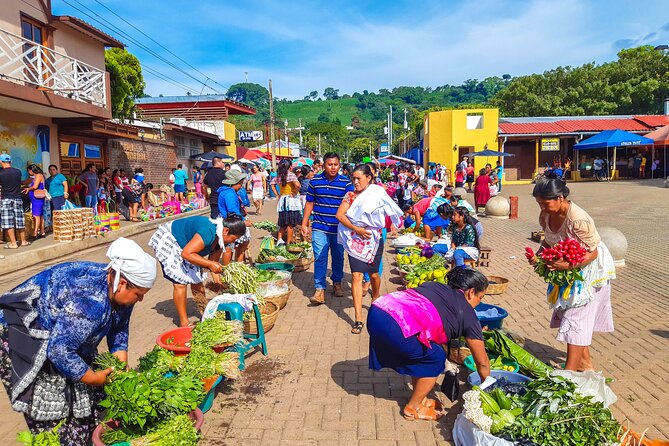
First stop: Nahuizalco. This town has an indigenous name meaning tied to Izalcos, and the visit is designed to give you context for the cultural legacy of the area. You’ll learn about one historical event that shaped that legacy, then you get practical, sensory time in the municipal market.
Here’s what makes this stop useful for you: markets are where you see daily life, not just attractions. You can browse and pick up small ideas about what locals actually buy and sell, including tropical fruits you can taste while you’re there. It’s also a strong craft stop. Nahuizalco is recognized for wicker and tule handicrafts—items like baskets, chairs, and mats. Even if you don’t buy anything, it helps you understand the region’s skills.
How to enjoy this part more:
- Wear shoes you can walk in without thinking, since markets and sidewalks tend to be uneven.
- If you like trying fruit, go a little hungry—this is one of the nicer “small included tastes” moments on the route.
Concepción de Ataco: Murals, Cobblestones, and Coffee Talk That Actually Clicks
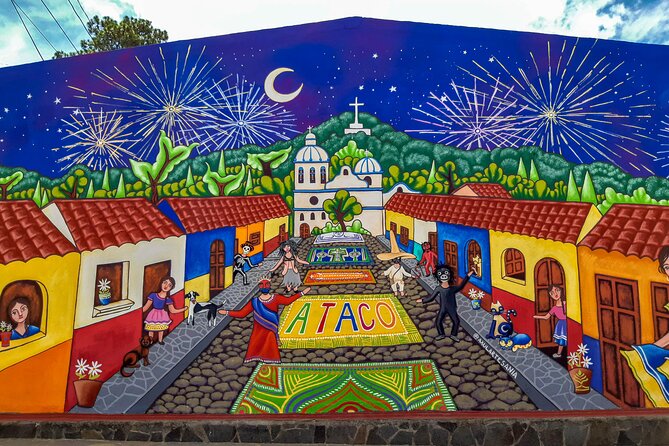
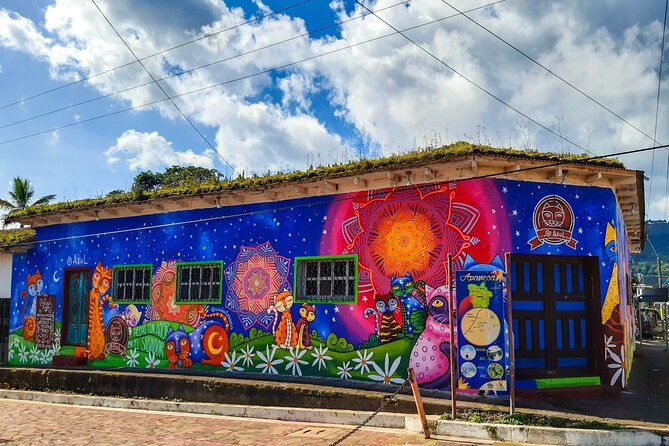
Next comes Concepción de Ataco, often the emotional high point for people who love color, street art, and walking-friendly streets. The vibe here is calm: cobblestone streets and murals around practically every corner. The effect is like walking through a community that chose art as public space.
Ataco is also a coffee town. On this day trip, coffee isn’t treated as a generic souvenir. You’ll connect Ataco’s reputation with what you see and what you’re told as you continue along the route. There’s time to experience coffee more directly, including a visit that helps you understand the process from planting onward.
What I like about Ataco in this format is that it sets you up for the big coffee stop later. By the time you reach the 1930s estate, coffee makes more sense. You’ve already gotten the “why this town is known for coffee” story, so the production tour doesn’t feel like it’s happening in a vacuum.
One consideration: if you’re the type who wants lots of free time to roam, know this stop is still just part of a bigger day. You’ll see a lot, but you won’t have unlimited wander time.
El Carmen Estate Coffee Tour: The 1930s Plant Tour You’ll Remember
The most specific and hands-on segment of the day is the El Carmen Estate coffee tour. You visit a coffee processing plant operating since 1930, and the tour is built around the transformation of coffee—from freshly cut coffee arriving on trucks through the processing steps, all the way to how it becomes a cup.
This is where the day earns its keep for the price. A lot of tours sprinkle in a quick “coffee visit.” This one is structured as a real production story. You’re not just looking at coffee plants and snapping photos. You’re being guided through how coffee moves through the system.
Because the estate tour is 1 hour with admission included, it’s long enough to feel informative without turning into a slow slog. If you like food-and-craft travel—how things are made, not just where they’re sold—this is the part that delivers.
Small practical tips:
- If you get motion sick easily, mention it at pickup. Long drives plus a structured tour can hit some people.
- Keep an eye on your bags and belongings, since you’ll move from one area to another during the processing explanation.
Termales de Santa Teresa Hot Springs: Real Relaxation with a Couple Caveats
After the route and coffee, you get the payoff: Termales de Santa Teresa. This is a smaller resort-like area in the mountains with pools of hot volcanic water coming from geothermal activity. There are pools at different temperatures, so you can choose what feels good without committing to one extreme.
This is a perfect ending after cobblestones and walking. The time slot is about 1 hour, which is usually enough to soak, rinse off, and feel human again. You should bring your swimsuit—that part is non-negotiable.
Two caveats to keep your expectations grounded:
- Some people found the facilities less clean than they hoped. If clean restrooms and shower areas are a major priority for you, I’d plan to be flexible.
- Bring your own towel. One common tip is that it’s easier than assuming you’ll have what you need on site.
Also: the water is hot, so even on warm days, you may want a light layer after soaking. A sweater or jacket helps if the mountain air feels cooler once you’re out of the pools.
Guides, Group Size, Pickup, and the Pace of the Day
This tour is designed for small groups, with a maximum of 10 travelers. That matters more than you’d think. When you’re in a tight group, your guide can manage bathroom stops, regroup faster, and keep the day moving without leaving people behind.
You’ll also get hotel pickup and drop-off—but only within San Salvador. If you’re staying outside the city area, you’ll need to plan around where pickup is allowed.
Guide quality is a big part of why people rate this so highly. You may be paired with guides such as Herbert, Osmaro, Francisco, David, Antonio, Smart, or Rafa, and they’re praised for different strengths: interactive explanations, helping with practical needs, and making sure the pace feels comfortable. I’d call out one smart strategy: if anyone in your group has mobility concerns, tell the guide early. Some guides have adjusted by helping with steps and timing.
Pace-wise, the day is busy. The best attitude is to think of it as a greatest-hits route: you get town flavor, coffee depth, then hot-spring reset.
Price Value: What You’re Really Paying For at $115.85
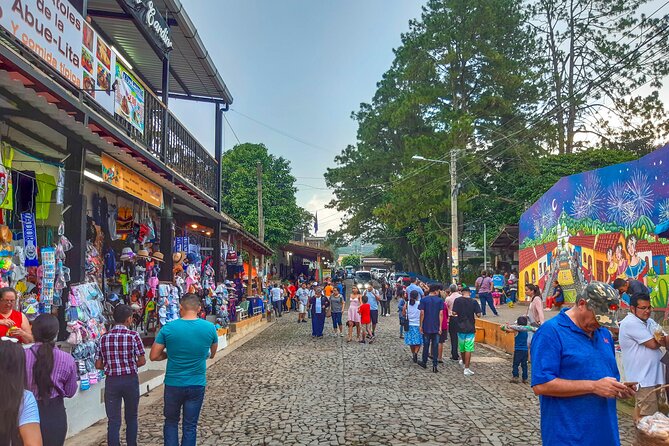
At $115.85 per person for about 8 hours, you’re paying for more than transportation. The real value comes from bundling four cost-heavy parts into one package:
- Multiple destination stops along the Ruta de Las Flores in a single day
- A guided market and town explanation experience
- A coffee tour at an estate operating since the 1930s, with admission included
- Hot springs entry, with admission included
- Professional guide plus taxes and fees handled
- Pickup/drop-off within San Salvador
What’s not included is also important: food and drinks aren’t included unless specified, and lunch plus bottled water aren’t listed as included. So if you want a smooth day, budget for snacks or lunch stops. Bring a little cash and plan to buy what you need between town breaks.
If you’re comparing options, this tour makes sense when you want structure and don’t want to piece together coffee and hot springs on your own. If you’re the type who wants to spend half a day in one town and never check your watch, this price won’t feel as worth it because the schedule is designed to cover many places.
Who Should Book This Route (and Who Might Want a Different Style)
This tour is a great match for you if:
- You’re based in San Salvador and want a western El Salvador day trip
- You want both town culture and coffee production (not just one or the other)
- You like hot springs as the final “reward” after walking
- You prefer a small group rather than a big bus crowd
It might be less satisfying if:
- You hate tight time windows and want long free time in one town
- Hot springs cleanliness or restroom/shower comfort is a deal-breaker
- You’re specifically trying to maximize time in only one stop (for example, only Ataco)
In short: book it when you want a balanced, packed day that feels like you covered a lot of ground for the money.
Should You Book Ruta de Las Flores + Hot Springs + 1930s Coffee?
I’d book this if your goal is a single-day snapshot of Ruta de Las Flores plus a real coffee production tour, capped with volcanic hot-spring relaxation. The package works because it’s not random stops—it has a logical flow: market culture, mural town charm, coffee processing depth, then soaking time.
Do it with your eyes open: the day is full, and you’ll likely want more time in at least one town than you get. If you plan for that—bring comfortable shoes, a swimsuit, sunscreen, and a towel—the experience is the kind that gives you strong photos and stronger context without the hassle of coordinating multiple providers.
FAQ
How long is the Ruta de Las Flores adventure and hot springs tour?
It runs for about 8 hours (approx.).
Does the tour include hotel pickup and drop-off?
Yes, hotel pickup and drop-off are available, but only in San Salvador.
What’s included in the price?
Included are taxes and fees, a professional guide, hotel pickup/drop-off in San Salvador, coffee tour admission at the El Carmen Estate, and hot springs admission at Termales de Santa Teresa. The group is also kept small.
Is lunch included?
Food and drinks aren’t included unless specified, and lunch is listed as not included. Plan to cover your own meals.
What should I bring for the day?
Bring comfortable shoes, light clothing, sunscreen, and a sweater or jacket. You should also bring a swimsuit for the hot springs.
Is the group small?
Yes. The tour has a maximum of 10 travelers.