
REVIEW · MALAGA
Tropical Tour: Avocado & Mango Farm – Small group and tasting
Book on Viator →Operated by Oletrips · Bookable on Viator
Mangoes and avocados are better when you see them growing. This small-group tour in the Axarquía area turns a simple tasting into a real, hands-on look at how tropical fruit is grown, harvested, and shipped toward your plate.
I especially like the farm visit with sea views and the way the guide ties daily work in the orchards to the bigger supply chain across Europe. I also like that the included tropical tasting is seasonal and designed to help you connect flavor with farming.
One thing to plan for: the fruit you taste depends on the calendar. Mangoes run roughly September to late November, and avocados are harvested from November to April, so offerings can vary.
In This Review
- Key things I found most useful
- Why La Axarquía Makes This Tour Worth Your Time
- The Van Ride and Timing: What 10:00 a.m. Really Means
- Stop 1 in Velez-Málaga: The Mango and Avocado Plantation
- The Picnic Brunch: Seasonal Tastes with Real Local Logic
- Stop 2 at TROPS: Seeing the Cooperative Behind the Fruit
- Shopping and Taking Málaga Flavors Home
- Group Size, Comfort Tips, and What to Bring
- Value and How to Get the Most from It
- Should You Book the Avocado & Mango Farm Tour?
- FAQ
- How long is the Avocado & Mango Farm tour?
- Is pickup included?
- What group size is this tour?
- What languages are available?
- What food is included?
- Are vegetarian dietary needs handled?
- When are mangoes and avocados in season?
- Do we visit more than one place?
- What should I bring?
Key things I found most useful
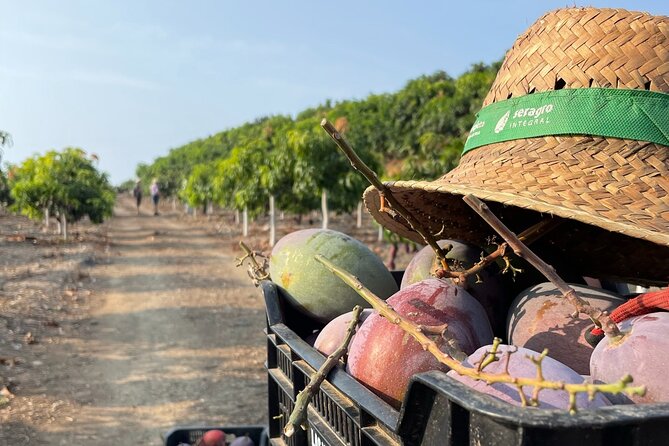
- Small group (3 to 8) means more questions, less waiting, and a better feel for what you’re seeing.
- Pickup included on the coast between Torre del Mar and Nerja in a Mercedes Vito van, with timing shared the day before.
- Two-part fruit education: a plantation tour plus a look at TROPS, the biggest mango and avocado cooperative in Europe.
- Included brunch picnic focuses on seasonal fruit and local specialties, not just a quick bite.
- Sea-view setting in Velez-Málaga makes the outdoor walking and tasting more enjoyable (and more photogenic).
Why La Axarquía Makes This Tour Worth Your Time
This is not a cookie-cutter fruit tasting. The heart of the experience is the Axarquía region of Málaga, famous for tropical and subtropical production. The tour frames the day around a simple idea: once you understand how these fruits are grown and sorted, the taste makes more sense.
I like that the learning stays practical. You’re not stuck in a lecture. You’ll get the planting-to-distribution story, then you’ll taste fruit that was grown locally and picked to match the season. That mix of education and eating is exactly why this works.
You should also know it’s a true farm-and-cooperative day. There’s walking on outdoor paths, so you’ll feel it a bit in your legs, especially if you’re sensitive to heat. The good news: it’s time-efficient, and it’s built around a 10:00 a.m. start.
You can also read our reviews of more tours and experiences in Malaga.
The Van Ride and Timing: What 10:00 a.m. Really Means
The experience runs about 5 hours total, starting at 10:00 a.m. If you’re getting pickup, the van is typically a big blue Mercedes Vito. One day before, you’ll get your exact pickup timing, so you can plan breakfast without guessing.
The early start matters because it gets you into the orchards at a comfortable part of the day. You’ll leave the start area by van and enjoy a relaxed drive along the coast. Expect Mediterranean sea views from the road, then a proper arrival around 10:30 a.m. before the tasting portion starts.
If you get carsick easily, bring your usual anti-sickness medication. This tour is mostly van-based with outdoor stops, but there’s enough driving to matter if your stomach is touchy. Also bring a water bottle. It’s an easy habit that keeps the day pleasant.
Stop 1 in Velez-Málaga: The Mango and Avocado Plantation
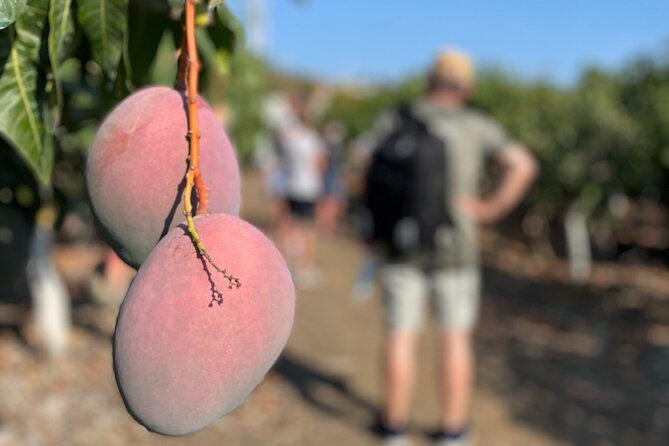
Your first real stop is a mango and avocado farm overlooking the sea near Velez-Málaga. This is the part I’d choose even if you’re not a big fruit person, because it answers the question of how these crops actually work in real life.
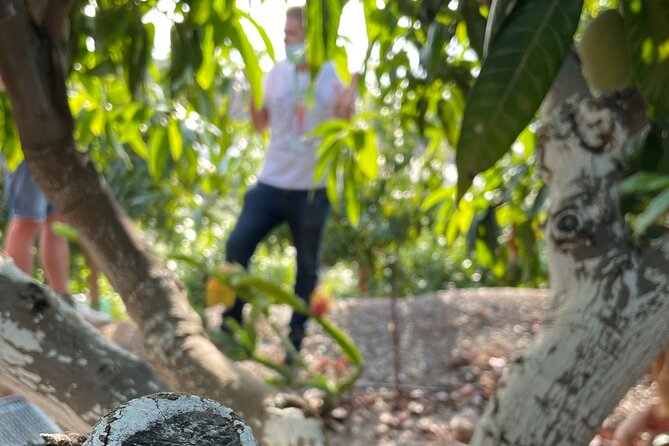
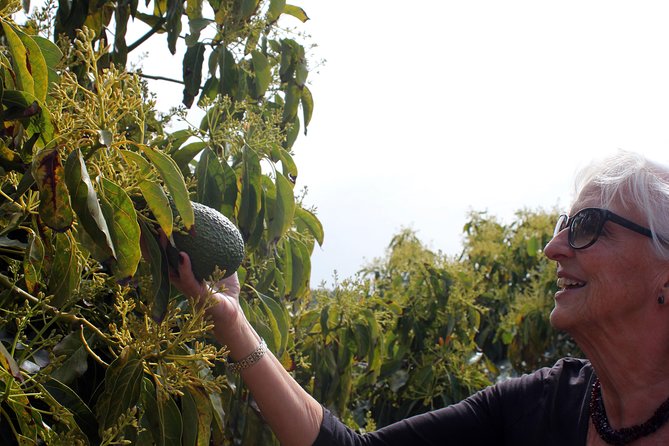
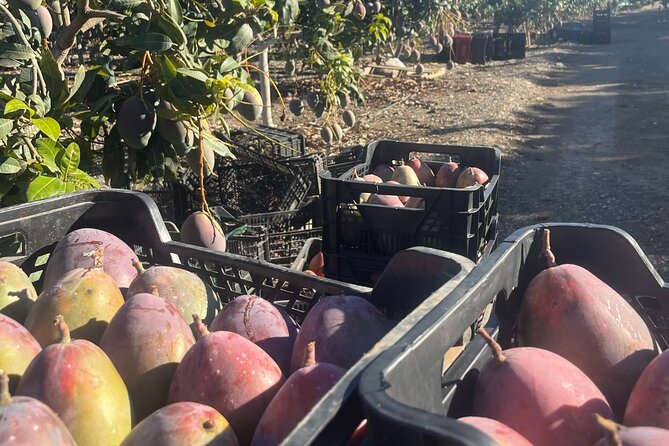
For about two hours, you’ll learn how avocados and mangos are grown in the region. The tour explains more than farming basics. You get the planting phase, then how fruit moves from the farm toward distribution across Europe—basically how you go from orchard to supermarket shelf.
There’s also a storytelling element. In the feedback I saw, the guide Cipriano stood out for linking the fruit to both farming practice and local context, with history and regional details that make the day feel grounded. Even when you know nothing about agriculture, the way it’s explained helps you spot what you’re looking at—so the farm tour doesn’t feel like random fruit trivia.
A practical note: the tour says mango season is September through late November, while avocados are harvested from November to April. That means the exact variety, ripeness, and mix of tasting fruit can shift by date. If you’re visiting outside peak months, you still get the full experience, but your picnic flavors may be different.
The Picnic Brunch: Seasonal Tastes with Real Local Logic
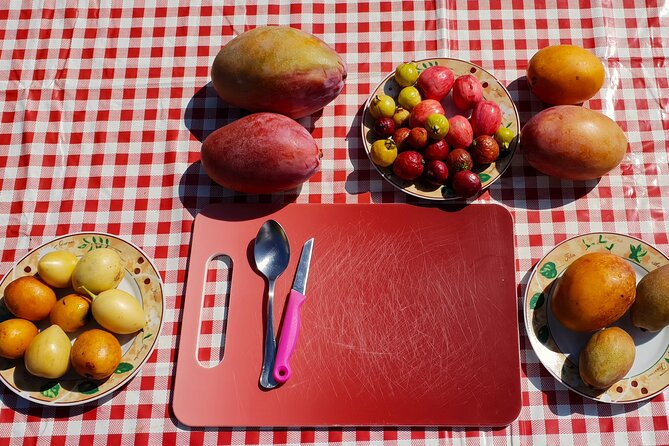
After the orchard walk, you’ll settle in for a picnic-style brunch tasting. This is included and designed to connect flavor to what you just learned.
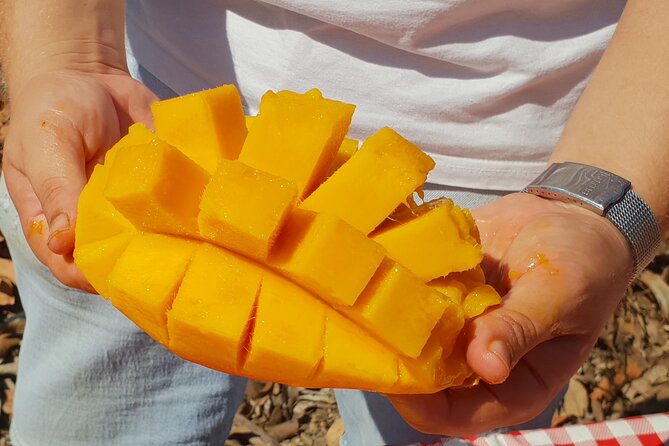
You’ll typically taste juicy mangoes and creamy avocados, plus other local treats that fit the season. In the kind of tour experience this is, the payoff comes from eating slowly enough to notice differences—texture, ripeness, and how sweet or buttery each fruit feels.
Some people highlight that the lunch includes two local specialties alongside the seasonal tropical fruit. Even without knowing exactly what those specialties are on your date, the structure usually works: fruit first for freshness, then local additions that give the region its own voice beyond just mango and avocado.
If you have dietary needs, plan ahead. The tour offers a vegetarian option, and you’re asked to advise your specific dietary requirements at booking. That matters here because the tasting portion is a core part of the value, not an add-on.
Stop 2 at TROPS: Seeing the Cooperative Behind the Fruit
The second part of the tour takes you to TROPS, described as the largest mango and avocado cooperative in Europe. This is where the day turns from orchard life to the bigger machine that moves food at scale.
You’ll tour the cooperative facilities and then explore the shop. It’s a smart follow-up after the farm visit, because it shows the handoffs: what happens after fruit leaves the trees, and how quality is organized for broader distribution. If the first stop teaches you how the fruit grows, the second stop teaches you how it gets sorted and sold.
The shop is also where you can turn tasting into take-home souvenirs. You’ll find local gourmet products and a good chance to pick up items that match what you enjoyed earlier in the day—useful if you want flavors that go beyond a generic gift.
One thing to manage: plan for a bit of walking inside and around the cooperative areas. It’s not described as a huge hike, but you’ll still want comfortable shoes so you can keep moving without cutting the day short.
Shopping and Taking Málaga Flavors Home
The TROPS shop is there for one simple reason: you don’t want your day to end at the picnic table.
The cooperative store is set up like a mini tasting market. Based on the info provided, you should expect local gourmet products, and you can use your orchard tastings as a guide for what to buy. That’s a practical advantage—your choices are tied to what you actually experienced, not just what sounds good on a label.
If you’re traveling with limited luggage space, think about what you can handle. Fruit itself is perishable, but packaged gourmet items are easier. The tour doesn’t spell out exact product types, so you’ll want to browse on-site and check shelf life before you buy.
Group Size, Comfort Tips, and What to Bring
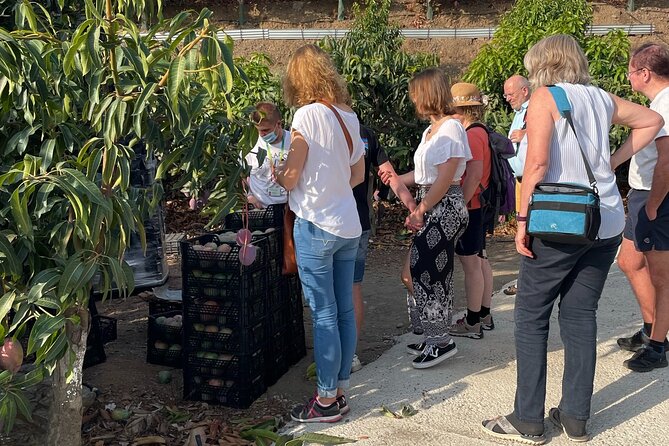
This tour runs with a maximum of 8 travelers and a minimum of 3. In practice, that small size is a big deal. You’re more likely to hear your guide clearly, ask questions without waiting, and get a feel for the day instead of standing in a crowd.
The guide is an official guide and also your chauffeur. Language options include English, German, and/or Spanish depending on the group. The tour may be operated by a multi-lingual guide, so you’re usually covered even if your group language is mixed.
Comfort-wise, here’s what you should actually take seriously:
- Wear comfortable shoes for outdoor areas.
- Bring a water bottle.
- In hot months, use sun screen. Most of the time is outdoors.
- If you get sick in cars, bring anti-sickness medication.
Service animals are allowed, and the tour is noted as being near public transportation. That means you can still make the day work even if pickup isn’t a perfect match for your exact lodging.
Value and How to Get the Most from It
There’s no price number listed in the details here, so I can’t judge cost per person directly. What I can do is talk about value in the only way that matters: what’s included for the time.
You’re paying for a half-day that bundles:
- pickup and drop-off in selected coastal areas via a Mercedes Vito van
- a small group experience (max 8)
- visits to both a fruit plantation and the TROPS cooperative
- an included brunch tropical tasting
- an official guide who speaks English, German and/or Spanish
The key value piece is that you’re not just tasting. You’re also seeing how fruit production is organized. That makes the flavors more meaningful, and it also helps you shop later because you understand what you’re buying.
To get the most out of the tour, go in with two mindsets:
- Expect seasonal variation. Your date changes the exact fruit mix.
- Ask questions during the farm and cooperative segments. With a small group, it’s the easiest time to clarify what you don’t know.
Should You Book the Avocado & Mango Farm Tour?
I’d book this if you want a practical, real-world food experience in Málaga that goes beyond standing near a table of fruit. It’s a strong fit for people who like agriculture, farmers markets, cooking, and understanding where food actually comes from. The sea-view farm setting and the two-stop format make it a good use of a half-day.
You might skip it if you hate car time or you’re not up for outdoor walking in warmer weather. Also, if your goal is mangoes and only mangoes, note that the tour explicitly ties offerings to season, so the fruit lineup won’t be identical year-round.
If you want, tell me when you’re visiting (month) and where you’re staying on the Costa del Sol. I can help you sanity-check whether your dates are likely to line up with your favorite fruit and whether the pickup zone fits your hotel.
FAQ
How long is the Avocado & Mango Farm tour?
It runs for about 5 hours (approximately).
Is pickup included?
Pickup is offered in selected coastal areas. Pickup is included from Torre del Mar to Nerja, specifically in Nerja, Torrox-Costa, Algarrobo Costa and Torre del Mar. Other pickup points can be discussed in advance.
What group size is this tour?
It’s a small-group tour with a minimum of 3 people and a maximum of 8.
What languages are available?
The official guide (also the chauffeur) offers English, German and/or Spanish. May be operated by a multi-lingual guide.
What food is included?
You get a brunch tropical tasting as part of the included experience, including seasonal tropical fruits and local treats.
Are vegetarian dietary needs handled?
Yes. A vegetarian option is available if you advise at booking.
When are mangoes and avocados in season?
Mango season runs from September to late November. Avocados are harvested from November to April. Offerings can vary depending on the season.
Do we visit more than one place?
Yes. You visit an avocado and mango plantation, then you tour TROPS, the cooperative, and visit its shop before returning to your accommodation.
What should I bring?
Wear comfortable shoes, bring a water bottle, and use sunscreen in hot months. If you get carsick easily, consider bringing anti-sickness medication.