REVIEW · TURIN
Turin: Meet the Monviso Alpacas at the Educational Farm with a Guide
Book on GetYourGuide →Operated by GROW UP Impresa Sociale Agricola · Bookable on GetYourGuide
Alpacas turn a break into a highlight. At the Cassotti Balbo Educational Farm, you get real hands-on time with Monviso alpacas just outside Turin, guided step by step. I like that it’s petting-and-feeding friendly, so you’re not just standing and staring, and it has an actual learning component about these Andes-born animals.
What I love most is how the guide helps you interact safely, and how the animals seem docile and curious once you follow the simple approach. The other big win is value: it’s only about an hour, but you come away with both photos and a better understanding of alpaca behavior.
One consideration: because it’s an outdoor farm experience, you’ll want comfortable shoes and outdoor clothing, and you may need to pace yourself if the ground is uneven in parts of the visit. Also, it’s a short visit—great for a quick stop, but not a full half-day outing.
In This Review
- Key highlights to know before you go
- Turin’s Cassotti Balbo Farm: A calm oasis near the city
- Where you meet the guide (and how not to waste time)
- The 15-minute alpaca intro: what the guide actually covers
- Inside the enclosure for 30 minutes of real alpaca time
- Feeding time: the direct contact moment (and how to handle it)
- Photo stops and selfies: how to get great shots in 10 minutes
- What makes the farm experience meaningful: welfare, education, inclusion
- Price and value: is $21 for an hour worth it?
- Who this experience suits best (and who might want something else)
- Practical tips so your visit goes smoothly
- Should you book the Monviso Alpaca visit?
- FAQ
- FAQ
- Where is the meeting point for the alpaca experience?
- How long does the experience last?
- How much does it cost?
- What’s included in the guided visit?
- Can I feed the alpacas?
- What languages are available for the live guide?
- Is the experience wheelchair accessible?
- Are pets allowed?
- Is there free cancellation?
Key highlights to know before you go
- Pet, feed, and observe alpacas in a controlled enclosure with a guide guiding your movements
- A friendly intro that explains alpaca origins, traits, and daily farm habits
- Photo time at the end so you can get selfies and close-ups without rushing
- A green setting near Turin that works well for families and groups
- An inclusion-and-sustainability farm project tied to GROW UP Impresa Sociale Agricola
Turin’s Cassotti Balbo Farm: A calm oasis near the city
If you want something different from the usual Turin checklists, this alpaca meet-up is a smart switch. The Cassotti Balbo site is set up as an educational farm, so the vibe feels like you’re stepping into a purposeful little corner of Piedmont rather than a loud tourist show.
You’ll like the fact that this is an easy outing: it’s scheduled for about an hour, and you’re not committing your whole day. And because it’s outdoors with farm paths and an enclosure, it’s a nice change of pace if you’ve been doing museums, churches, and long walks all week.
Most importantly, this isn’t just about cute photos. The guide is there to explain what you’re seeing, why it matters, and how to interact without stressing the animals.
Where you meet the guide (and how not to waste time)
The meeting point is Grow Up – Alpaca del Monviso – Cascina Cassotti Balbo, at Strada Castello di Mirafiori 22, Turin. You’ll recognize the entrance by the green door, and your guide is waiting there.
Plan to arrive about 10 minutes early. That buffer helps you get checked in, get your bearings fast, and start the experience on time without that last-minute scramble that makes anyone cranky—human or alpaca.
You’ll also need to show your voucher when you arrive. Digital vouchers are accepted, so you don’t have to hunt for paper. If you’re coming from central Turin, give yourself extra time for city-to-suburb travel and then you’ll be stress-free.
The 15-minute alpaca intro: what the guide actually covers
The visit begins with a short class-style introduction—about 15 minutes—so you’re not walking into the enclosure blind. This is where you learn the basics that make the rest of the experience feel more meaningful.
Expect a guide-led presentation on:
- where alpacas come from (they’re originally from the Andes)
- their characteristics and what makes them different from other farm animals
- fun facts about daily life on the farm
This part matters because it changes how you watch. Instead of seeing random animal behavior, you start noticing patterns—how they move, how they react to attention, and what “normal” looks like in a calm farm setting.
If you’re visiting with kids, this is also the segment that helps them connect quickly. If you’re an adult, it’s the part that keeps the experience from turning into a pure photo op.
Inside the enclosure for 30 minutes of real alpaca time
After the intro, you step into the enclosure for about 30 minutes of wildlife viewing. The guide stays close, because the goal is safe interaction and calm observation, not chaos.
Here’s what this typically looks like in practice:
- the guide explains how to approach
- you’re shown where and how to stroke
- you learn to spot behaviors that tell you an alpaca’s mood
This is where the experience goes from cute to memorable. Alpacas have a way of turning their heads like they’re inspecting you, and once you learn the basics of approach, you get that satisfying moment of eye contact.
Also, the guide’s job is to keep you moving at the animals’ comfort level. That’s one of the reasons the alpacas can feel extremely docile and social—you’re interacting in a way that fits their space.
Feeding time: the direct contact moment (and how to handle it)
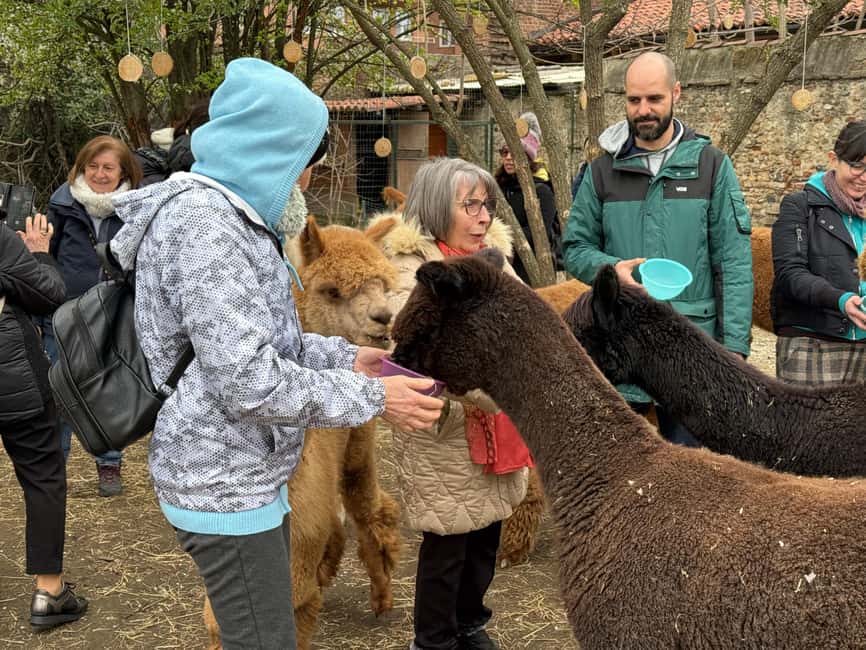
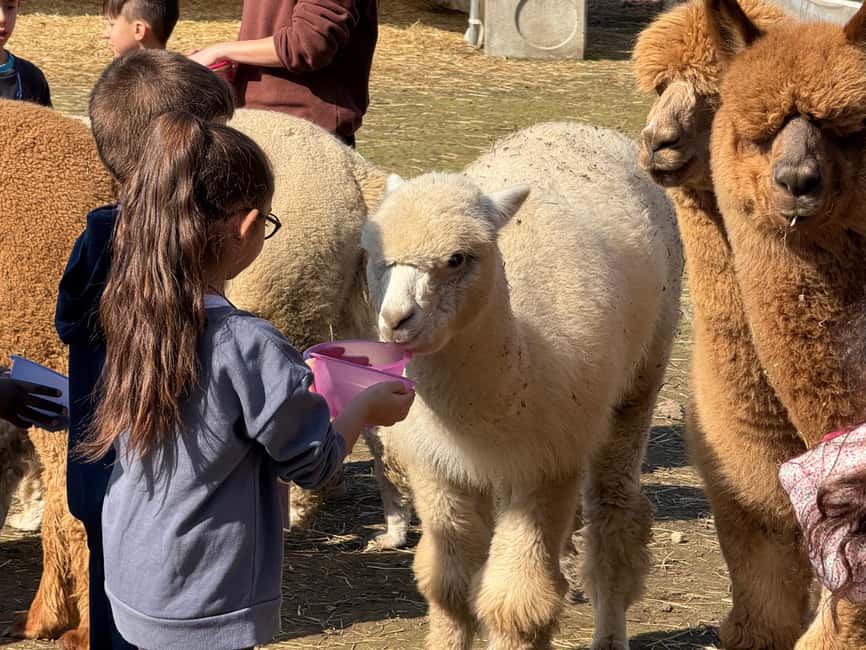
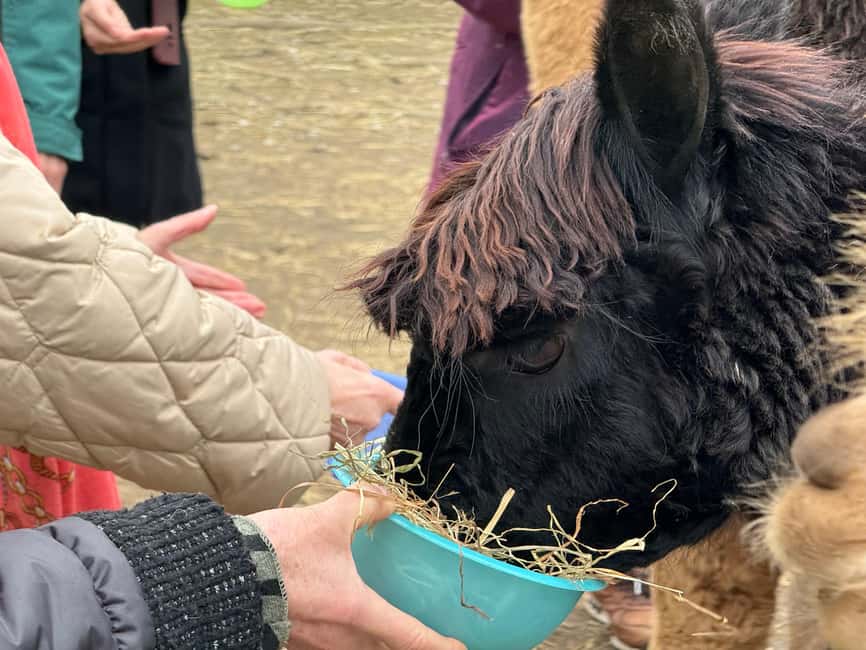
One of the best parts is the chance to feed the alpacas using special bowls. The visit includes time for this, and the guide helps you do it.
Why this matters: feeding brings you right into the routine of the farm. You get that close moment where you can see how they react when food is presented, and it creates the kind of interaction that sticks in your memory.
It also teaches something subtle. Once you’re there, you realize this isn’t about grabbing at an animal. It’s about offering the bowl calmly, letting the alpaca come to you, and following the guide’s pace.
If you tend to get excited around animals, treat feeding like a quiet moment. Slow movements help everyone.
Photo stops and selfies: how to get great shots in 10 minutes
The last portion includes a photo stop of about 10 minutes. This is smart scheduling. You’ve already learned how to interact, so the photos aren’t rushed and frantic.
For best results, think of photos as part of the farm rules, not the only goal. The animals are the main event, and the guide will keep the experience moving in a way that doesn’t overwhelm them.
If you want selfies, position yourself only when your guide indicates it’s comfortable. If you want close-ups, you’ll get better results by standing calmly and waiting for the alpaca to come into a good angle—rather than trying to chase it.
This is also when you’ll feel the contrast between “first look” and “I get you now.” After the viewing time, you’ll know when an alpaca is curious versus just quietly hanging out.
What makes the farm experience meaningful: welfare, education, inclusion
This is not just a petting stop. The alpaca project, Alpaca del Monviso, is run by GROW UP Impresa Sociale Agricola, and it’s designed to support social inclusion through urban agriculture.
That shows up in the way the farm is presented: the experience includes animal welfare and educational elements, and the project language is about more than profit. You’re stepping into a space that uses animals and outdoor learning to support wider community goals.
I like experiences like this because they help you feel connected to how something works locally. You’re not just consuming a moment; you’re participating in a farm model built around education and care.
Price and value: is $21 for an hour worth it?
At $21 per person for about one hour, the value depends on what you want from the experience. If your goal is a short, family-friendly outing where you can pet, feed, and learn, it’s a solid deal.
You’re getting:
- entry to the educational farm
- a guided tour with an expert guide
- an intro on alpaca origins and behavior
- safe enclosure interaction (petting included)
- feeding time with bowls
- observation and dedicated photo time
If you’ve spent money on longer attractions that mostly involve walking and waiting, this can feel more efficient. You get hands-on contact plus context. It’s the kind of activity that works well when you want something memorable without turning your schedule into a full-day marathon.
Who this experience suits best (and who might want something else)
This works especially well for:
- families looking for a safe, outdoor animal activity near Turin
- couples who want something different from museums
- school groups or groups of friends who like guided learning
- anyone who likes farm animals but doesn’t want to spend hours on logistics
Based on what people consistently highlight, the animals tend to be calm and friendly, and the guide tends to make the activity easy to understand and enjoyable for both kids and adults. That blend is rare. Too many animal experiences either stay too technical or turn into a rushed line.
If you’re the type who wants hands-on time to be the whole point, you’ll likely love this. If you’re hunting for a deep, long-form nature walk, you may feel the duration is short. This is designed as a focused hour of interaction and education.
Practical tips so your visit goes smoothly
A little prep makes a big difference on farm visits. Here’s what I’d do if you’re planning to go:
- Wear comfortable shoes and outdoor clothing suited to light walking
- Keep expectations realistic: it’s a guided enclosure experience, not a self-guided zoo
- Follow the rules about animal interaction—don’t improvise approaches
- Plan for photos, but let the guide set the rhythm
Also note the basics that protect everyone:
- Smoking isn’t allowed.
- Pets aren’t allowed, but assistance dogs are allowed.
Those rules help keep the alpacas calm and the experience safe.
Should you book the Monviso Alpaca visit?
Book it if you want a short, high-reward animal experience near Turin: petting, feeding, and guided learning all in one hour. It’s also a great choice if you’re traveling with kids or you want an outdoor reset without committing to a long day.
You might skip it if you’re not into close animal interaction or you already have a full schedule and need something longer and more location-based. But for most people looking for an authentic, farm-style encounter with a clear educational purpose, this is an easy yes.
FAQ
FAQ
Where is the meeting point for the alpaca experience?
The meeting point is at Grow Up – Alpaca del Monviso – Cascina Cassotti Balbo, Strada Castello di Mirafiori 22, Turin. You should look for the entrance with the green door.
How long does the experience last?
The tour lasts about 1 hour.
How much does it cost?
The price is $21 per person.
What’s included in the guided visit?
You get admission to the educational farm, a guided tour, a presentation on alpacas, time to interact and pet the alpacas, and time to observe and take photos and selfies. Feeding with bowls is included as well.
Can I feed the alpacas?
Yes. You can feed them using the special bowls provided during the visit.
What languages are available for the live guide?
The live guide is available in Italian and English.
Is the experience wheelchair accessible?
Yes, it’s listed as wheelchair accessible.
Are pets allowed?
Pets are not allowed, but assistance dogs are allowed.
Is there free cancellation?
You can cancel up to 24 hours in advance for a full refund.