REVIEW · NEW YORK
1.5 Hour Immersive Farm Experience in Adirondacks
Book on Viator →Operated by The Cook Farm · Bookable on Viator
You’re about to meet a real working farm.
This Cook Farm experience in the Adirondacks is built for small groups and lots of up-close farm time. You’ll get a guided look at how vegetables grow, how animals are raised, and how kitchen scraps become soil again.
I like the hands-on format: you don’t just watch, you help. I also like the close, family-led teaching style from Laura, Ivan, and Brandon, with animal time that feels practical rather than staged.
One thing to consider: farm ground can be messy. Plan on tall, grippy boots (even if you’re offered boot covers), and save this for a good-weather day.
In This Review
- Key highlights worth planning for
- A real working farm tour in the Adirondacks with max 6 people
- Meeting at Owls Head: timing, boot covers, and weather reality
- Getting into farm mode: history, boot covers, and harvesting organic market-garden veggies
- Pigs, poultry, and goats on pasture: feeding time plus barn knowledge
- Composting made practical: take a temperature reading on the pile
- Meet the ambassador goats Chuck and Larry, plus barn routines
- Farm-to-fridge lessons you can actually explain to friends
- Price and value: $20 for 90 minutes of real farm work
- Should you book the Cook Farm 1.5-hour tour?
- FAQ
- How long is the Cook Farm immersive farm experience?
- Where is the meeting point?
- What time does the tour start?
- What is the group size limit?
- Is the tour ticket mobile, and is it in English?
- What animals might I see during the tour?
- Can I harvest vegetables to take home?
- What should I wear?
- What happens if weather is poor?
- Can I cancel and get a refund?
Key highlights worth planning for
- Max 6 people means you actually get to ask questions and move at a farm pace
- Harvest your own organic market-garden produce to take home
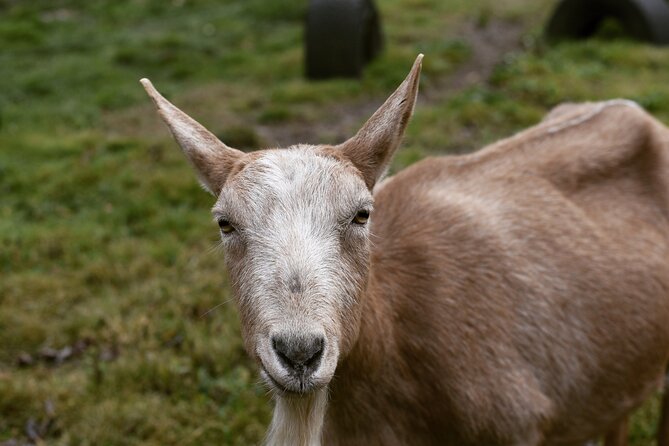
- Animal feeding and close animal time with poultry, pigs, goats, and even baby goats
- Hands-on composting learning including a temperature reading on the compost pile
- Meet ambassador goats Chuck and Larry and get time grooming and photos
A real working farm tour in the Adirondacks with max 6 people
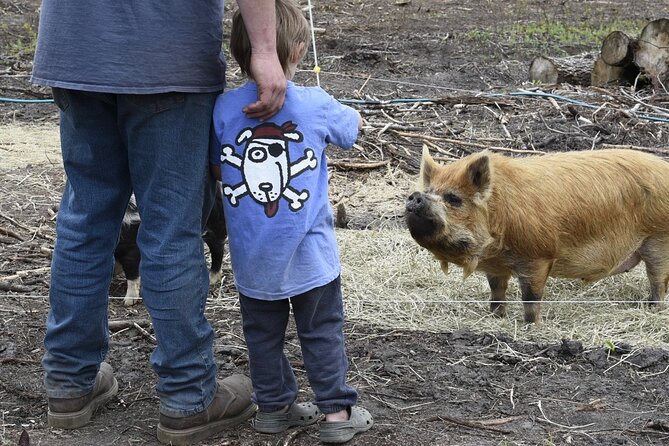
This is the kind of small-group farm tour that feels more like visiting a working American farm than doing a quick “look but don’t touch” stop. With a maximum of 6 travelers, you’re not queued up for photos while your guide powers through to the next group.
The format also keeps the lesson style grounded. You’re not getting lectured for 90 minutes. Instead, you’re bouncing between the market garden, animal areas, and farm systems, picking up how decisions connect—like why composting matters, or why certain animals are raised on pasture.
For your value math: $20 for about 1.5 hours is very reasonable when so much of the time is hands-on. Most paid farm visits at this level are mostly viewing; here you’re actively involved in tasks like harvesting and feeding.
You can also read our reviews of more tours and experiences in New York.
Meeting at Owls Head: timing, boot covers, and weather reality
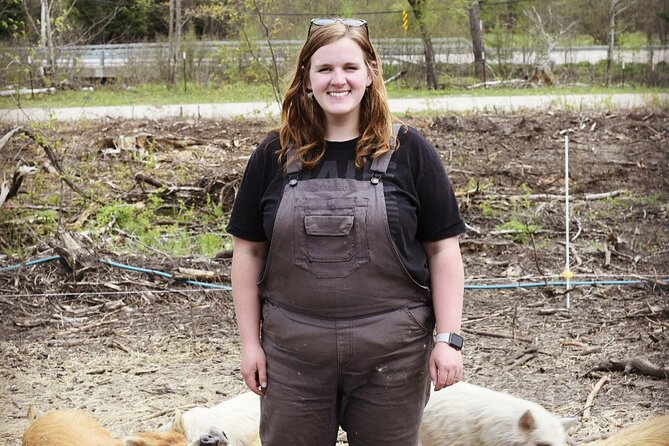
You’ll meet at 189 Ragged Lk Rd, Owls Head, NY 12969, with the start time listed as 1:00 pm. The tour ends back at the meeting point, so you don’t need to track a second location.
This is also a weather-dependent activity. If conditions are poor, you’ll be offered another date or a refund, so check day-of. And because it’s a working farm, expect uneven ground and the kind of dirt that sticks to shoes—quickly.
A practical tip from what’s worked for people: you may be offered boot covers on arrival, but bringing your own high work or garden boots (often called sloggers) can make the whole thing less stressful. If you’re the type who hates thinking about where your footwear might step, go tall and grippy from the start.
Getting into farm mode: history, boot covers, and harvesting organic market-garden veggies
The first chunk of your tour is all about getting set up and learning the baseline story. You’ll meet at the farm, get boot covers (or get pointed to where your own boots will fit the job), and settle in for a short orientation.
Then comes the part you’ll probably remember most: harvesting produce. You’ll visit the organic market garden, and you can harvest fresh veggies to take home. It’s not just a walk past rows; it’s structured so you know what you’re looking for and how to do the harvesting part right.
Why this matters for you: taking something home makes the farm feel real, not like a souvenir photo. Even if you’ve cooked with greens before, getting to pick what’s fresh and in season adds a new layer to dinner later.
Two small considerations. First, you’ll want to plan for carry-out. The tour includes produce harvesting, so bring something simple for transport (like a reusable bag). Second, because it’s a working garden, your pace will follow farm pace, not city pace.
Pigs, poultry, and goats on pasture: feeding time plus barn knowledge
After the garden, the tour shifts into animals—pasture first, then barn details. This is where the experience turns from educational to genuinely memorable because you get close to multiple types of livestock in a short time window.
You might see ducks and chickens first. Then the experience moves to pigs on pasture, where the tour includes collecting eggs and feeding treats to the pigs. If you like animals but get nervous in petting-zoo settings, this will feel more grounded because the guide connects each animal group to how the farm manages them day-to-day.
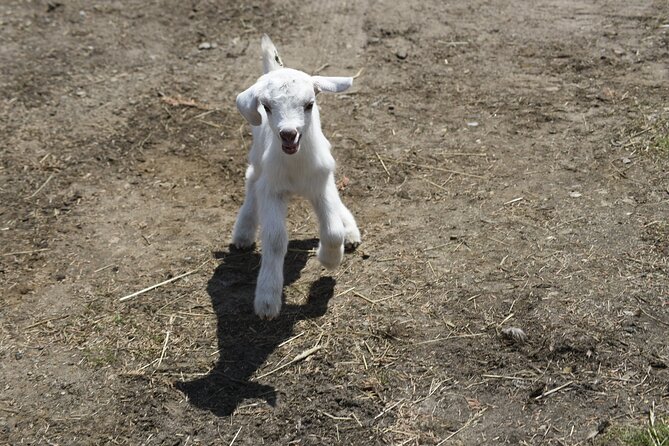
Next comes the goats. You’ll see how pasture raising works and how their routines fit the farm’s schedule. And yes, you may get extra hands-on time, including the chance to feed baby goats when the moment lines up with their feeding schedule.
A few practical animal-spotting details that make your expectations better:
- You may also encounter turkeys along the way, depending on what’s out in the areas that day.
- You may notice that not all chickens are the same. The tour includes time with different kinds of chickens, including broiler chickens, and the guide explains the basic difference between chicken types.
One of the biggest reasons this section earns strong marks is how the guides teach with actual steps. Ivan and Brandon focus on the what-and-why, while Laura tends to bring the farm story and animal context together. It doesn’t feel like generic “farm facts.” It feels like a family explaining the decisions behind the work.
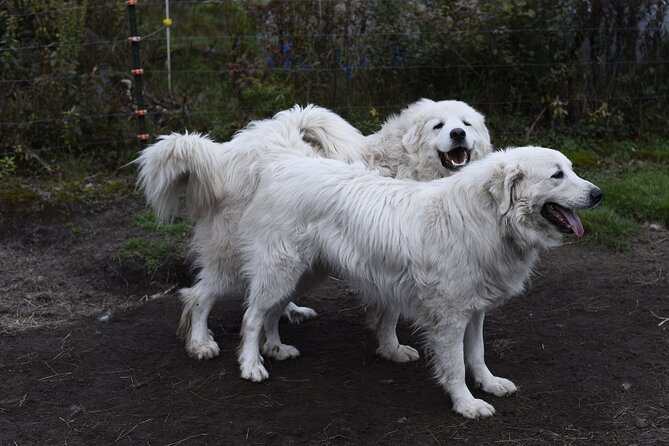
Also, keep an eye out for the farm guard dogs. If you’re expecting only livestock, you’ll likely notice the dogs have a role in protecting the farm’s animals and the family too. That adds a real layer of “this is how farms actually operate” understanding.
Composting made practical: take a temperature reading on the pile
The tour doesn’t stop at animals and gardens. You’ll also get real time with a working community composting system.
One of the standout moments here is the compost temperature reading. You’re not just told that compost “works.” You learn how they monitor the pile and what operating the system means in practice.
Brandon explains what goes into the compost and how the piles are managed day to day. Ivan walks through the temperature-check process, which makes the lesson feel like a farm tool, not a classroom slide.
Why you’ll care (even if you don’t compost at home)
You’re getting a feel for how closed-loop thinking supports the farm. Compost turns waste into soil input, and soil input supports healthier plants, which supports the garden. It’s a small chain, but it’s a real one—exactly the kind of system-level thinking that sticks after a short tour.
If you like “useful learning,” this is the piece that pays off later. You’ll walk away with a better sense of what compost piles need and why checking temperature matters.
Meet the ambassador goats Chuck and Larry, plus barn routines
The final animal focus zooms in on goat time, and it’s built around interaction. You’ll spend time grooming the ambassador goats—named Chuck and Larry—and you’ll have a chance for photos while you brush them.
Then the tour continues into barn details. The guides walk you through the goat routines, including steps in the process of milking, and they also show you the male goats housed in the barn area.
A detail that makes this part extra interesting: the guide explains things that most visitors never hear, like the fact that goats can have horns across different sexes. It’s the kind of farm knowledge that turns your brain from guessing mode into understanding mode.
If timing lines up, you may also see the baby-goat feeding setup—warm milk and a nipple-bucket arrangement, plus a bottle feed for the youngest kid. This part can feel both sweet and educational, because the guide ties the feeding setup to daily care rather than treating it like a spectacle.
And through the whole goat segment, you get a clear sense that “ambassador goats” aren’t just pets. They’re part of the farm’s public-facing education while still living as normal goats in a working setting.
Farm-to-fridge lessons you can actually explain to friends
The “how food gets from farm to fridge” angle isn’t presented as a buzzword here. You learn it through practical connections: what’s grown in the market garden, what gets fed to animals, how waste becomes compost, and how the farm’s systems support ongoing production.
You also get a clearer view of the local food system simply because the tour is structured around farm operations you can picture at home. If you’ve ever wondered why certain farming steps matter—like compost temperature or rotating how animals are handled—this tour gives you a concrete answer.
By the time you walk back to the meeting point, you’ll have the kind of explanation that makes sense: it’s not just “local food is good.” It’s “here’s how the farm keeps a cycle going, and here’s what each step does.”
Price and value: $20 for 90 minutes of real farm work
At $20 per person for about 1 hour 30 minutes, this tour is priced like a practical add-on to an Adirondacks day. The value comes from what’s included: harvesting produce, feeding animals, composting instruction, and a small-group format that keeps you close to the guides.
If you’re comparing options, here’s how I’d frame it for your decision. If you want a casual walk past animals, you’ll likely find cheaper or more self-guided things. But if you want structured learning + hands-on moments in a group capped at 6, the math gets better fast.
One more value perk: the tour uses a mobile ticket and is offered in English, so you’re not dealing with complicated logistics. That means more of your time stays focused on the farm itself.
Should you book the Cook Farm 1.5-hour tour?
Book it if you want an Adirondacks farm day that feels like work happening in real time—especially if you like hands-on tasks like harvesting and compost temperature checks. It’s also a strong choice for families or anyone who appreciates small-group attention and animal care routines explained step-by-step.
Skip it (or at least reconsider the timing) if muddy, uneven farm ground sounds like a headache. Bring tall boots, go when the weather cooperates, and you’ll get a lot more out of the experience.
FAQ
How long is the Cook Farm immersive farm experience?
It’s listed at about 1 hour 30 minutes.
Where is the meeting point?
You meet at 189 Ragged Lk Rd, Owls Head, NY 12969.
What time does the tour start?
The listed start time is 1:00 pm.
What is the group size limit?
The tour has a maximum of 6 travelers.
Is the tour ticket mobile, and is it in English?
Yes, it’s a mobile ticket experience, and it’s offered in English.
What animals might I see during the tour?
You may encounter goats, pigs, chickens, turkeys, and ducks.
Can I harvest vegetables to take home?
Yes. You’ll harvest from the organic market garden and you can take the produce home.
What should I wear?
Bring high, grippy boots. You may be offered boot covers at the farm, but tall boots help keep you comfortable on farm ground.
What happens if weather is poor?
This experience requires good weather. If it’s canceled due to poor weather, you’ll be offered a different date or a full refund.
Can I cancel and get a refund?
Yes. You can cancel up to 24 hours in advance for a full refund.