REVIEW · NEW YORK
Guided Lilymoore Alpaca Farm Tour
Book on Viator →Operated by Lilymoore Farm · Bookable on Viator
A farm tour like this is pure stress-free fun. At Lilymoore Alpaca Farm, you get a guided walk with plenty of hands-on time with alpacas and other animals, plus a chance to learn how they’re cared for and why they act the way they do. It’s a simple, family-friendly way to swap city noise for fresh air and farmyard chatter.
What I like most is the generous animal interaction. You don’t just look through a fence. You’ll get time to pet and feed alpacas and other animals while your host shares practical details you can actually use (like how they respond to gentle handling).
One thing to plan around: this experience runs best with good weather. If conditions are poor, the farm may reschedule you or offer a full refund, so keep an eye on the forecast.
In This Review
- Key highlights at Lilymoore Alpaca Farm
- Your 1-hour guided farm tour at 21 Moore Rd (no fluff, all animals)
- Meet the alpacas, llamas, huarizo, goats, and miniature pig up close
- What the guide tells you (care, feeding, and animal personalities that make sense)
- Feeding and petting time: how to make it enjoyable for you and the animals
- Goats that come out to play (and why that moment matters)
- Price and value: why $16.95 can make sense
- Who should book this Lilymoore Alpaca Farm tour
- Should you book it?
- FAQ
- How long is the Guided Lilymoore Alpaca Farm Tour?
- Where is the meeting point for the tour?
- How much does the tour cost?
- What animals will I meet during the tour?
- Do I need printed tickets?
- How big is the group for this tour?
- Are service animals allowed?
- What happens if the weather is bad?
- What is the cancellation policy?
Key highlights at Lilymoore Alpaca Farm
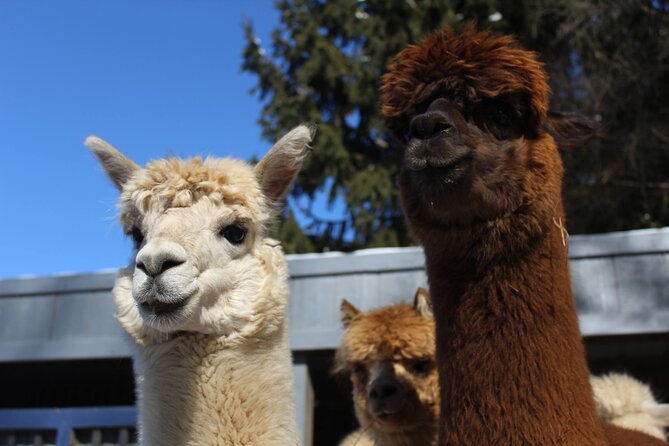
- Up-close alpaca and llama time with a real guide, not a quick drive-by
- Feeding and petting that keeps kids engaged without feeling rushed
- Goats that come out to play, plus plenty of opportunities for candid photos
- A mix of farm animals, including huarizo, a miniature pig, and often chickens and birds
- Small-group feel with a maximum of 25 people
- One-hour format, so it works even if you have a tight day plan
Your 1-hour guided farm tour at 21 Moore Rd (no fluff, all animals)
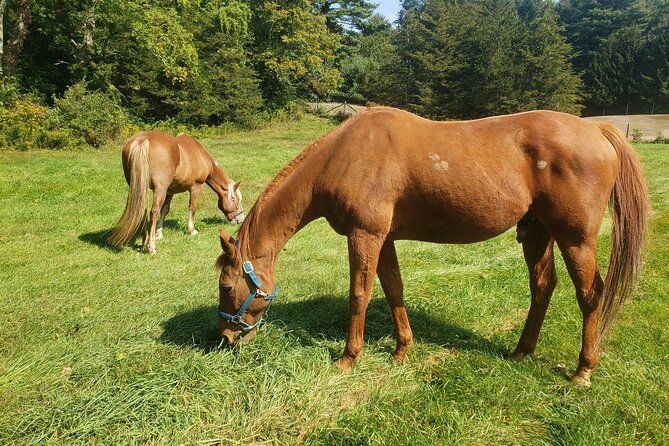
If you’re looking for a low-effort outing that still feels special, this one hits the mark. The tour runs about one hour, which is long enough to meet the animals, get a few teachable moments, and still make it easy to fit into a day with kids or a busy travel itinerary. For a set price, you’re not juggling tickets, timing puzzles, or long rides—just show up at the meeting point on 21 Moore Rd, Pleasant Valley, NY 12569 and head in.
I also appreciate the scale. With a maximum of 25 travelers, the group size stays manageable, so you’re not shouting to a guide while animals are moving faster than your camera. It’s the kind of tour where you can actually hear the explanations and spend time near the animals rather than hovering at the edge.
You’ll use a mobile ticket, which makes it easy to keep everything in one place. Confirmation comes at booking, so you don’t have to stress about last-minute paperwork. And because it’s family-oriented, it’s not one of those experiences where you feel underdressed or out of place if you’re traveling with little ones.
The biggest practical takeaway: arrive with comfortable shoes and be ready for a real farm environment. Even when everything stays calm, animals can be curious, people tend to get excited, and the ground is what it is on a working farm.
You can also read our reviews of more tours and experiences in New York.
Meet the alpacas, llamas, huarizo, goats, and miniature pig up close
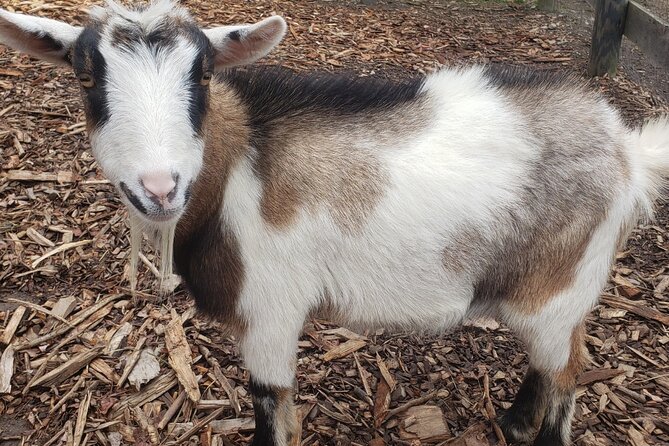
The core of this tour is simple: you get up close with a good variety of animals, led by a guide who helps you understand what you’re seeing. You’ll meet alpacas and llamas, plus huarizo (a cross between alpacas and llamas), goats, and a miniature pig. That variety matters because it keeps the experience from turning into just a single “look at fluffy animals” moment.
I love that the animals aren’t all treated the same. Alpacas and llamas have their own body language and habits, and your guide points out how to interact in a way that keeps it positive for everyone. Goats are a different story. They tend to be more active and will often come out to play, which is exactly the kind of energy kids love because it feels like a living show, not a lecture.
One extra detail that adds charm: you might also encounter chickens and birds on the farm. It’s not just alpaca focus; it’s a working animal scene where the rest of the barnyard has its own personality. And the miniature pig, in particular, tends to bring that extra “how is this so cute” factor into the hour.
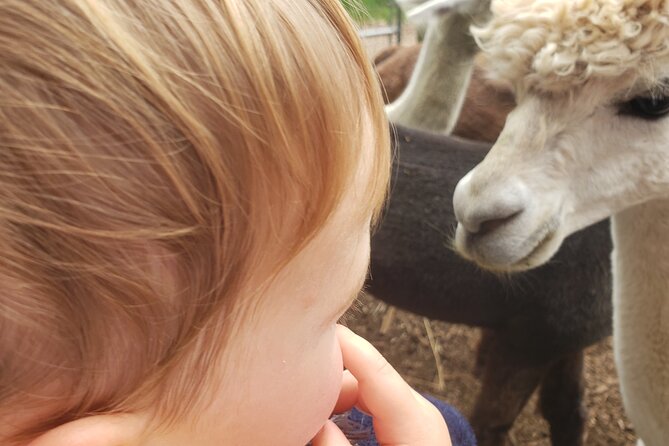
You’ll also have time to pose for photos with an alpaca, so you’re not leaving without proof you actually did something fun. Just remember: in a farm setting, photos happen when animals cooperate—not when you demand it. The good news is the tour keeps it relaxed, so you’re not under pressure.
What the guide tells you (care, feeding, and animal personalities that make sense)
A big reason this tour earns strong praise is what happens while you’re standing next to the animals. Your guide isn’t just herding you from one pen to the next. They share insider info on care and feeding as you meet each species, so the experience sticks longer than a simple “aww, alpaca” moment.
This is where the hour feels like more than entertainment. When you learn the basics—what animals eat, how feeding works safely, how they respond to calm movement—you start to notice behaviors you’d otherwise miss. That’s especially helpful if you’ve never been around farm animals before. Suddenly you’re not guessing. You’re reading the room.
Also, the guide-style communication is practical. One host (Steve) is specifically part of the vibe, and his responses reflect that the farm cares about friendly interaction and animal welfare. You’ll feel that in how the tour is paced: it’s built for hands-on contact, but it isn’t careless.
Here’s the real value for you: you can take what you learn and apply it to everyday animal encounters. Even if you don’t visit farms again right away, you’ll carry a better sense of how to approach animals with patience and respect. That makes future farm visits feel calmer and safer, not chaotic and guesswork-heavy.
Feeding and petting time: how to make it enjoyable for you and the animals
The most memorable part of this kind of tour is often the contact time. In this case, you’ll spend time petting and feeding animals, and it’s structured enough that most ages can participate. That’s important. Some animal experiences are all “look, don’t touch.” This one gives you actual hands-on moments.
To get the best experience, keep your expectations realistic. Animals can be social, but they’re also animals. If one alpaca is in a mood, the guide can help you shift to another. The tour pacing gives you enough time to get the interaction you came for without feeling like you’re being rushed.
A few practical habits will help. Stay gentle, move slowly, and listen for the guide’s cues. If your group is excited (which it will be), it’s easy to accidentally get too hands-on too fast. The guide’s job is to keep the interaction smooth and safe, and if you follow their lead, feeding becomes a fun highlight rather than a stressful scramble.
Also, plan for photos without turning it into a full-on photo shoot. The alpaca photo moment and goat play moments are great, but trying to force a perfect shot can frustrate both you and the animals. A calmer approach usually gets better results anyway.
If you’re traveling with kids, this is a good “confidence builder” outing. They can participate directly, ask simple questions, and see animals up close. For many families, that’s the kind of memory that lasts longer than a souvenir shop stop.
Goats that come out to play (and why that moment matters)
Goats don’t just sit there politely. In a tour like this, they tend to show up as the playful wildcard. When the goats come out, the experience feels more alive and less staged. Kids often light up because goats create motion: curious heads, quick steps, and the kind of interaction that feels like a real farm day.
That’s also why this tour is a great fit for mixed-age families. Older kids might be more interested in learning, while little kids just want the animals that move. Goats give you both. You can watch them closely, then still get the calmer alpaca and llama time for quieter attention.
This also affects your photo chances. If you’re hoping for action shots—goats in motion, alpacas standing near you, and a pig that’s apparently involved in everything—timing matters. The hour format helps because you’re not waiting around for the “right moment” for hours. The guide builds the tour so you hit the interaction windows while the animals are responsive.
The subtle upside for you: you leave feeling like you did something genuine. A lot of “cute animal” attractions are one-note. Here, the animal behavior keeps the hour from feeling repetitive.
Price and value: why $16.95 can make sense
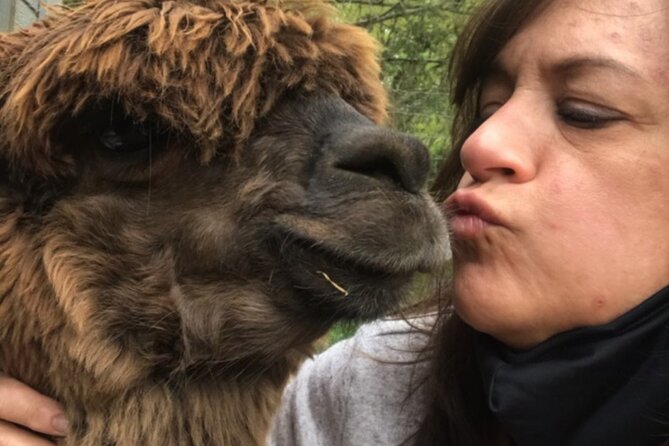
At $16.95 per person, this tour is priced like a small splurge with real payoff. It’s not a big theme-park ticket. It’s an experience built around one hour of guided, hands-on interaction with multiple animal types. That’s key for value: you’re paying for the guide’s time and for the fact that you get actual access, not just a pass-by view.
If you’re traveling with kids, the value calculation usually becomes simple. Kids often want interaction, not distance. Here, your money goes toward feeding, petting, and guided explanations. That’s different from paying to watch animals from far away.
For adults, the value is learning plus atmosphere. You’re not just taking photos. You’re getting explanations that help you interpret animal behavior. Even if you’re not an expert, you’ll feel like you left with something usable.
One practical note: this experience works best when you can show up and enjoy it without rushing. If your day is extremely tight, a farm tour might feel like it’s too slow, especially if you’re used to city pacing. But for most travelers—especially families—it’s a sweet middle ground.
Who should book this Lilymoore Alpaca Farm tour
This tour is ideal if you want an uncomplicated, family-friendly animal experience in Pleasant Valley. I’d put it at the top of your list if:
- you’re traveling with kids who do best with hands-on activities
- you want a short guided stop that doesn’t eat your whole day
- you like learning basics about animals instead of just browsing
- you want a farm setting with multiple species, not just alpacas
It also works well for multi-generational groups. Many people can participate, and the guide-led pace helps keep everyone involved.
If you’re the type of traveler who hates being around animals, or you prefer only self-guided, quiet museum-style experiences, this might not be your thing. But if you like farm life even a little, this is a solid bet.
Should you book it?
I’d book the Lilymoore Alpaca Farm guided tour if you want a straightforward hour that mixes real animal time with guide-led explanations. The strongest reason to go is the interaction: you get to pet and feed, you’re not just observing, and the goats plus alpacas make the hour feel lively.
Just plan around weather since the experience needs good conditions. If you’re flexible, that’s easy to handle.
If your goal is a memorable, family-pleasing farm stop near New York that doesn’t require a whole day commitment, this one fits well.
FAQ
How long is the Guided Lilymoore Alpaca Farm Tour?
The tour lasts about 1 hour.
Where is the meeting point for the tour?
The meeting point is 21 Moore Rd, Pleasant Valley, NY 12569, USA.
How much does the tour cost?
It costs $16.95 per person.
What animals will I meet during the tour?
You’ll be introduced to alpacas, llamas, huarizo, goats, and a miniature pig. The farm also includes other animals like chickens and birds.
Do I need printed tickets?
No. This experience uses a mobile ticket.
How big is the group for this tour?
The tour has a maximum of 25 travelers.
Are service animals allowed?
Yes, service animals are allowed.
What happens if the weather is bad?
This experience requires good weather. If it’s canceled due to poor weather, you’ll be offered a different date or a full refund.
What is the cancellation policy?
You can cancel for free up to 24 hours in advance of the experience start time for a full refund.