
A private waterfall, off the main trails. This Da Lat trek connects Twin Beans Farm with a private hidden waterfall you can enjoy without the usual crowds. It is one of those rural days that feels quietly different from the standard city tour loop.
I love the way the walk is built around real working farms, not just photo stops. You get to see how a sturgeon/caviar operation works and then move into the coffee process at the plantation-roastery set at Twin Beans.
One catch: you start at Twin Beans Farm, about 40 minutes from Da Lat, and there is no hotel pickup. If you rely on someone else to find the place for you, add a little buffer.
In This Review
- Key highlights at a glance
- Starting at Twin Beans Farm: more than just a meet-up
- The first trek: forest time before the sturgeon farm
- Sturgeon farm stop: how the farming process works
- The hidden waterfall: private time and a real climb
- Coffee plantation and roastery tour: farm-to-cup, not just a tasting
- Itinerary feel and timing: how to plan your day
- Price and value: why $10 adds up fast
- Getting there and local logistics that actually matter
- Who should book this trek, and who should think twice
- Should you book the 3-Hours Trekking Tour to Hidden Waterfall and Sturgeon Farm?
- FAQ
- FAQ
- How long is the trekking tour?
- Where do I meet the guide?
- What is included in the tour price?
- Is lunch included?
- Is hotel pickup or drop-off included?
- Do I need swimwear?
- What languages are available for the guide?
Key highlights at a glance
- A not-public waterfall stop, where you get time to yourselves
- Sturgeon farm visit with a hands-on look at how farming works
- Coffee plantation and roastery tour in a working farm setting
- Trekking through the forest with a guide who can explain what you see
- Small-group feel that can turn into real conversation time
- Swim-friendly waterfall time (bring swimwear)
Starting at Twin Beans Farm: more than just a meet-up
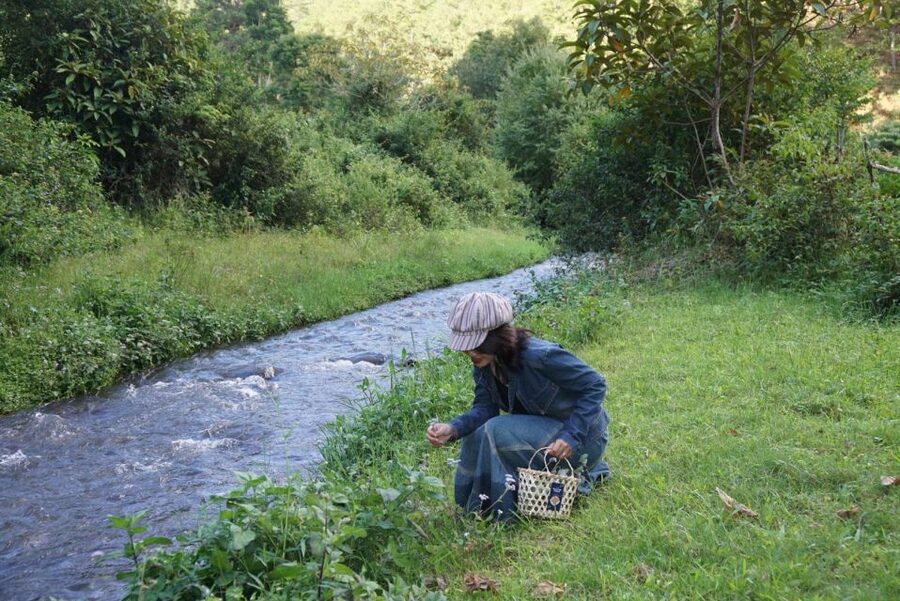
The day begins at Twin Beans Farm in Da Sar commune, Lac Duong district (Lam Dong province). It is roughly 20 km / 40 minutes from Da Lat downtown, and that distance matters. You are not just walking around the city edge—you are getting out into the countryside, where the farms and trails actually begin.
Getting there is simple if you have your own wheels, and a bit more annoying if you do not. The tour area is reachable by motorbike, car, or Grab/taxi, and the listing notes a taxi cost around 300,000 VND one way. Still, more than one rider pointed out that it can be tricky for drivers to locate the farm using GPS alone, so it helps to have the exact meeting instructions ready on your phone.
I also like that you start at the farm itself. You are not rushing through a bunch of unrelated handoffs, and you are already on the right kind of terrain—forest edges first, then farms, then waterfall.
You can also read our reviews of more tours and experiences in Dalat.

The first trek: forest time before the sturgeon farm
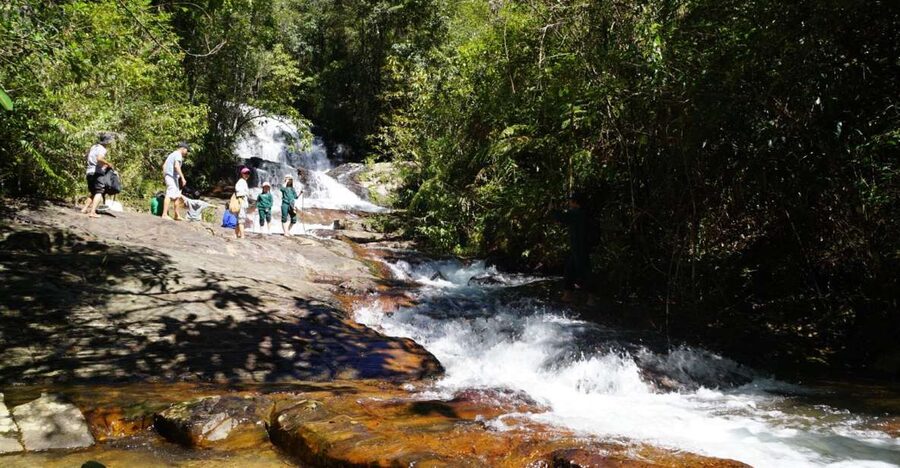
After you meet at Twin Beans, the walk starts with about 30 minutes trekking in the forest. This is the “get your legs ready” portion, and it is also where the day switches from road noise to bird sounds and shade.
The forest section also sets expectations for the rest of the trek. You are not doing a long mountain hike, but you do need comfortable shoes and a normal amount of hiking stamina. Think uneven paths and dirt footing more than city sidewalks.
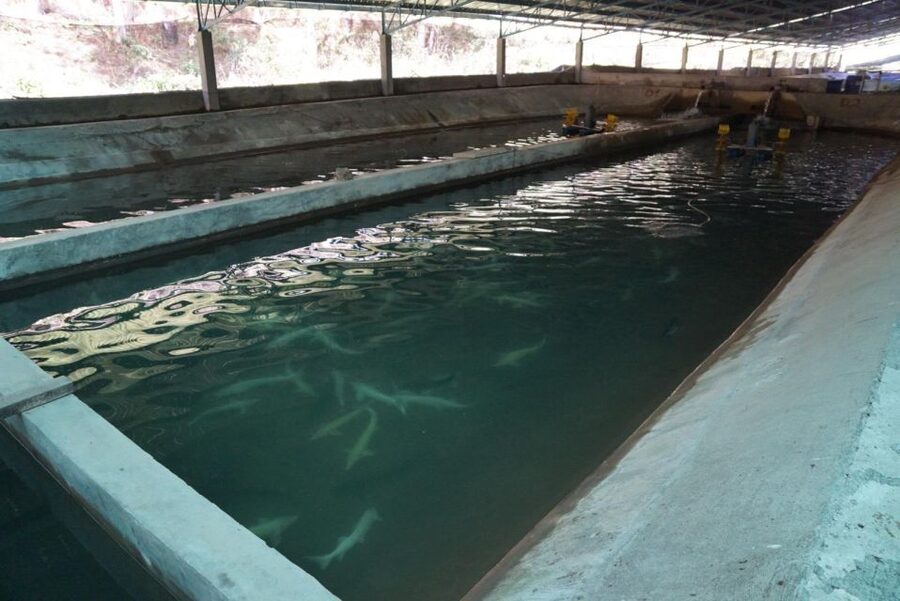
Then you arrive at the sturgeon farm. This is one of the largest sturgeon operations in the Da Lat area, and the big practical value is that you are not just looking at a roadside display. You learn about the process inside a working operation that is not open to the general public.
Sturgeon farm stop: how the farming process works
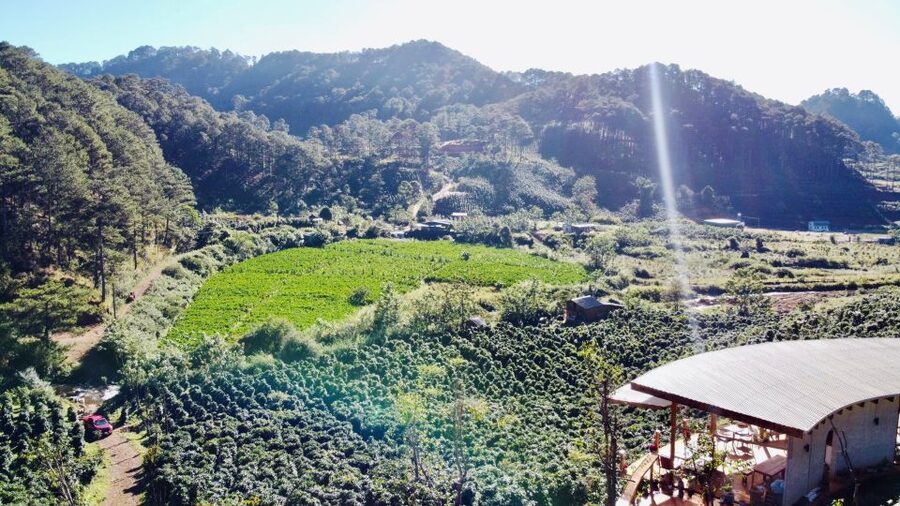
The sturgeon visit is where the tour becomes educational in a down-to-earth way. Your guide (often Hieu, and you may also see the name written as Hue) talks you through how sturgeon farming works, step by step, and what the farm is doing to keep the operation running day to day.
One reason this stop lands well is that it changes how you see “caviar” as a product. Instead of a vague luxury label, you connect it to actual farming routines—how the animals are raised and managed, and how the farm’s systems support the end goal. The tone stays practical and simple, especially because your guide explains things in English/Vietnamese.
This is also a good moment to slow down and ask questions. If your group is small, you can usually get a more personal conversation instead of being swept along. A few people described having the guide almost entirely focused on them, which is a nice way to get context without feeling rushed.
The hidden waterfall: private time and a real climb
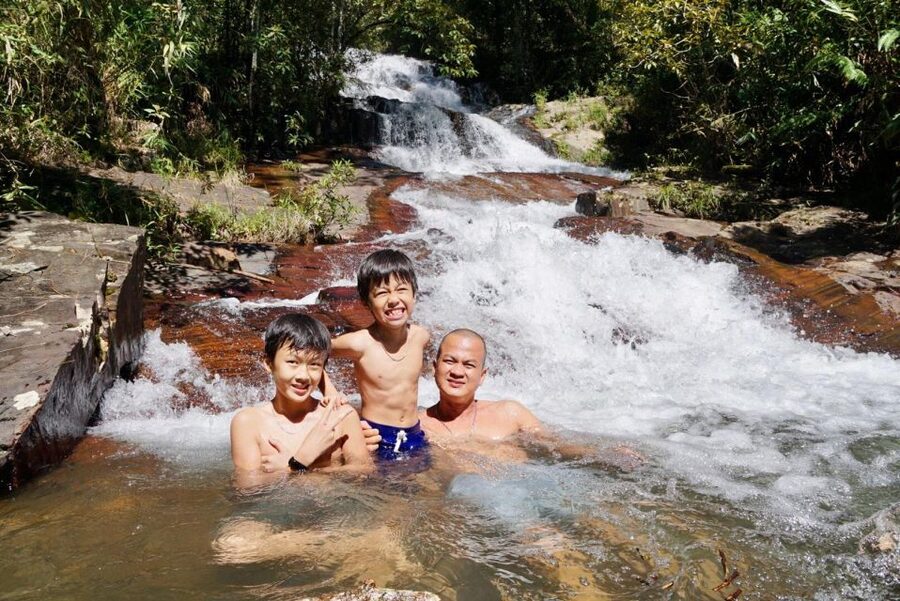
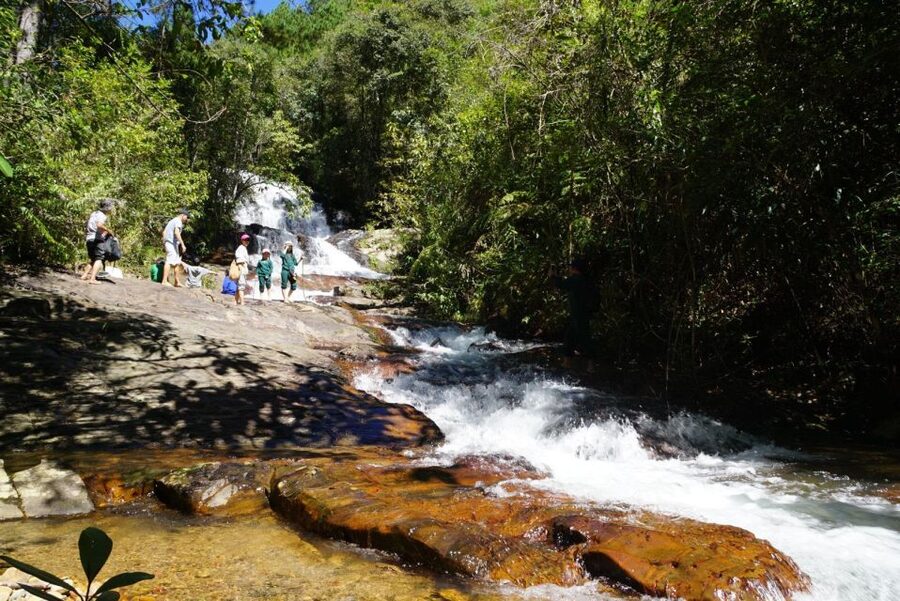
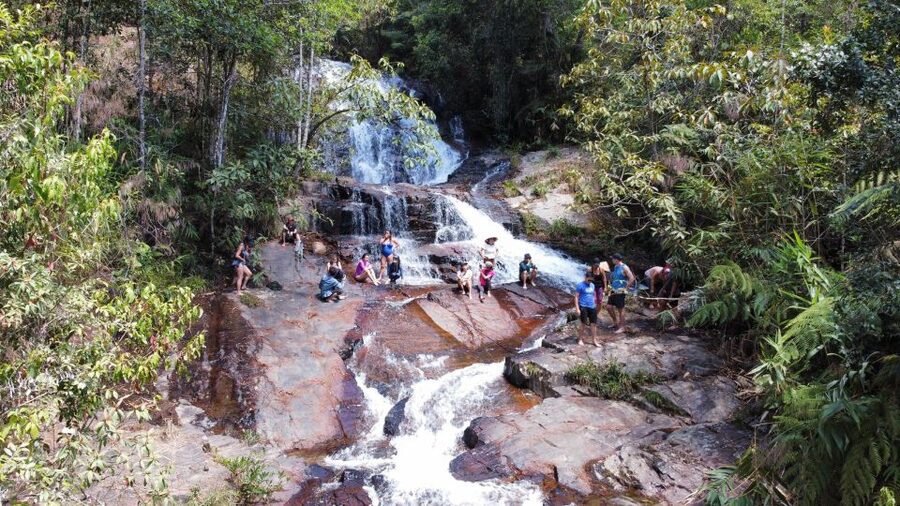
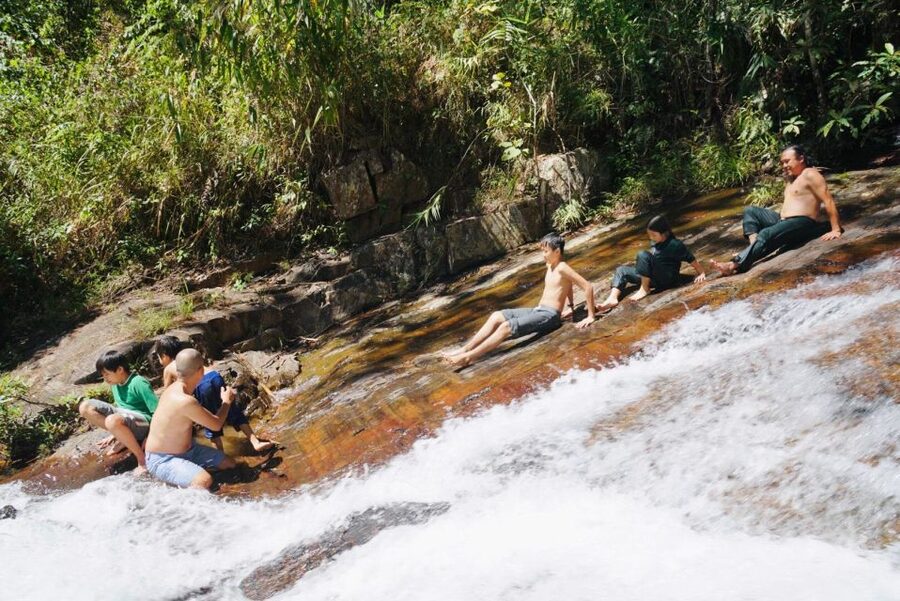
The best part of the day is the waterfall segment, and it is built around one key idea: this waterfall is not publicly accessible. That means you are not competing with the usual crowd flow you might expect around famous falls.
After the sturgeon farm, you continue trekking to the hidden waterfall. Expect a more “adventure” feel than a flat nature walk. One helpful heads-up from experiences shared by previous visitors: there is a climb up involved, and the waterfall time can be about 40 minutes depending on pace and how long you want to stay.
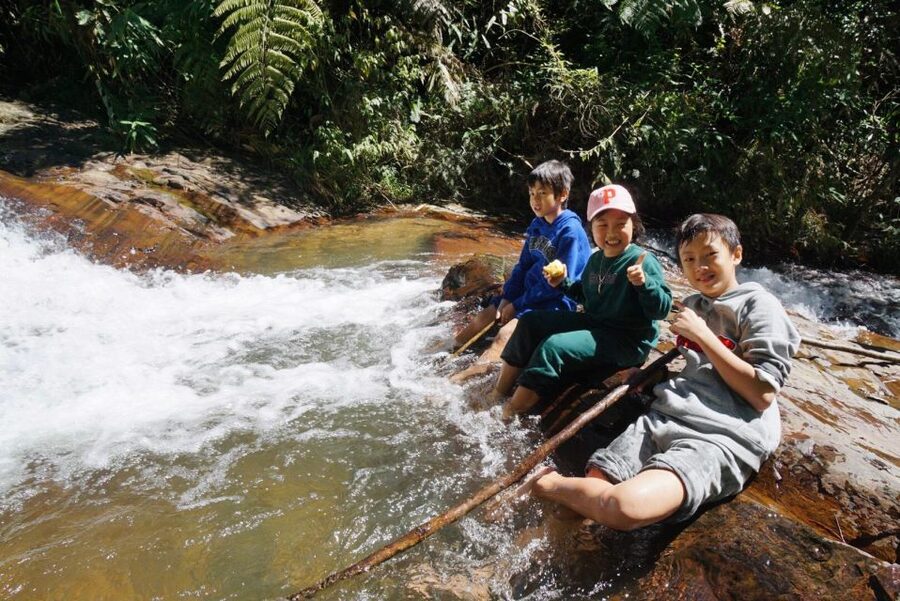
You will have time at the water for your own enjoyment. That can mean photos, sitting, and a swim—since the tour specifically tells you to bring swimwear. If the water conditions are safe and your guide confirms it on the day, it is a great way to cool off after the climb.
A small detail that makes the waterfall feel even more special: the farm side of the experience has a friendly, lived-in vibe. People have mentioned Twin Beans farm dogs walking along the road with the group during parts of the day. It is not staged; it feels like you are moving through someone’s daily working environment.
Coffee plantation and roastery tour: farm-to-cup, not just a tasting
After the waterfall, you head back to Twin Beans Farm. This is your reset moment—walk off the trek fatigue, drink something, and settle into the plantation setting.
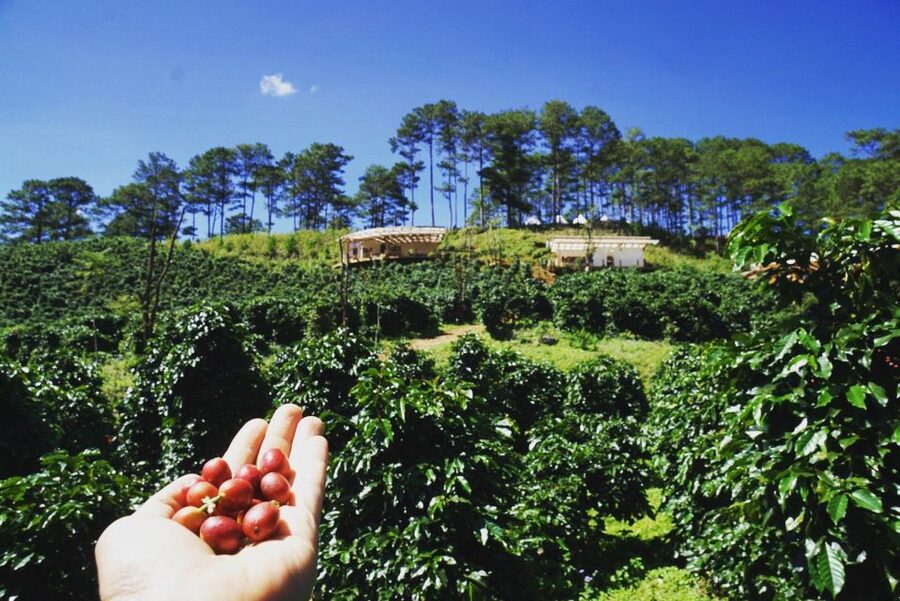
The tour includes a coffee plantation and roastery tour, plus a welcome drink. That is the important part: you are not only sampling coffee at a café counter. You get the production side—how the plantation works and how beans move through the roasting process.
Your tour also gives you a “buy something real” opportunity. You can pick up coffee beans as a souvenir, which is usually the best kind of memento. It is compact, transport-friendly, and it matches the actual farm you visited.
What is not included: coffee drinks at a coffee shop. The info states you can enjoy coffee afterward in the plantation, but drinks are not included. So plan to budget for the beverage if you want it. Even so, the value is strong because the production tour is part of what you pay for.
Also, this farm-to-cup stop is a nice bridge to local life. Da Lat coffee has a whole culture around it, and having it connected to a working plantation makes the experience feel grounded rather than like a generic “tasting.”
Itinerary feel and timing: how to plan your day
On paper, the tour duration is listed as 3 to 6 hours, and that wide range is not random. It depends on start times and how the day flows with walking pace and how long you want at the waterfall and coffee area.
In real terms, the waterfall and farm segments are the ones that can stretch. One practical tip: if you are planning transportation back to Da Lat, build in extra time for a café-style break. Some people reported the tour running about 45 minutes longer because the group took time at the coffee stop and enjoyed drinks.
That matters if you have dinner reservations or another appointment. The tour ends back at the meeting point, so your return plan should be flexible. If you need a taxi back, the farm staff can arrange one, but it may take time to arrive.
Price and value: why $10 adds up fast
At $10 per person, this tour is priced like a local activity, not an “experience package.” The value comes from three things you typically pay separately for in most places: guide time, farm access, and entry fees.
Included costs are clear:
- English/Vietnamese speaking guide
- Entrance fees to the sturgeon farm and hidden waterfall
- Water and a welcome drink
- Coffee plantation and roastery tour
When you break it down, you are paying for access to areas that would otherwise be hard to reach or hard to justify alone: a large sturgeon farm not open to the public, and a waterfall you can only reach through this kind of organized trekking route.
The other value factor is the guide’s ability to connect dots between agriculture and daily life. In small groups, that can turn into a genuinely interesting conversation, not just a walking script.
If you want a simple rule: if you like countryside, farming, and walking (even moderate walking), this price is a strong deal.
Getting there and local logistics that actually matter
This is where I try to save you frustration.
You do not get hotel pickup or drop-off, so you need your own ride or a taxi arranged by yourself. The meeting point is 20 km from Da Lat, and the listing notes Grab/taxi options around 300k VND one way.
If you are driving yourself, consider a scooter if you are comfortable on rural roads. One practical piece of advice shared by prior visitors: scooter rental often costs less than Grab or taxi, and the roads are generally good, though the final stretch (around the last 100 meters) can be a bit rocky.
If you are relying on drivers, keep expectations realistic about GPS. People noted that GPS may fail to guide you smoothly to the meeting stop, because service can be patchy and the exact pinpoint can be hard to find. That is why it helps to arrive a little early and be ready with directions.
Who should book this trek, and who should think twice
This tour fits best if you want a rural, working-farm day around Da Lat. You will like it if you:
- enjoy short treks and want forest time
- like agriculture-focused experiences (sturgeon plus coffee)
- want a waterfall stop that is not a busy public viewpoint
- care about small details like the chance to swim and buy beans afterward
It is not ideal if you want a super-easy, fully paved walk, or if you dislike any uphill climb. The hidden waterfall access involves a climb, and the tour asks you to bring swimwear and comfortable shoes—signals that it is meant to be active.
If you have very limited mobility or you dislike getting muddy, you may want a gentler nature option instead.
Should you book the 3-Hours Trekking Tour to Hidden Waterfall and Sturgeon Farm?
Yes—if you want an off-the-beaten-path Da Lat day that mixes sturgeon farming, a private waterfall, and coffee production in one smooth loop. The standout value is access: a sturgeon farm that is not open to everyone and a waterfall that is not publicly accessible.
Book it if you are ready for a real trek (even if it is not a full hike), and if you can manage getting to Twin Beans Farm on your own. If that logistics part sounds annoying, plan a buffer and confirm transport early so you do not lose time searching for the meeting point.
FAQ
FAQ
How long is the trekking tour?
The tour duration is listed as 3 to 6 hours. Starting times depend on availability.
Where do I meet the guide?
Meet at Twin Beans Farm, Da Sar commune, Lac Duong district, Lam Dong province. It is about 20 km (around 40 minutes) from Da Lat downtown.
What is included in the tour price?
Included are an English/Vietnamese speaking guide, entrance fees to the sturgeon farm and hidden waterfall, water, a welcome drink, and a coffee plantation/roastery tour.
Is lunch included?
No. Lunch is not included and can be arranged for an extra cost.
Is hotel pickup or drop-off included?
No. Hotel pickup and drop-off are not included. The tour starts and ends back at Twin Beans Farm.
Do I need swimwear?
Yes. The tour asks you to bring swimwear, since there is time at the waterfall.
What languages are available for the guide?
The guide speaks English and Vietnamese.