REVIEW · HOI AN
From Hoi An: Cooking Class at Organic Farm
Book on GetYourGuide →Operated by Lemon Basil Cookery & Restaurant · Bookable on GetYourGuide
Tra Que is a real working vegetable village. This 3-hour class blends an organic farm tour with hands-on cooking of classic dishes in a small group. I especially like the English-speaking chefs and the farm-to-table feel, where you start with fresh ingredients and then cook them together. One thing to plan for: there’s no pickup, so you’ll need to get to Lemon Basil Cookery & Restaurant on your own.
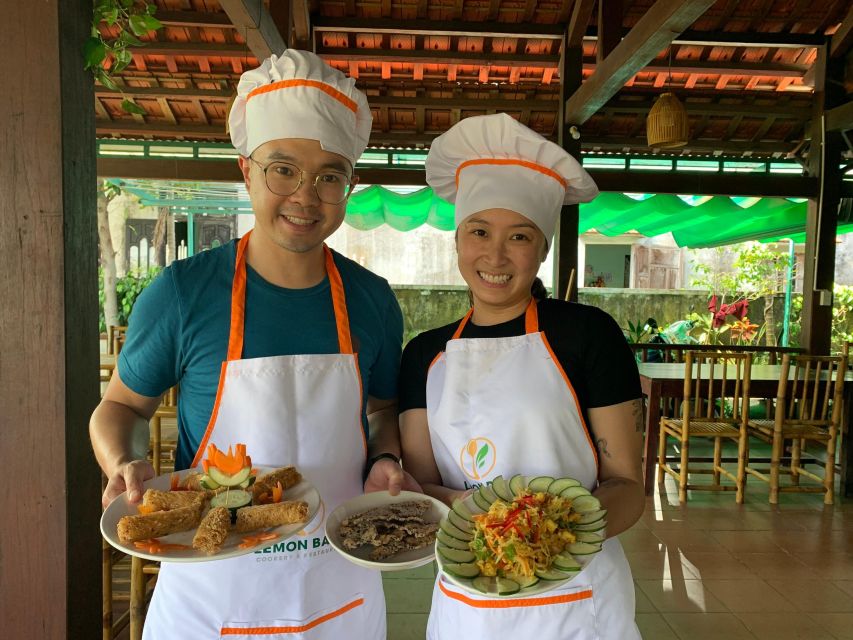
You’ll make and eat four Vietnamese favorites, including Tra Que Spring Rolls, Green Papaya Salad, Fish in Clay Pot, and Bánh Xèo (Vietnamese crispy pancake). I also like how the teaching feels practical and friendly, with a group size capped at 10 so you’re not lost in a crowd. If you’re hoping for a long, leisurely meal, note the timing is tight—this is built as a focused 3-hour experience.
In This Review
- Key highlights you’ll care about
- A small-group farm kitchen in Tra Que village
- Where to go, when to arrive, and how the 3 hours flow
- Organic farm tour: herbs, vegetables, and the real prep behind dinner
- Tra Que Spring Rolls: turning farm ingredients into rollable bites
- Green Papaya Salad: sour, fresh, and all about flavor balance
- Fish in Clay Pot: comforting, fragrant, and built for texture
- Bánh Xèo (Vietnamese crispy pancake): the fun, the challenge, the payoff
- Communal dining: eating together, not just tasting
- English instruction you can actually follow
- Price and value: why $27 makes sense here
- Who should book (and who might prefer something else)
- Practical tips for a smooth class day
- Should you book Lemon Basil Cookery in Tra Que?
- FAQ
- Do I need to arrange my own transportation to the cooking class?
- What dishes will I cook in this class?
- How long is the cooking class?
- Is the instruction available in English?
- How big is the group?
- Are dietary restrictions accommodated?
Key highlights you’ll care about
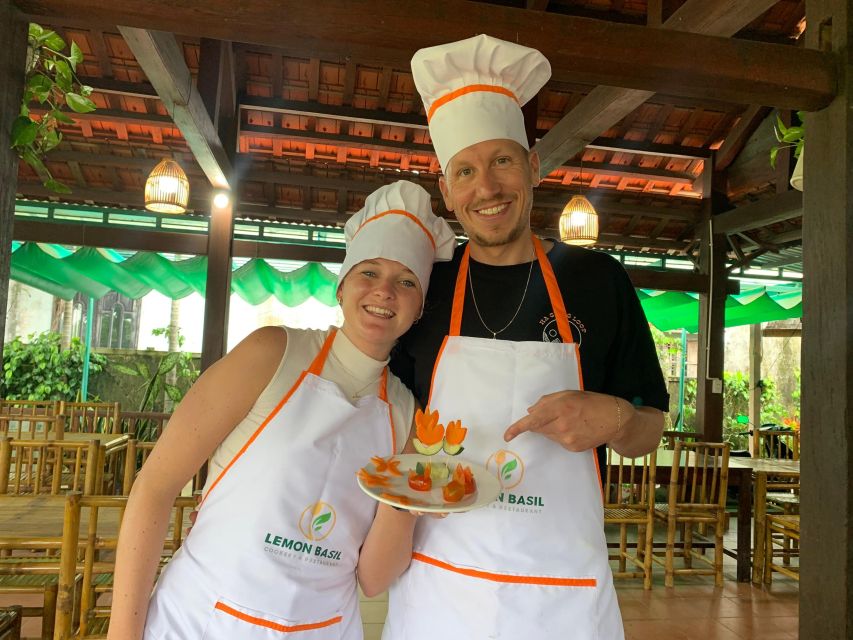
- Organic farm tour first, with a look at how herbs and vegetables are grown in Tra Que
- Hands-on cooking guided by English-speaking chefs for multiple classic dishes
- Small group (max 10 people), so you get real attention while you cook
- Four iconic dishes: Tra Que Spring Rolls, Green Papaya Salad, Fish in Clay Pot, and Bánh Xèo
- Communal dining so you eat what you help make
- Dietary requests are welcomed in advance, not left for you to figure out later
A small-group farm kitchen in Tra Que village
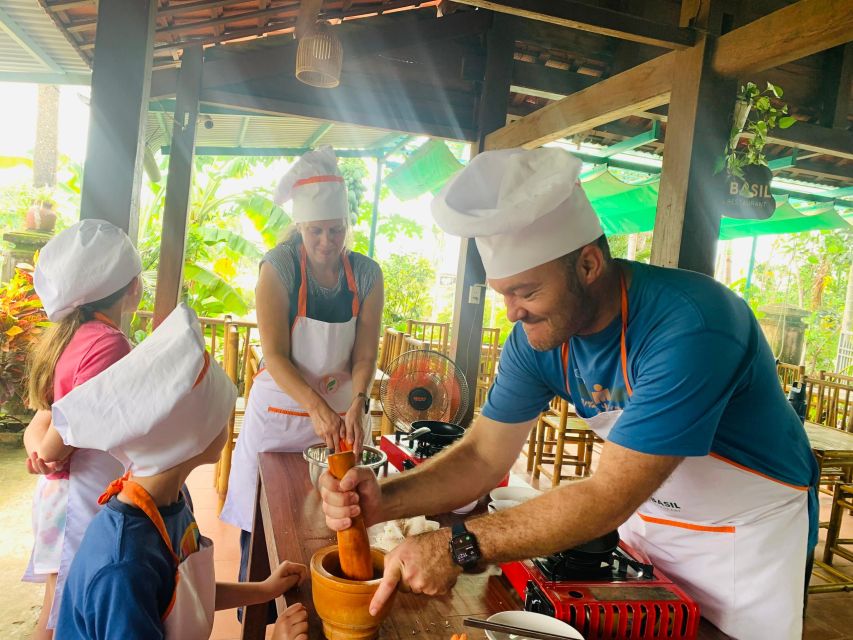
This cooking class is based in the Tra Que vegetable village area, where the whole mood is calmer than the busy parts of Hoi An. Lemon Basil Cookery & Restaurant is the place to find—it’s signposted, and it’s set in the greenery that makes Tra Que feel different.
What makes this experience stand out is the way it connects the farm work to the cooking. You don’t just get a lesson in theory; you start by seeing ingredients grown there, then you cook Vietnamese food that depends on those flavors. It’s the kind of setup that makes your meal taste more intentional.
Two things you’ll likely appreciate right away:
- The small-group format (limited to 10 participants).
- The fact that you’re cooking with an English-speaking instructor and team.
And a quick heads-up: because you arrive independently, you’ll want to build a little buffer for travel time so you don’t feel rushed at the start.
You can also read our reviews of more tours and experiences in Hoi An.
Where to go, when to arrive, and how the 3 hours flow
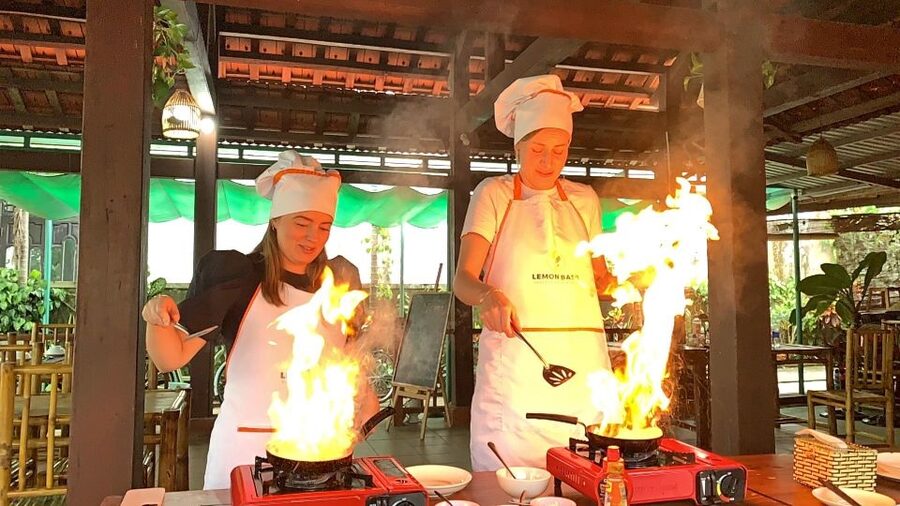
The class runs about 3 hours (listed as approximately 3–3:30). You’ll meet at Lemon Basil Cookery & Restaurant in Tra Que vegetable village. Aim to arrive 5–10 minutes early so you can check in and get comfortable before cooking starts.
No pickup is included. That means your plan is simple but on you: get yourself to the meeting point, then the class schedule takes over. In practice, that’s a good model if you like control and hate waiting around for vans.
Once you’re there, the flow is straightforward:
- Brief intro and farm-side start
- Farm tour and ingredient prep
- Hands-on cooking in the kitchen
- Communal meal
- Finish with a completion certificate
The timing is designed so you cook multiple dishes rather than spending all day on one. If you’re the type who gets bored waiting, this structure is a plus. If you prefer a long, slow dinner where you can linger, you may wish you had more time after the class ends.
Organic farm tour: herbs, vegetables, and the real prep behind dinner
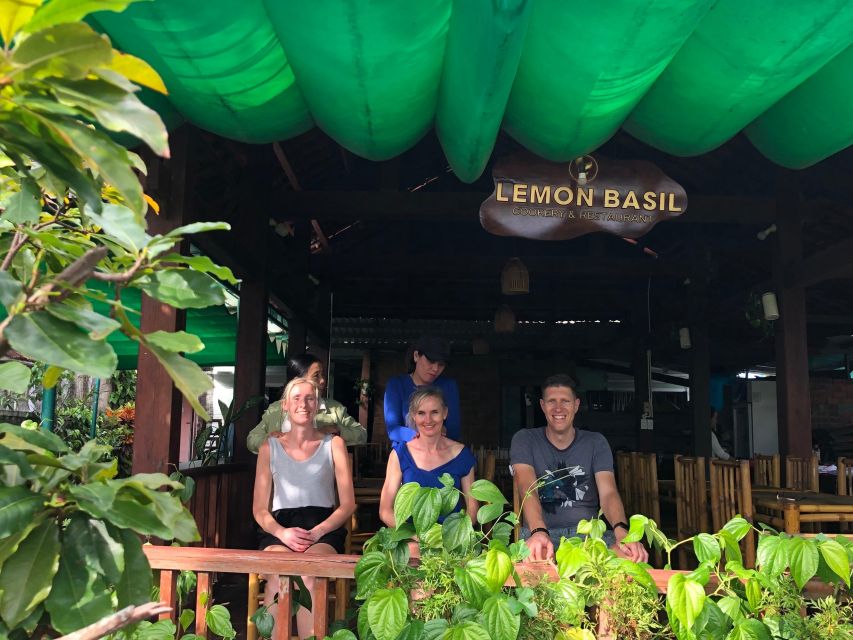
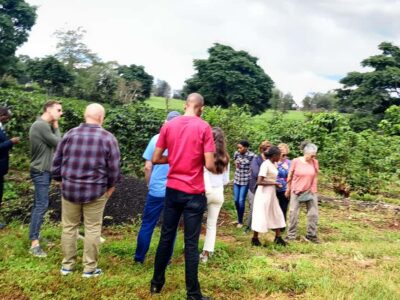
A big chunk of the value here is the organic farm tour before you cook. You’ll see the vegetables and herbs that matter for Vietnamese dishes, especially the Tra Que ingredients you’ll use shortly after.
In the farm portion, you can expect a look at the working garden space and how the team grows and tends crops. Some sessions include hands-on moments like planting small greens or watering—so it’s not just walking and watching. You’ll also get introduced to herbs and crops used in Vietnamese cooking, which helps when you later taste the dishes you make.
Why this matters for you: Vietnamese food often tastes like balance—fresh herbs, sour notes, salty depth, and a little sweetness. Seeing ingredients up close makes that balance easier to understand, even if you’re not a cooking expert.
Also, this farm start helps the class feel less like a staged performance. You’re in an active agricultural setting, not just a classroom with ingredients set out.
Tra Que Spring Rolls: turning farm ingredients into rollable bites
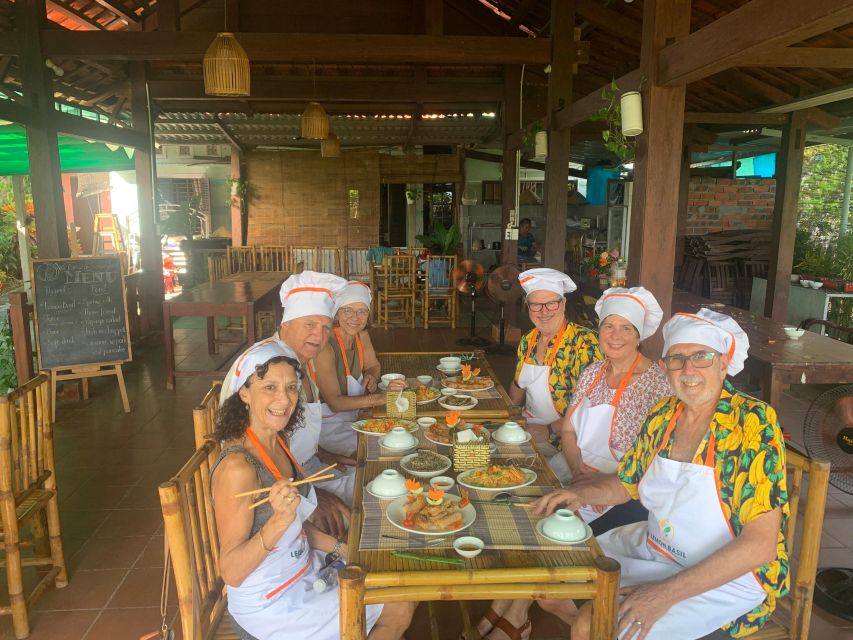
Your first cooking focus is Tra Que Spring Rolls. The class starts this dish early because it’s a great way to build momentum: you learn a basic Vietnamese technique and get a direct taste of how the fresh ingredients work together.
What you can expect:
- You’ll be given ingredients to use for the spring rolls.
- You’ll cook them as part of the shared group effort, not just watch and plate.
The reason spring rolls work so well in a class like this is that they’re tactile. Rolling, assembling, and tasting teach you what seasoning and herb flavor do in real time. It’s also a dish that often feels forgiving—especially when the team is guiding and you’re working with fresh, ready-to-use components.
For dietary needs: the class notes flexibility for all dietaries, and you’re asked to inform restrictions in advance. So if you avoid certain ingredients, tell them early so adjustments can happen before you’re deep into cooking.
Green Papaya Salad: sour, fresh, and all about flavor balance
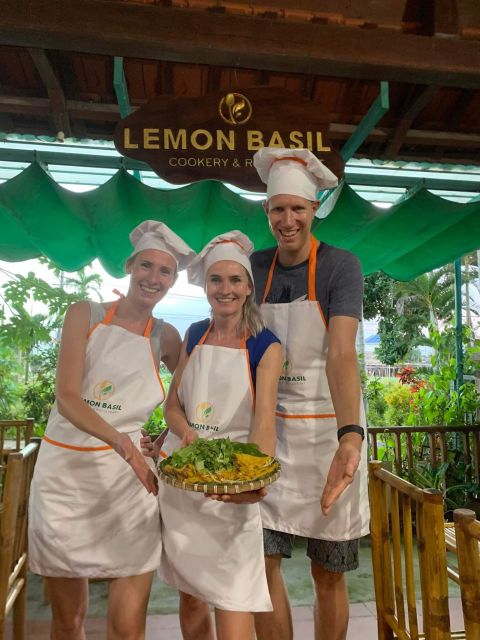
Next up is Green Papaya Salad, one of those Vietnamese dishes that seems simple until you actually taste the layers of flavor. The class approach here is not about memorizing a recipe card. It’s about understanding the balance you’re aiming for while you cook.
You’ll learn the nuances of flavor as you prepare the dish. Expect guidance on how Vietnamese-style salads often hit multiple notes at once: crisp freshness, tang, and seasoning depth. In a hands-on class, you get to see how small changes affect the final taste.
If you’re cooking for someone picky, this dish is a useful skill. Once you understand how the balance works, you can adjust the level of sourness or seasoning next time at home.

Fish in Clay Pot: comforting, fragrant, and built for texture
Then you’ll tackle Fish in Clay Pot. This is the kind of Vietnamese comfort food that depends on gentle cooking and a sauce that clings to the fish. The clay pot method is great for learning because it’s about texture and aroma, not just taste.
In class terms, you’ll be given the ingredients and you’ll cook alongside the chef team. You’ll learn how this dish comes together as a whole—how the fish is cooked and how the flavors build through the pot.
Why this is valuable: clay pot cooking teaches you patience. It’s less about high-speed “showy” techniques and more about letting heat do its job. When you eat it after, you’ll likely understand why Vietnamese families reach for this method when they want something satisfying.
Bánh Xèo (Vietnamese crispy pancake): the fun, the challenge, the payoff
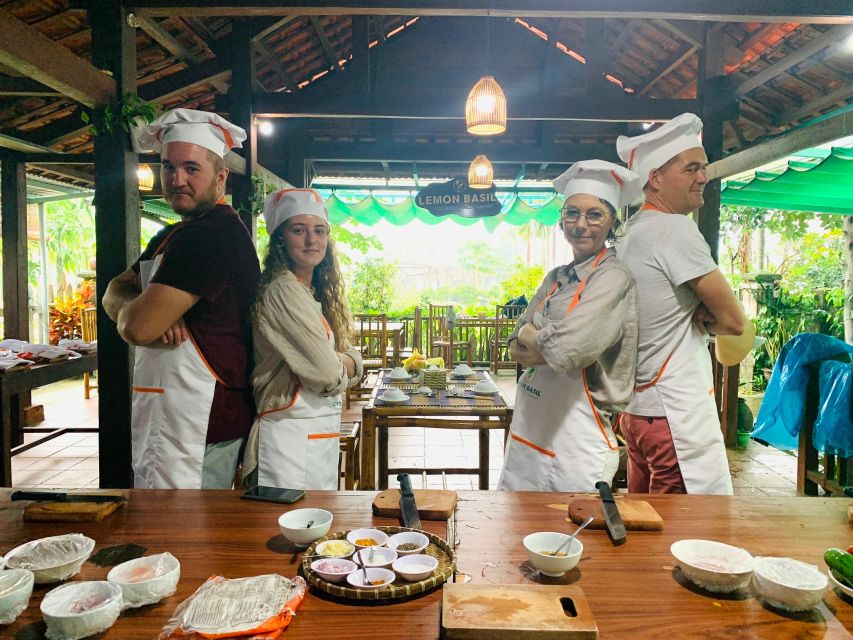
Finally, you’ll make Bánh Xèo, the Vietnamese crispy pancake. This is often the most entertaining dish in a cooking class because the result depends on technique, heat, and timing—and it’s easy to feel proud when your pancake actually lands right.
You’ll learn how to prepare the crispy pancake as part of the group cooking. Expect support from the English-speaking chef so you can focus on the important parts instead of getting stuck on unfamiliar steps.
This is the kind of dish where your senses matter:
- You’re watching for the batter to set.
- You’re listening and watching for crispness.
- You’re tasting to check seasoning.
And yes, it’s a shared effort. In a small group (max 10), you’re cooking long enough to feel like you contributed, but short enough that the class stays energetic.
Communal dining: eating together, not just tasting
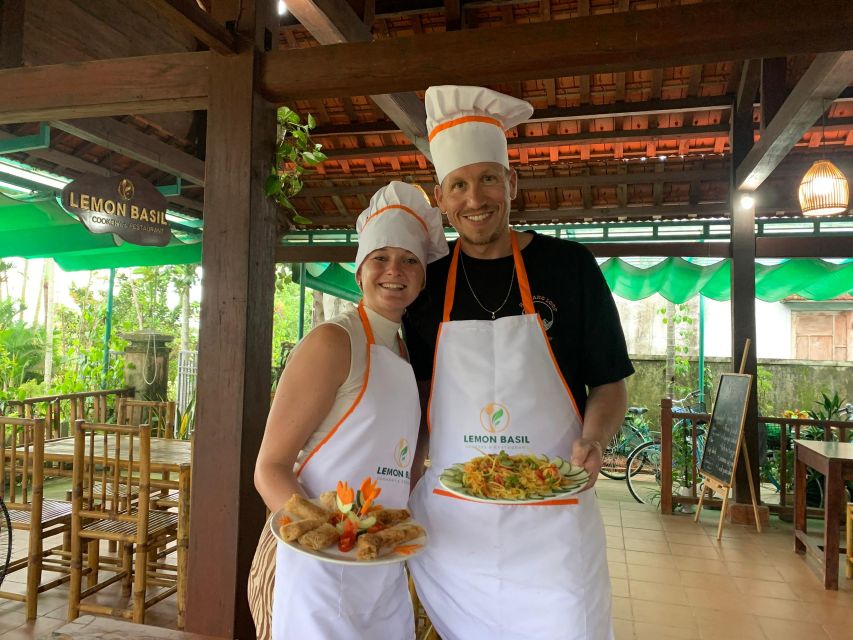
After cooking, you eat what you make in a communal dining setup. This matters more than it sounds. When you sit with the group and share the plates, you get a clearer picture of how the dishes work together as a meal.
You’re not only sampling—you’re also learning from what others made. Even in a small group, different cooking styles show up in little ways: crispness, sauce strength, and how herbs are balanced.
In some sessions, the meal may wrap with fruit such as mango, pink jackfruit, and lychees, and there can be small extras like a fruit gift mentioned in feedback. You shouldn’t plan your day around extras, but it’s nice if they happen.
Also, if you’re worried you won’t be satisfied: the class is structured around multiple dishes, and the communal meal is built to let you eat full portions of what you cooked.
English instruction you can actually follow
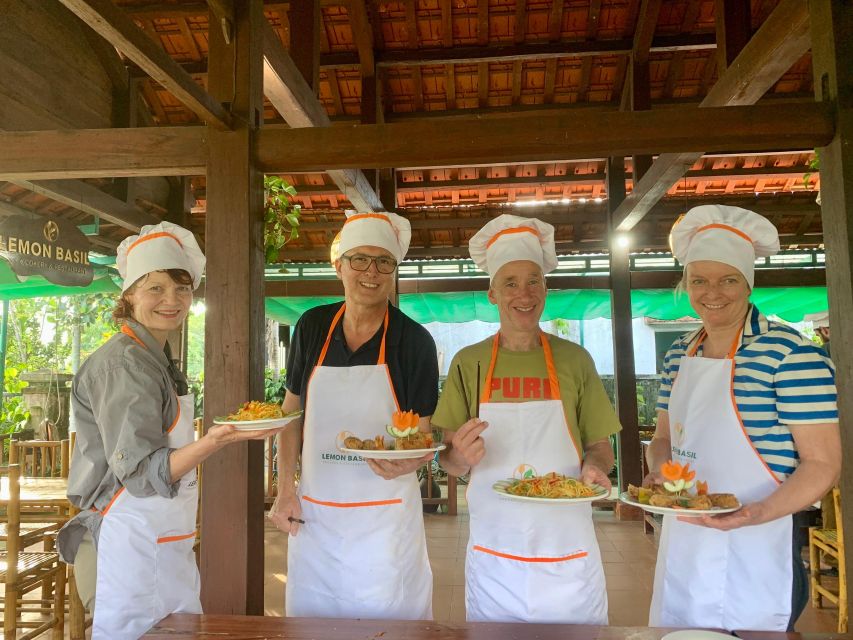
A practical advantage: the class is taught in English, by skilled chefs. That sounds basic, but it changes the whole experience. Vietnamese cooking has terms for herbs, sauces, and texture cues, and you’ll want those explained clearly.
Based on class feedback, hosts such as Min/Minh and family members like Jessica are often mentioned by name. You’ll likely feel like you’re cooking with a real family team rather than a formal school.
The tone is also friendly and interactive. The best part is that English instruction doesn’t just explain ingredients—it helps you understand what to watch for while cooking.
Price and value: why $27 makes sense here
At $27 per person for about 3 hours, this class looks like good value for Hoi An—mainly because you’re getting several things at once:
- Farm tour with organic ingredients
- Hands-on cooking of four dishes
- Communal dining (you eat what you cook)
- English-speaking guidance
- A certificate of completion
A lot of food experiences charge extra for one “main” activity, then add the rest as optional add-ons. Here, the whole package is built around multiple recipes and a meal in one block of time.
The only cost that can surprise you is the one you control: transportation to and from the meeting point. Pick-up isn’t included, so factor in your taxi, bike, or Grab route to Tra Que.
If you’re comparing options, I’d judge this class on whether you want:
- a short, guided, do-it-yourself cooking session
- a farm start with organic ingredients
- a meal you helped make
If that’s your style, this price usually feels fair.
Who should book (and who might prefer something else)
This cooking class is a great fit if you:
- Want a practical Vietnamese cooking experience, not just a tasting tour
- Like small groups and direct guidance while you cook
- Enjoy farm settings and want context for where ingredients come from
- Need help with English instruction while learning recipes
- Have dietary restrictions and can message them in advance
You might consider a different option if you:
- Strongly rely on pickup or want everything handled for you
- Prefer a longer sit-down meal with fewer cooking steps
- Want only one specific dish (this class includes four)
Practical tips for a smooth class day
Here’s how to make the most of your 3 hours without stress:
- Arrive 5–10 minutes early at Lemon Basil Cookery & Restaurant so you can settle in.
- Bring a clear list of dietary restrictions before the day, since the class asks you to inform them in advance.
- Come hungry. You’ll cook multiple dishes and then eat in a communal meal setup.
- Wear clothes you don’t mind getting a little messy. Hands-on cooking in an active kitchen can be unpredictable.
- Since pick-up isn’t included, plan your route to Tra Que ahead of time so you’re not scrambling.
Should you book Lemon Basil Cookery in Tra Que?
If you want a cooking class that feels grounded in real ingredients and real instruction, I think this is a strong choice. The mix of organic farm tour + four hands-on dishes + communal meal is the kind of combo that gives you more than a photo and a vague memory. It’s practical, social, and short enough to fit nicely into an Hoi An schedule.
Book it if you value small-group attention and you’re comfortable getting yourself to Tra Que. Skip it if you need pickup included or you’re looking for a longer, slower food experience.
FAQ
Do I need to arrange my own transportation to the cooking class?
Yes. Pick-up is not included, so you’ll need to make your way independently to Lemon Basil Cookery & Restaurant in Tra Que vegetable village.
What dishes will I cook in this class?
You’ll cook four dishes: Tra Que Spring Rolls, Green Papaya Salad, Fish in Clay Pot, and Vietnamese Crispy Pancake (Bánh Xèo).
How long is the cooking class?
The class runs for about 3 hours (approximately 3–3:30).
Is the instruction available in English?
Yes. The chefs/instructor provide instruction in English.
How big is the group?
It’s a small group limited to 10 participants.
Are dietary restrictions accommodated?
You’re asked to inform the team of any dietary restrictions in advance, and the class states it is flexible for all dietaries.