REVIEW · HANOI
Hanoi Farm Tour and Cooking Class with Local Family
Book on GetYourGuide →Operated by Farm tour and Home cooking in Hanoi · Bookable on GetYourGuide
A 4-hour detour turns Hanoi rural. This private experience pairs a visit to a market older than a millennium with a walk through working farms, then finishes in a home kitchen for hands-on Vietnamese cooking. I like how you see everyday food life up close, not just shop-and-snap photos. I also like that the day ends with a real meal you help make, plus tea and traditional cake, right where local life happens.
One thing to consider: the market can be intense. Depending on the day, you may see stalls trading animals and people working side by side, and that can feel a bit direct if you’re squeamish or sensitive about such things. If you prefer a gentler pace, focus on the produce sections and the farm part, which feels calm and green right after the city noise.
In This Review
- Key Things I’d Put on Your Must-Do List
- The Drive Out of Hanoi: Why This Half-Day Works
- Entering the 1000-Year-Old Market: What You’ll See and How to Read It
- If it’s market day
- If it’s not market day
- How to make this stop enjoyable
- Vegetable Fields Right Next Door: Bitter Melon, Soybeans, and Farmer Talk
- What you’ll walk through
- What makes farmer conversations worth it
- Cooking Class in a Family Home: How the Lesson Feels
- Choosing your menu
- What you actually do during class
- Family atmosphere you can’t fake
- Meal, Tea, and Traditional Cake: Eating Like You Belong
- Price and Value: Why $43 Often Feels Like More
- Who This Hanoi Countryside Experience Is Perfect For
- FAQ
- FAQ
- How long is the Hanoi Farm Tour and Cooking Class?
- Where does the tour meet, and where does it end?
- Is hotel pickup included?
- What is included in the price?
- What happens if my visit isn’t on market day?
- Is the tour suitable for everyone?
- Should You Book This Tour?
Key Things I’d Put on Your Must-Do List
- A market with serious age: an old trading area tied to the Le King Dynasty era (1428)
- Hands-on farm time: walk vegetable beds and fruit gardens while you talk with working farmers
- Real market details: expect everything from baskets and tools to local specialties and daily routines
- Cook with guidance in a family home: you cook traditional dishes using fresh ingredients
- Meal included: eat what you make, with tea and traditional cake as part of the experience
The Drive Out of Hanoi: Why This Half-Day Works
You start from a meeting point in Hoài Đức, then head west from central Hanoi for about 35 to 40 minutes. The village is around 18 km from the old quarter, so it’s close enough for a half-day plan, but far enough that you feel the change in air and pace.
Here’s the practical bit: the tour notes recommend getting a taxi to reach the village. That makes sense. You’ll avoid the hassle of squeezing through Hanoi’s traffic with transfers that may not be worth the time. Once you arrive, the day feels like a focused “day on the ground” rather than a long day of commuting.
Since this is a private group, you’re not stuck doing the same slow shuffle as a large bus tour. You can ask questions, pause to watch, and actually connect the dots between what you buy at the market and what you cook later.
You can also read our reviews of more tours and experiences in Hanoi.
Entering the 1000-Year-Old Market: What You’ll See and How to Read It
The market visit is usually the headline, and it’s where the day starts telling a story. The local guide brings you into a market that’s been in operation since the Le King Dynasty in 1428. Even if you’ve visited Vietnamese markets before, this one has a specific rhythm: lots of hand-to-hand trading, constant motion, and vendors working like they’ve done it forever.
If it’s market day
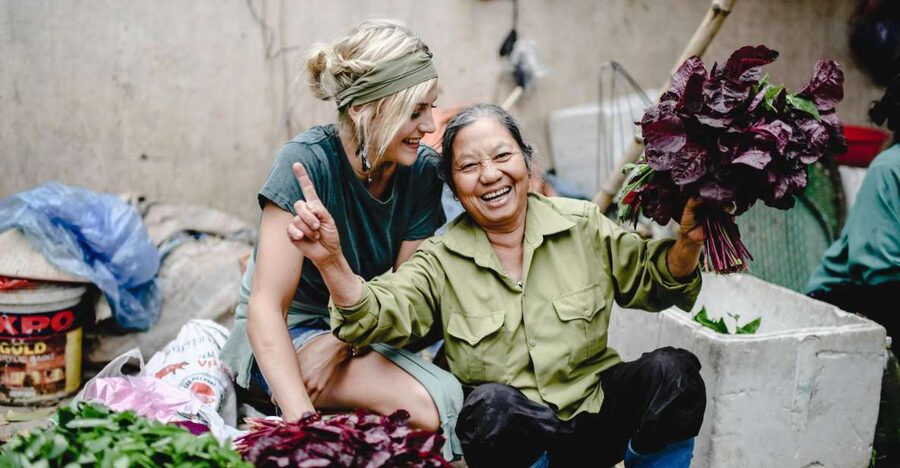
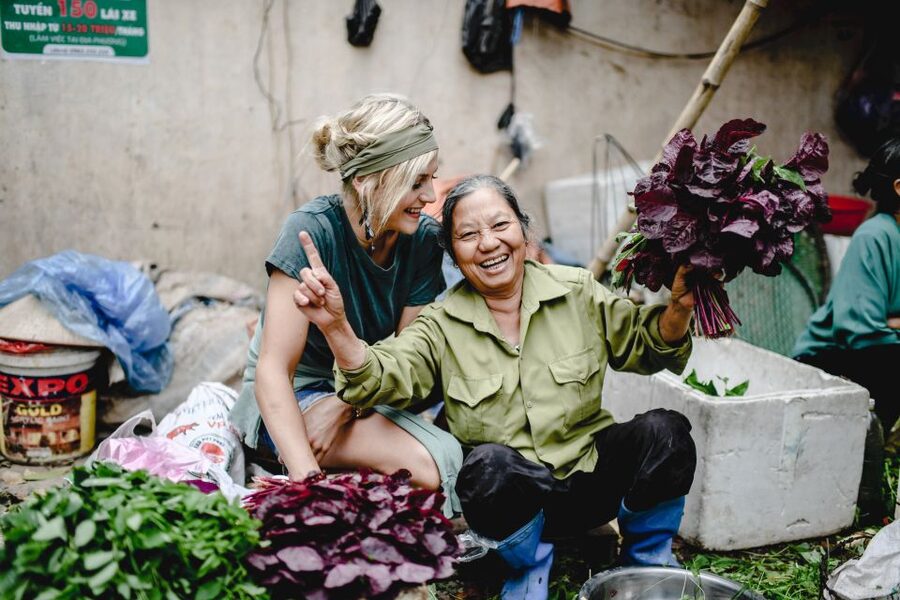
If your timing lines up with a market day (typically two or three times per week), you’ll see crowds from nearby villages coming to trade. The tour description specifically mentions animals such as dogs, cats, pigs, chickens, and ducks—along with bamboo baskets. You might also notice details that are easy to miss in a quick “tourist pass,” like older women chewing betel and areca nut and blacksmiths working with bright braziers.
That’s the value here: you’re not only seeing goods. You’re seeing work. Markets in North Vietnam aren’t just shopping—they’re supply lines and social hubs.
If it’s not market day
Not every day is a big market day. If you arrive when it’s quieter, you’ll visit another market with local produce such as fish, vegetables, fruits, and meat. It still delivers the same big benefit—getting your bearings in how locals think about ingredients and daily needs.
How to make this stop enjoyable
Bring a mindset shift. Instead of trying to spot everything, pick 2–3 items and track them through the day. For example: leafy greens for cooking, a fruit you might see later in the garden, or a staple you notice in the household kitchen. This makes the market feel less like a blur and more like part of a recipe trail.
Vegetable Fields Right Next Door: Bitter Melon, Soybeans, and Farmer Talk
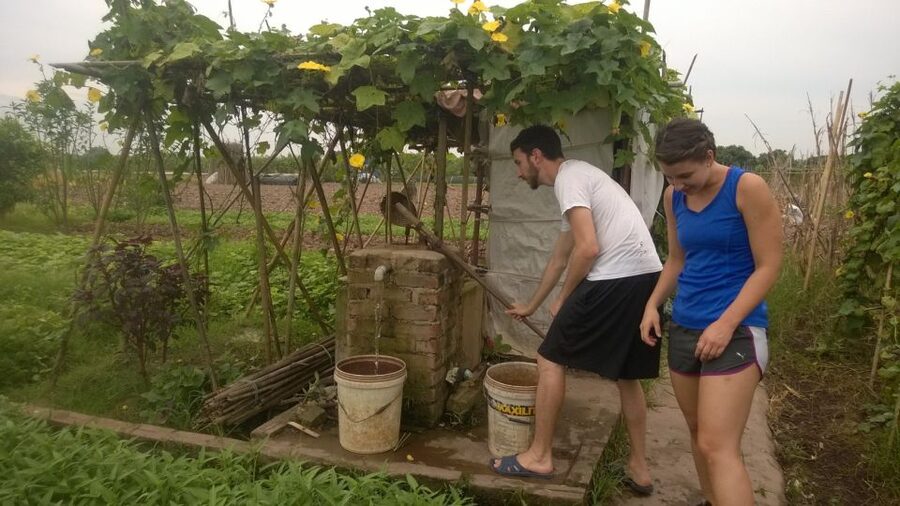
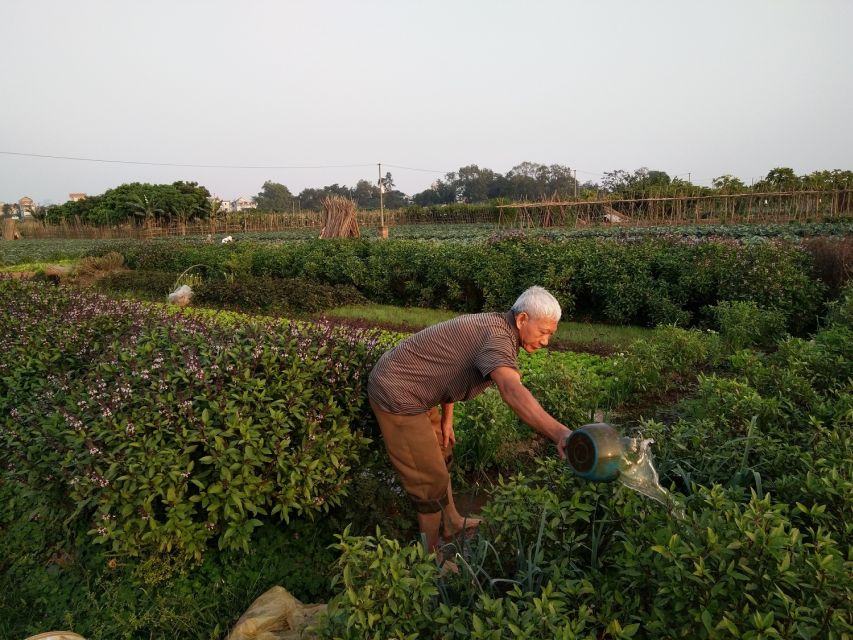
After the market, you step into fields that grow what you just saw—or what will likely show up on your cooking table later. The tour goes to vegetable farms right next door, which is a big deal. It keeps the day grounded: ingredients don’t travel far in this story. You walk from trading to cultivation.
What you’ll walk through
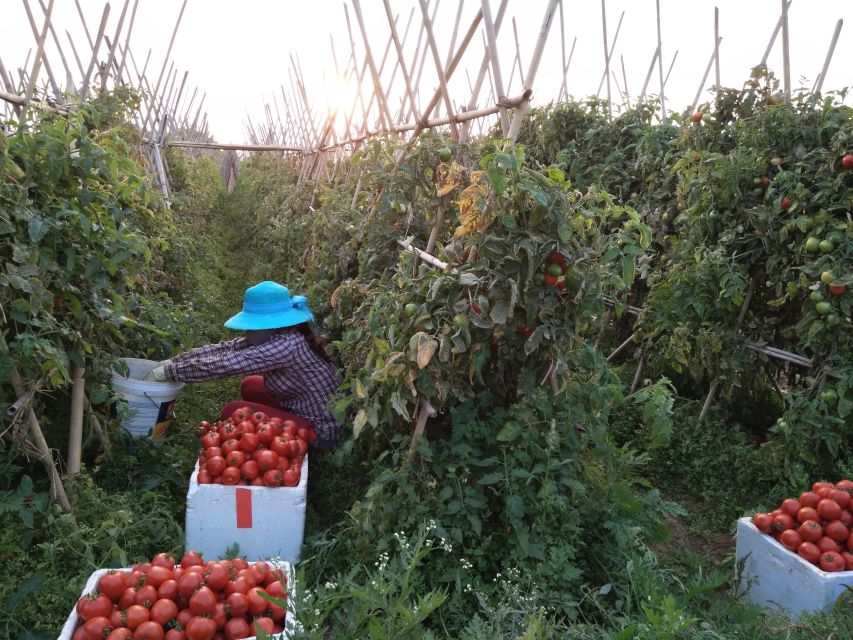
Expect a vegetable mix including bitter melon, corn, cauliflower, cabbage, tomatoes, green peas, and soybeans. That selection matters because it covers different cooking styles. Bitter melon alone signals a taste profile you won’t get from most common stir-fry routines. And soybeans connect to everyday Vietnamese cooking through sauces, oils, and other staples you might notice in meals.
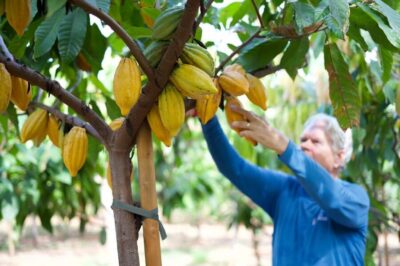
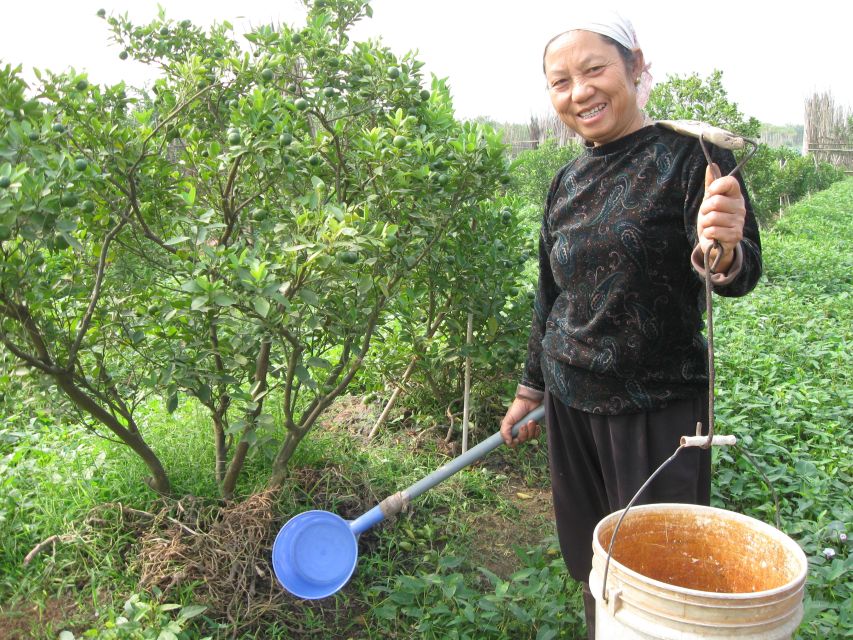
Then come the fruit gardens. You may see oranges, pomelos, papayas, guavas, and bananas. This part is calmer and more relaxed than the market—less noise, more light, more time to look closely at how plants grow and how farmers manage them.
What makes farmer conversations worth it
The tour gives you time to talk with working farmers and ask about cultivation techniques and daily lifestyle. That’s where you get context. You’re not only learning what grows here; you’re learning how people maintain crops and how farm life fits into family life.
A good way to use this time: ask about what’s in season and what changes during the year. Even if your guide can only answer generally, you’ll leave with a better understanding of why Vietnamese kitchens taste the way they do.
Cooking Class in a Family Home: How the Lesson Feels
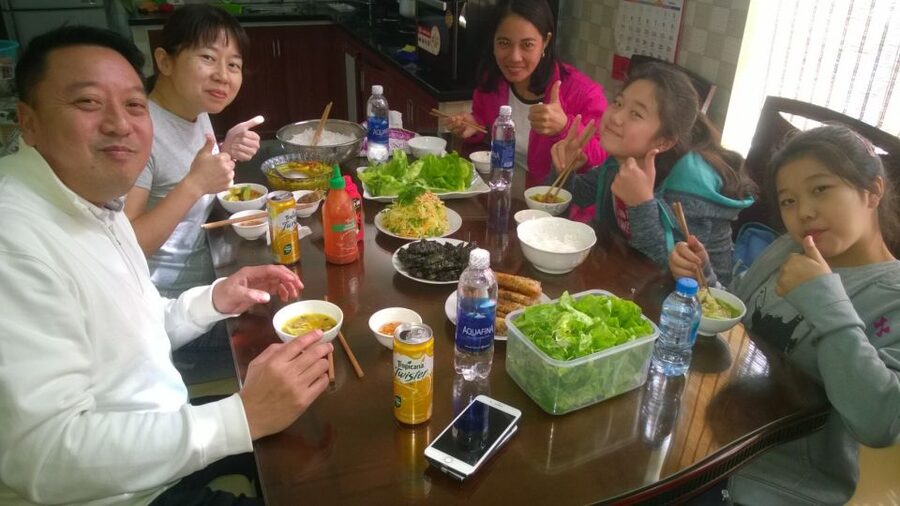
Now for the best payoff: cooking in a local home. The tour takes you from the farm to a family kitchen, where you learn traditional Vietnamese dishes using fresh vegetables and fruit, plus tea and traditional cake as part of the meal flow.
Choosing your menu
You’ll be sent a detailed menu so you can choose what you want to cook, and you’ll also receive the house address after booking. That planning helps because you can think about ingredients you saw earlier—then taste whether your memory was right.
What you actually do during class
The experience is hands-on. You’re not just watching someone else cook. You’ll learn how to prepare dishes with the guide’s direction and with the household setting the tone. The tour includes the meal, so the cooking isn’t a separate thing you finish and then wander away from.
In practice, this kind of setup usually means you’ll work through at least a few key steps—prep, mixing or seasoning, and then cooking. You’ll also get feedback as you go, which is far more useful than a demo-only class.
Family atmosphere you can’t fake
One of the strongest elements is that you cook as part of local family life. The tour description specifically frames this as learning Vietnamese family customs and traditions. Even when language barriers exist, food is the universal translator. You get a sense of how meals are organized in a household and how ingredients move from garden to plate.
If you’ve ever thought Vietnamese cooking looks simple but tastes complicated, this is where you understand why. The flavor comes from balancing fresh herbs, sauces, and correct timing—not just from having the right dish name.
Meal, Tea, and Traditional Cake: Eating Like You Belong
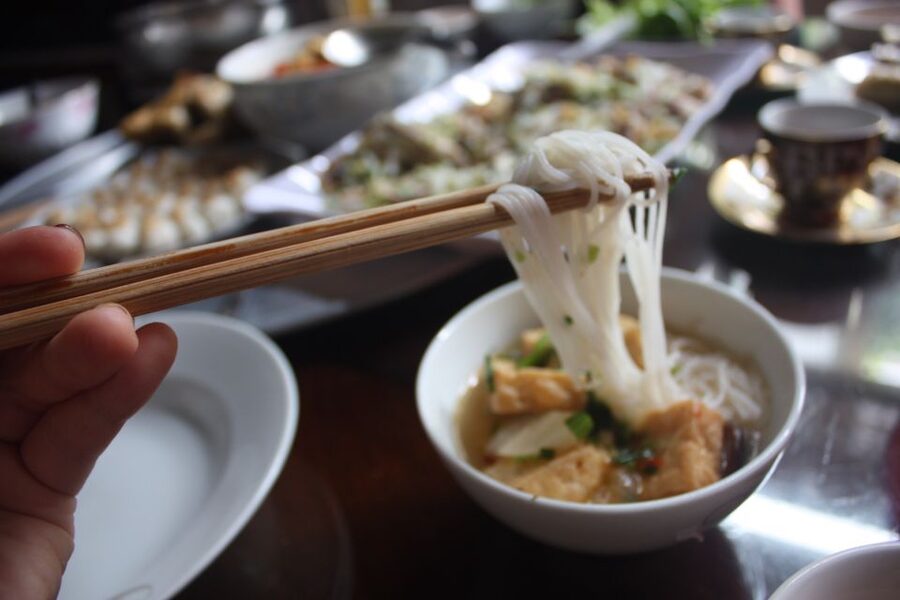
The included meal is one of the reasons this tour feels like more than a “tour.” You don’t end with a snack. You end with a proper sitting, with the food you made, along with drinks.
Expect fresh local vegetables and fruit, plus tea. The tour also mentions traditional cake as part of the shared experience. Those details matter because they reflect Vietnamese meal culture: it’s not only about one main dish, but about the whole eating rhythm.
And yes, this is where you can take a breath. The market and farm segments are active and fast-moving. The meal lets you slow down and process what you learned.
Price and Value: Why $43 Often Feels Like More
At $43 per person for a private, 4-hour half-day, this is one of those “you’re paying for access” experiences.
You’re getting:
- a private English-speaking local host
- a market and farm visit
- a cooking class
- the meal
- drinks
What you’re not paying for is hotel transfer—so you’ll likely use a taxi based on the tour recommendation. Even with that, the value tends to be strong because the class happens in a real home kitchen with a guide.
If you’re comparing this to a restaurant cooking class that doesn’t include market time, you’re paying for the story arc. Market to farm to kitchen is a full loop. That makes the cooking lesson feel grounded, not random.
Who This Hanoi Countryside Experience Is Perfect For
This is a great fit if you want:
- hands-on cooking and not just a show
- market context for your food (so you understand ingredients, not just recipes)
- a calmer break from Hanoi’s pace
- a chance to talk with locals and see how agriculture connects to everyday life
It may be less ideal if:
- you don’t want any exposure to animal trading at the market (depending on the day)
- you’re looking for a major sightseeing checklist (this is food and village life first)
- you’re pregnant, since the tour notes it’s not suitable for pregnant women
Best match: food-focused travelers, curious cooks, and anyone who likes village-level Vietnam more than temple-heavy days.
FAQ
FAQ
How long is the Hanoi Farm Tour and Cooking Class?
The experience lasts about 4 hours.
Where does the tour meet, and where does it end?
It starts at Đình Phương Viên, Đê Song Phương, Hoài Đức, Hà Nội, and it ends back at the meeting point.
Is hotel pickup included?
No. Transfer from your hotel is not included.
What is included in the price?
The price includes a private English-speaking local host, market and farm visit, cooking class, meal, and drinks.
What happens if my visit isn’t on market day?
If it’s not market day, you’ll visit another market with local produce such as fish, vegetables, fruits, and meat.
Is the tour suitable for everyone?
It is noted as not suitable for pregnant women.
Should You Book This Tour?
If you’re the type of traveler who wants Hanoi food to make sense in your head, then yes—this is worth booking. The best part is the connection: you walk a market where ingredients are traded, you see crops growing in nearby fields and gardens, and then you cook and eat in a local home kitchen. That loop is hard to replicate with any half-day “food tour” that stays only in restaurants.
Book it when you want real Vietnam, food-first, with a private English-speaking host and a meal included—without turning the day into a long, complicated travel shuffle.