REVIEW · HANOI
Farm tour & Home cooking class with local family in Hanoi
Book on Viator →Operated by Bui Manh · Bookable on Viator
Cook where Hanoi eats.
This farm tour and home cooking class is a smart way to learn Vietnamese food in the place it actually comes from: a market first, then a private cooking class in a local home. I like that you don’t just get recipes; you see ingredients growing, meet everyday sellers, and then cook four dishes with clear, English-speaking guidance.
One thing to plan for: the meeting point is in Hoài Đức District, so you’ll want your own transport worked out unless you’re already staying nearby.
In This Review
- Quick hits to know before you go
- From a 400-year communal house to your dinner table
- The market walk: what you’re really learning before you cook
- Vegetable fields and garden time: connecting flavor to farming
- Meet your host at home: Bui Manh’s private cooking lesson
- Four dishes, one focused skill set
- The food experience: lunch, dinner, and no hunger math
- Price and time: getting $38 to feel like a deal
- Where it fits best in your Hanoi day plan
- Small details that make a big difference
- Should you book this Hanoi farm tour and home cooking class?
- FAQ
- How long is the farm tour and home cooking class?
- How much does it cost, and what’s included?
- Do I need to bring ingredients or cooking equipment?
- Is this a private tour?
- Where is the meeting point?
- Is transfer included?
Quick hits to know before you go
- Market walk with real buying know-how so you learn what matters when you pick ingredients
- Vegetable fields nearby to connect dinner to the garden, not the supermarket
- A local communal house over 400 years old gives context for how community life works here
- English-speaking home cooking with Bui Manh (also known as Mandy) for hands-on, step-by-step lessons
- Four dishes plus lunch, dinner, and coffee/tea so you don’t leave hungry
- Private group only means the cooking pace and questions stay focused on you
From a 400-year communal house to your dinner table
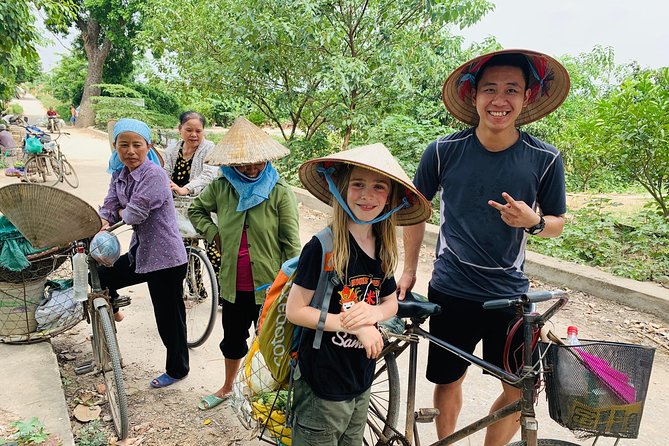
You start in a part of Hanoi where daily life still feels local. Before any cooking happens, you’ll see a communal house that’s over 400 years old, which sets the tone: this isn’t a theme park version of Vietnam. You’re moving through real spaces where people trade, farm, and live.
Then the day turns practical. You head toward a local farmer market where vegetables and fruit are sourced close to the city, and where food looks different when you see the full supply chain in one morning. You’ll walk with an English-speaking guide who can explain not just what to buy, but why it works in Vietnamese cooking.
You can also read our reviews of more tours and experiences in Hanoi.
The market walk: what you’re really learning before you cook
The market portion is the key that makes the cooking class feel grounded. Instead of memorizing a recipe, you get a feel for ingredients: which ones are fresh, what textures you should look for, and what combinations make sense in Vietnamese dishes.
You’ll also have a chance to see a slice of village trade life. Depending on timing, you might pass or meet local sellers connected to trades like blacksmithing and bamboo basket making, alongside farmers and other market workers. It’s a reminder that food is connected to everyday skills, not just cookbooks.
Practical tip: ask your host what you should buy at home if you can’t find the exact Vietnamese ingredients. Even if the tour doesn’t promise substitutions, a good guide will help you map the flavors to what you can get later.
Vegetable fields and garden time: connecting flavor to farming
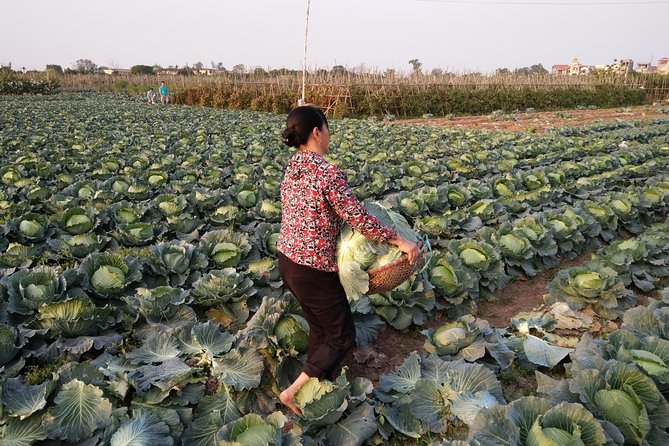
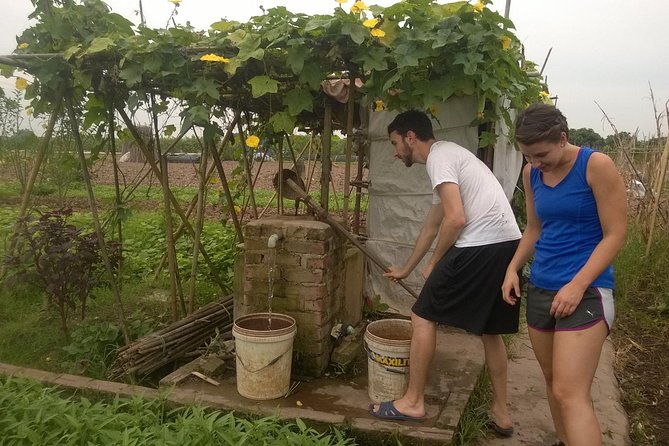
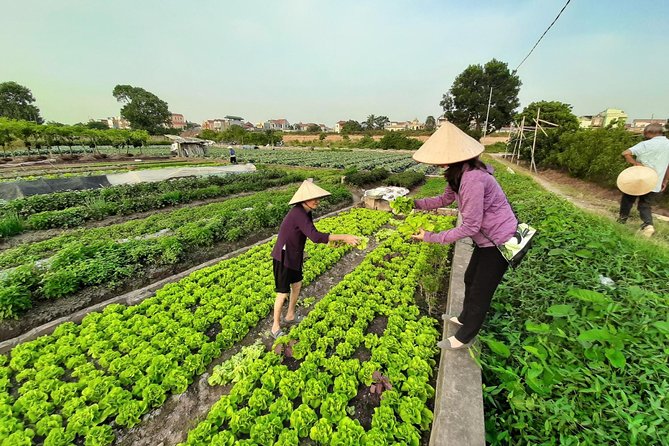
Next comes the part that makes this tour more than a cooking workshop. You’ll walk around nearby gardens and vegetable growing areas, where you can see how food is cultivated before it ever reaches the market. This is where you start thinking about cooking with ingredients that are seasonal and local to this region.
You’ll also get time to talk with people involved in keeping these gardens running. The tour description notes chances to chat with local garden farmers, so you can ask simple questions like what’s planted right now and how they care for the beds. Even if you’re not a serious gardener, you’ll come away understanding why certain flavors taste the way they do here.
What to watch for: wear comfortable shoes. You’ll be walking outdoors, and the ground near fields and gardens can be uneven.
Meet your host at home: Bui Manh’s private cooking lesson
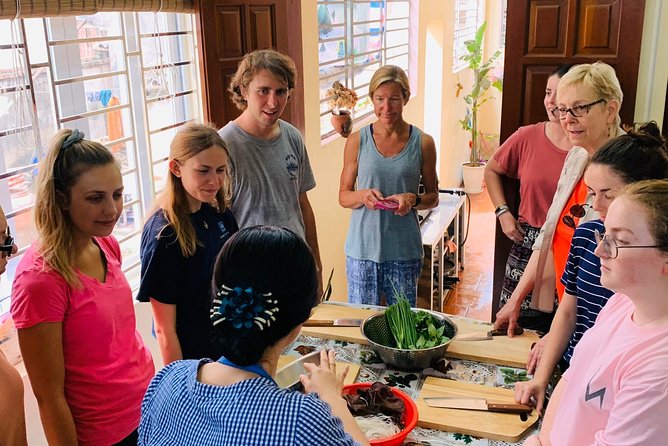
The cooking happens in a local home with a cozy setup built for visitors to join in without feeling like an outsider. Your host is Bui Manh, and in the experience feedback she’s described with the name Mandy because it’s easier for English speakers. Either way, the emphasis is the same: you’re learning from someone who cooks this food every day.
You’ll get a clear structure for the lesson and then you’ll do the cooking yourself. Since ingredients are provided, you don’t need to bring supplies, special tools, or anything that turns the day into extra work. The guide does the heavy lifting in the prep area so you can focus on technique and flavor.
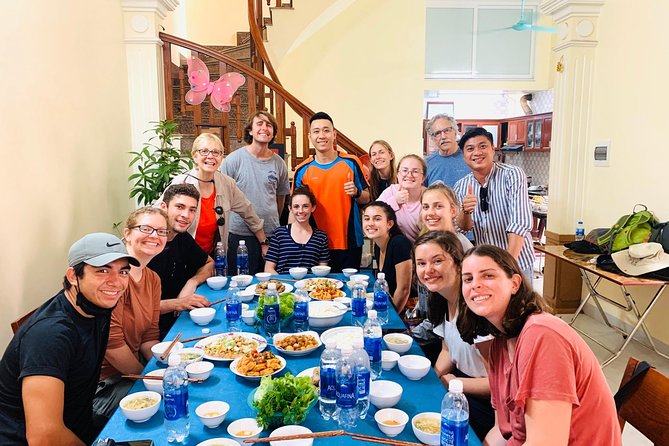
One of the best parts is the family atmosphere. In one account, the host’s daughters came home during the meal, and the whole kitchen felt like a real family moment. That’s not staged for photos. You talk over tea, you laugh, and you cook like you’re part of the household for a few hours.
If you’re camera-happy, keep a friendly rhythm. Ask when it’s okay to take photos, and try not to block a cooking station while someone is explaining.
Four dishes, one focused skill set
You’ll learn to make four Vietnamese dishes, and then you’ll eat what you cook with a drink included. The food isn’t just a tasting session. The tour includes meals during the day, so you’ll have lunch and dinner in addition to the class cooking.
Because the class teaches four dishes, it’s easier to connect the lesson to the flavors you’ll taste. You’ll start seeing patterns: how Vietnamese cooking builds balance with herbs, acidity, and aromatics, and how different textures show up across dishes. Even without exact dish names provided in the tour details, you can expect a mix that represents what Vietnamese homes cook often.
What I appreciate most is that you don’t have to pace yourself like a restaurant meal. You’re invited to eat what you make, and the included coffee and/or tea give you a natural break after cooking.
The food experience: lunch, dinner, and no hunger math
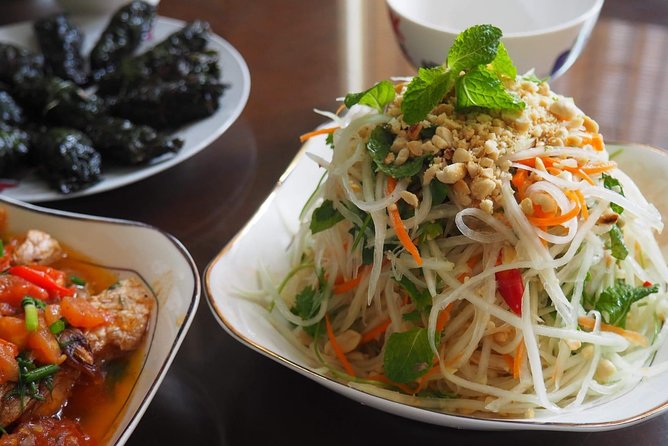
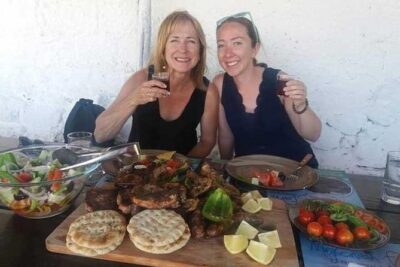
This is a big part of the value. For $38, you’re not buying a short class and a polite snack. The tour includes lunch, dinner, and coffee and/or tea, plus a welcome drink and one more drink during the meal.
That matters because Vietnamese cooking is a lot more enjoyable when you slow down. You can eat, then ask questions about flavors you’re tasting. You can try another bite, then compare it to what you did during prep. When the meal is built into the experience, the learning sticks.
A practical note: since you’re eating multiple meals in one day, don’t plan a heavy dinner afterward. Think of this as your full food day in Hanoi, not a side activity between sightseeing stops.
Price and time: getting $38 to feel like a deal
At $38 per person for about 4 hours, this is one of those Hanoi activities where the math works if you care about food culture. The price covers the English-speaking host, ingredients for the four dishes, and multiple meals with drinks. You’re also getting market time and garden time, which many cooking classes skip.
What you’re paying for is not just cooking. You’re paying for context and access. That access is the real currency here: a local family kitchen, a market view of ingredients, and a garden walk that makes the flavors make sense.
The duration matters too. A short class can feel rushed. Four hours gives you enough time to cook, eat, talk, and feel like you had a real conversation rather than a timed demo.
Where it fits best in your Hanoi day plan
Because you return to the meeting point and the tour operates within set windows, you’ll want to anchor your day around it. Opening hours are listed in blocks during the day, which means you should schedule other activities before or after without trying to cram too much.
This experience suits you if:
- You want a Hanoi cooking class that feels grounded in daily life
- You like markets and want to understand ingredients before you cook them
- You prefer private, guided attention in a home setting
- You’re comfortable walking in outdoor spaces (market and gardens)
It might not fit if:
- You hate being in a small walking route with brief stops
- You’re only looking for a quick, restaurant-style food taste
Small details that make a big difference
A few practical points can help your day go smoother:
- It’s a private tour/activity, so it’s just your group.
- You get a mobile ticket, which reduces hassle on the day.
- Transfer isn’t included, so plan transport to the meeting point in Hoài Đức District.
- Confirmation is tied to availability, so book with enough lead time.
Also, if you’re traveling with kids, the tour notes pricing rules: children under 5 are free, children age 5–11 are 50%, and age 12+ follow the adult price. That’s useful for budgeting a family day.
Should you book this Hanoi farm tour and home cooking class?
I’d book it if you want more than a recipe lesson. This is the kind of experience where the market walk and garden time give meaning to what you cook, and the home setting makes it feel personal. The standout praise centers on the host’s warmth and clear English, plus the “part of the family” feeling during tea and dinner.
Pass if you’re short on time, don’t want to arrange transport to Hoài Đức, or you’re looking for a high-end restaurant meal instead of hands-on cooking. In that case, you might prefer a city-based cooking class with easier logistics.
If you match the vibe—food-first, local-first, questions welcome—you’ll likely leave with more than full stomach. You’ll leave with a better sense of how Vietnamese cooking builds flavor from simple, fresh choices.
FAQ
How long is the farm tour and home cooking class?
The experience lasts about 4 hours.
How much does it cost, and what’s included?
It costs $38 per person. Included are the English-speaking local host guide, a home cooking class where you make four dishes, a welcome drink plus one more drink with the meal, lunch, dinner, and coffee and/or tea.
Do I need to bring ingredients or cooking equipment?
No. Ingredients are provided for the cooking class, so you don’t have to bring anything specific for the lesson.
Is this a private tour?
Yes. It’s a private tour/activity, so only your group participates.
Where is the meeting point?
The start meeting point is Đình Phương Viên2M6X+W8G, Song Phương, Hoài Đức District, Hanoi, Vietnam. The tour ends back at the meeting point.
Is transfer included?
No. Transfer and travel insurance are not included. You’ll need to arrange your own way to and from the meeting point.
If you want, tell me your travel dates and where you’re staying in Hanoi. I can help you judge whether the Hoài Đức meeting point will be easy or a hassle for your day.