REVIEW · SKJOLDEN
Steim Farm Experience in Vik, Norway
Book on Viator →Operated by Steim · Bookable on Viator
Steim Farm is a working farm with lots of friendly faces. You’ll spend about 1 hour walking real fields, barns, and stables with hosts Christina and Gaute, then meet alpacas and muscovy ducks up close. You also get a taste in the organic garden—strawberries when in season—and a look at animals on neighboring pasture, including long wooled sheep and Norwegian fjord horses.
What I really like is how grounded it feels: you’re not just watching a petting zoo, you’re getting a guided look at farm life—green grass to animal feed—inside a small group capped at 8 people. My one possible drawback is timing and weather: this experience needs good conditions, and the church segment is more of a viewing and optional drop-off, not a long interior visit.
In This Review
- Key things you should know before you go
- Steim Farm in Vik: what this tour feels like (and why it’s worth your hour)
- Meet the animals at Steim: alpacas, muscovy ducks, and the rest of the farm cast
- The walk through the fields and feed process: the practical part you’ll remember
- Inside the barn and stables: where the tour turns from view to experience
- Vik centre and old-town views: why you still get city context
- Hove Stone Church (c. 1170): an old stop, shown the easy way
- Timing, group size, and the practical logistics that make it smooth
- Price in context: what $30.31 buys you (and what costs extra)
- Weather matters here: how to plan for a smooth visit
- Who should book Steim Farm, and who might skip it?
- Quick tips so you get the most from your hour
- Should you book it? My straight answer
- FAQ
- How long is the Steim farm experience?
- How much does it cost?
- What’s included in the ticket price?
- Is pickup offered?
- Do I need a paper ticket?
- What animals will I see?
- Is there any food or tasting included?
- Can I be dropped off somewhere other than the tourist information?
- What happens if the weather is bad?
- How big is the group?
Key things you should know before you go
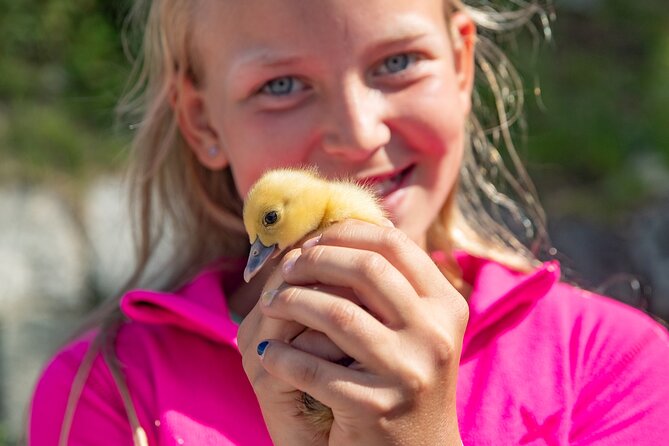
- Working farm focus: You’ll see fields, barns, and the feed process, not just animals in a pen.
- Hand-feeding energy: Alpacas and ducks are part of the star lineup, and you’ll likely get hands-on time.
- Organic garden tasting: You may taste strawberries from the vegetable garden (seasonal).
- Views of Vik village: You’ll get a good overview of the old-town area from the farm.
- Historic Hove Stone Church, from the area: You can often glimpse it, with the option to be dropped off there instead of the tourist info.
Steim Farm in Vik: what this tour feels like (and why it’s worth your hour)
This is one of those Norway experiences that makes the place feel real fast. Instead of driving past farms like they’re background scenery, you step into Steim, a running farm where the guide explains how the farm operates now and in older times that trace back to the Viking age.
You’ll move at a calm walking pace. The guide keeps the story practical: what’s happening in the fields, how grass turns into feed, and how farm spaces connect—fields, garden, barn, stables, then pastures above. It’s a small-group setup, so questions don’t get swallowed by noise.
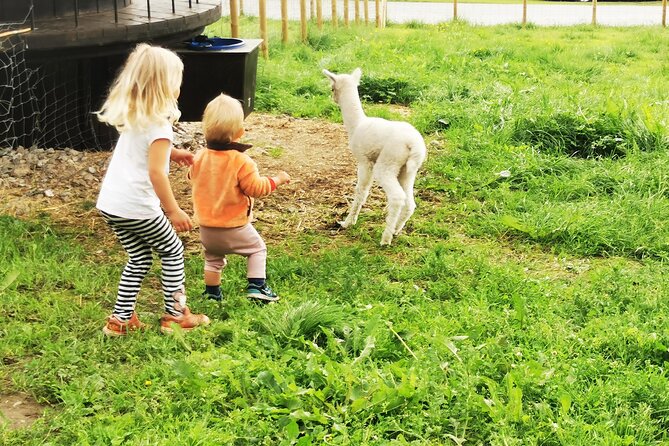
And yes, the animals do their job. Alpacas and muscovy ducks are front and center, and you may also spot goats grazing in the pastures above. If you’re traveling with kids, this kind of animal time tends to land well because it’s not rushed and you’re guided through it.
Meet the animals at Steim: alpacas, muscovy ducks, and the rest of the farm cast
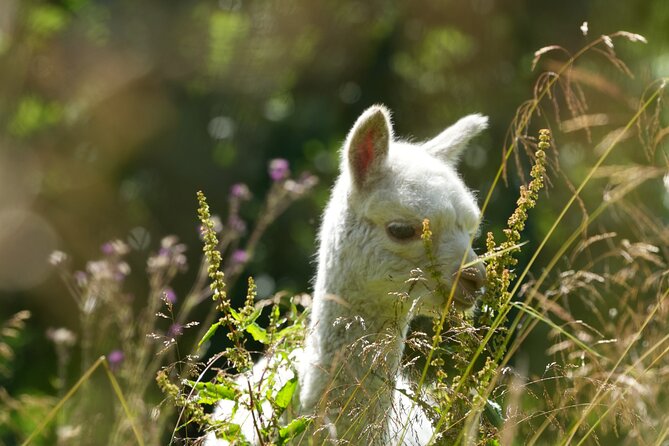
The animal portion is more than a quick photo stop. On this visit, you tour the farm and then spend time in and around the barn and stables where the animals are. Sometimes the ducks are nesting in the stable, so you’re seeing life that feels a little more “how it really is” than a staged encounter.
Here’s what you can plan around from what’s offered:
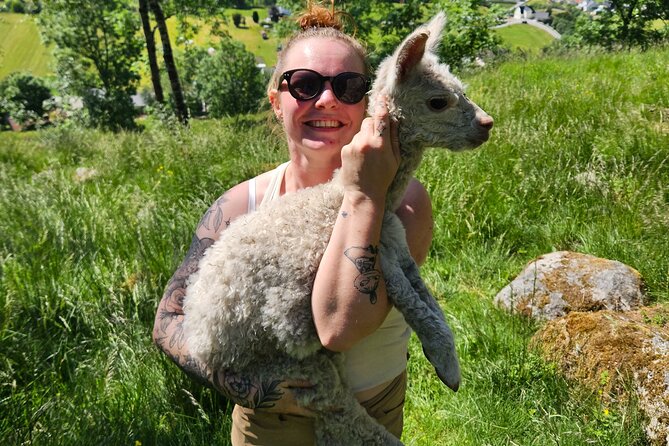
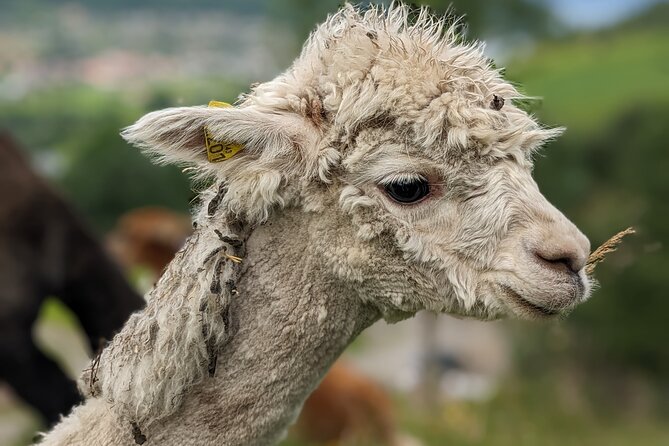
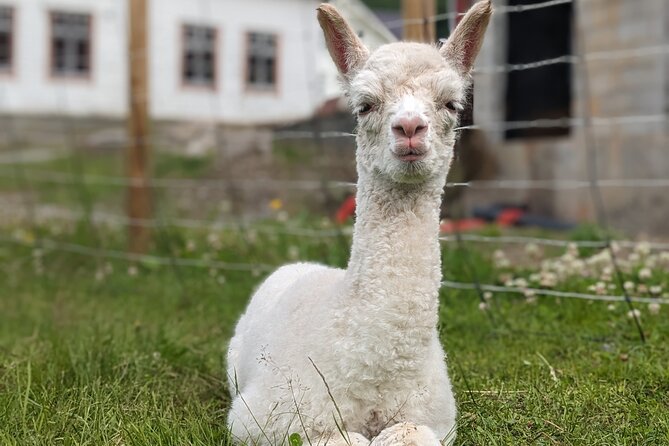
- Alpacas: Expect a friendly meet-and-greet. If you like the idea of the classic alpaca arm moment, this is the right stop.
- Muscovy ducks: You’ll meet them as part of the farm routine; on a nice day, they tend to be curious and engaged.
- Goats: You might see boar goats grazing above, depending on the time of day and what’s happening in the pastures.
- Long wooled sheep and fjord horses: These are on neighboring farms, so your guide helps connect what you’re seeing with the wider farm landscape around Vik.
A small practical note: because this is an active farm, your visit can change a bit with daily conditions. That’s normal here. Good weather makes the walk more comfortable, and the tour is described as requiring it.
The walk through the fields and feed process: the practical part you’ll remember
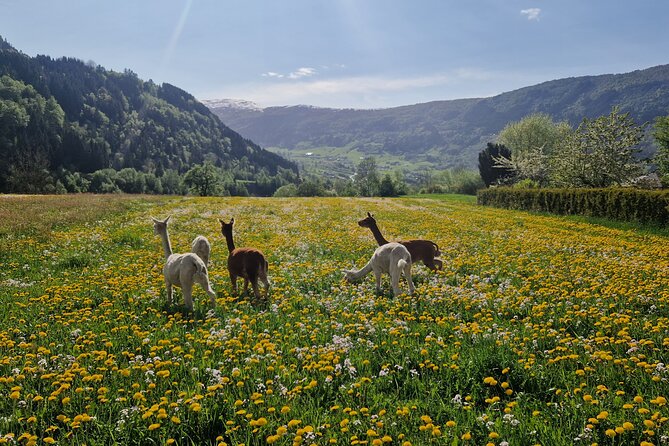
A lot of tours promise stories. This one leans into work. You’ll walk around Steim as the guide talks farm life before and now. Then you’ll see the fields and learn about the process from green grass to animal feed.
That feed explanation matters because it turns the farm from a pretty postcard into a system. Instead of thinking farm animals only live in barns, you get the logic: pasture grows, grass gets turned into feed, and the farm keeps animals cared for based on seasonal work.
You’ll also visit the organic vegetable garden. When the strawberries are in season, you can taste them. Even if you’re not a huge gardener, tasting something from the garden makes the visit feel connected to real daily effort.
Inside the barn and stables: where the tour turns from view to experience
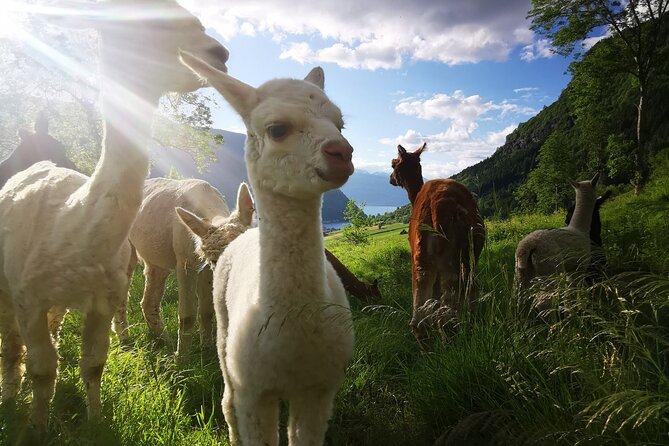
After the outdoor walk, the tour shifts into the farm buildings. This is where you get closer to what animals need day-to-day. You’ll visit the barn and stables, and the guide shows you how the space functions.
Sometimes ducks are nesting in the stable. That means you might catch a quieter, more intimate farm moment—less “spotlight,” more “this is where they live.” It’s also the kind of stop that helps kids (and adults) slow down and actually look, instead of just sprinting from animal to animal.
Vik centre and old-town views: why you still get city context
The tour doesn’t stop at the farm gate. You also get a short look at Vik centre. Vikøyri is the administrative center of the municipality of Vik, and the village sits at the mouth of the Vikja river on the south shore of the Sognefjord.
From the farm, you’ll get a good overview of the village. It’s a smart move because it helps you get your bearings. If you later want to wander Vikøyri on your own, you’ll already understand where things sit relative to the fjord area and the old-town vibe.
This is the part that’s easiest to underestimate. You may think you’re booking only an animal farm visit. But those village overview moments help you turn a quick day trip into a trip where you understand the geography.
Hove Stone Church (c. 1170): an old stop, shown the easy way
From the farm, you can get glimpses of Hove Stone Church, dated to around 1170. It’s one of the oldest stone churches in Norway, and seeing it from the area gives you context for how old structures still sit inside modern daily life.
If you want transport and prefer not to return to the tourist information pickup point, the experience offers an option to be dropped off by the church instead. That’s useful if you plan to continue exploring on foot or want a straightforward end to the tour.
Important expectation-setting: this is not presented as a long, guided inside visit here. Think of it as a look from the farm area plus an optional drop-off.
Timing, group size, and the practical logistics that make it smooth
This experience runs about 1 hour 10 minutes total. It’s a guided farm visit with a max group size of 8 travelers, which is a big deal for farms.
Small groups mean:
- more chance to ask questions,
- less waiting at animal areas,
- and a better chance your guide can adjust for what’s happening that day.
Pickup is offered, and the tour ends back at the meeting point: Vik Tourist Information, Rv13 57, 6893 Vik i Sogn. You’ll also use a mobile ticket.
The tour is described as suitable for most travelers, and service animals are allowed. If you’re bringing a stroller or have mobility limits, you’ll want to consider that this includes a walking farm tour—but the data doesn’t specify step-free routes, so plan conservatively.
Price in context: what $30.31 buys you (and what costs extra)
The price is listed at $30.31 per person. For that, you’re paying for a guided visit and access to a working farm experience: the farm walk, barn and stable time, garden tasting (seasonal strawberries), and the added context of Vik and Hove Stone Church.
Optional food is the main extra. There’s an optional picnic basket available for 149 NOK/adult and 89 NOK/child. If you’re the type who likes to make a full half-day out of it, that can be a good add-on. If not, you’ll likely be fine just doing the tour and grabbing snacks later in Vik centre.
Value-wise, the best part is the small group and the “real” farm workflow. If your day in Vik is mostly viewpoint hopping, this gives you something hands-on and memorable for about an hour.
Weather matters here: how to plan for a smooth visit
This experience requires good weather. If conditions aren’t right, it will be canceled and you’ll be offered a different date or a full refund.
I recommend building flexibility into your schedule. If you’re only in the area for a single day, try to pick a slot that has backup time around it. A farm visit is still a farm visit—mud, rain, and slippery paths can put a damper on the whole experience.
Who should book Steim Farm, and who might skip it?
You should book if you want:
- animal time that’s guided and not chaotic,
- a working farm perspective rather than a scripted show,
- and a quick way to connect Vik’s village area with nearby rural life.
You might consider skipping if:
- you dislike farm walks or you need a very fixed, indoor-only itinerary,
- or you’re traveling on a day with uncertain weather and no flexibility.
It also makes sense for families. One family setup included adults plus a toddler and infant, and the farm visit worked as a shared “everybody gets something out of it” experience.
Quick tips so you get the most from your hour
- Dress for farm conditions and bring layers. Norway can change its mind fast.
- If strawberries are in season, take the tasting. It’s a small moment that makes the garden visit feel meaningful.
- If you’re interested in Hove Stone Church, ask about the drop-off option so the end of the tour fits your walking plan.
- Since the group is small (max 8), be ready with a couple questions. Guides can tailor answers when there’s time.
Should you book it? My straight answer
Yes—if your idea of a great day in Vik includes a real working farm, gentle guided walking, and animal encounters that feel personal, this is a strong booking. The price is fair for what you get: a guided farm visit, garden tasting when available, and quick context for Vik centre and Hove Stone Church.
If you’re only chasing fjord views and you’d rather keep your schedule indoors or very fast-moving, then the farm might feel like more effort than you want. But for most people visiting Vik, it’s one of the more human-scale experiences in the area.
FAQ
How long is the Steim farm experience?
It’s about 1 hour 10 minutes (approx.).
How much does it cost?
The price is $30.31 per person.
What’s included in the ticket price?
You get a guided farm visit. Admission is included for the farm portion.
Is pickup offered?
Yes, pickup is offered.
Do I need a paper ticket?
No. You’ll use a mobile ticket.
What animals will I see?
You’ll meet alpacas and muscovy ducks, and you might also see goats grazing in pastures above. The tour also mentions seeing long wooled sheep and Norwegian fjord horses on neighboring farms.
Is there any food or tasting included?
The tour includes a visit to the organic vegetable garden where you can taste strawberries when available. There’s also an optional picnic basket you can buy if you want snacks.
Can I be dropped off somewhere other than the tourist information?
Yes. Instead of returning to the tourist information, you can request a drop-off by Hove Stone Church.
What happens if the weather is bad?
The experience requires good weather. If it’s canceled due to poor weather, you’ll be offered a different date or a full refund.
How big is the group?
The tour has a maximum of 8 travelers.