REVIEW · SRI LANKA
Udawalawe: Farm to Table Cooking & Authe: Village Experience
Book on GetYourGuide →Operated by OwinRich Hospitality · Bookable on GetYourGuide
A village day that actually teaches you something
This is one of those Sri Lanka experiences that feels time-smart: you start with cinnamon tea, then move through a traditional village setup that includes hands-on cooking, spice work, and a visit to a precious-stone mine. I like the mix because you’re not only watching from the sidelines—you’re learning how everyday food starts, from garden to pot.
One thing to watch: drinks can add up at the meal. I’d ask what’s included and what costs extra before you order, so the final bill doesn’t surprise you.
In This Review
- Key highlights to look for
- Udawalawe’s village setup: 2 hours, but you’ll walk about 90 minutes
- Cinnamon tea welcome and the spice culture that shapes the day
- The precious-stone mine stop: old methods and practical questions to ask
- Garden picking and a hands-on cooking class in a village kitchen
- The communal meal: what you eat, how it works, and a key budget note
- Local melas after cooking: music, crafts, and village fair energy
- Price and value: is $30 fair for two hours?
- Who should book this (and who should skip it)
- Should you book Udawalawe: Farm to Table Cooking & Village Experience?
- FAQ
- FAQ
- Where is the meeting point?
- How long does the experience last?
- Is this a walking tour?
- Is the group private?
- What languages will the guide speak?
- What’s included in the price?
- Do I get to pick vegetables?
- Is a wheelchair user able to join?
- What are the cost and cancellation rules?
- Who runs the experience?
Key highlights to look for
- Cinnamon tea welcome before you do anything else
- Precious-stone mine visit with an explanation of old mining methods
- Cinnamon peeling by skilled artisans, not just a quick photo stop
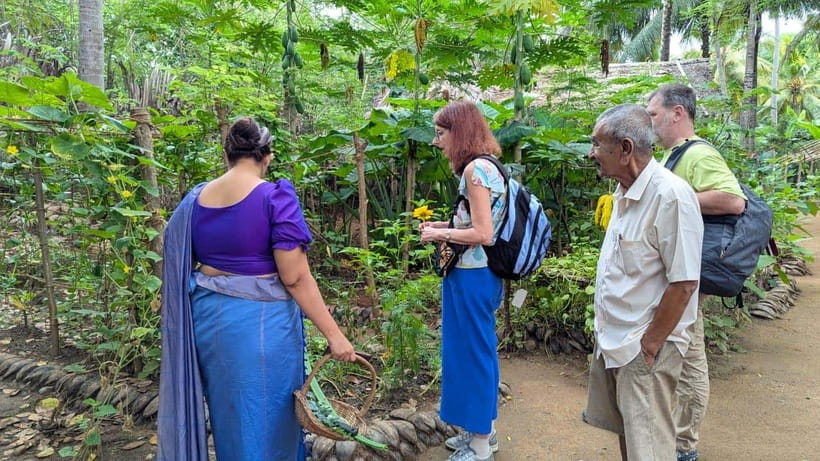
- Pick vegetables from the organic garden, then cook in a village kitchen
- Local meal that you help prepare, followed by time at village melas (fairs)
Udawalawe’s village setup: 2 hours, but you’ll walk about 90 minutes
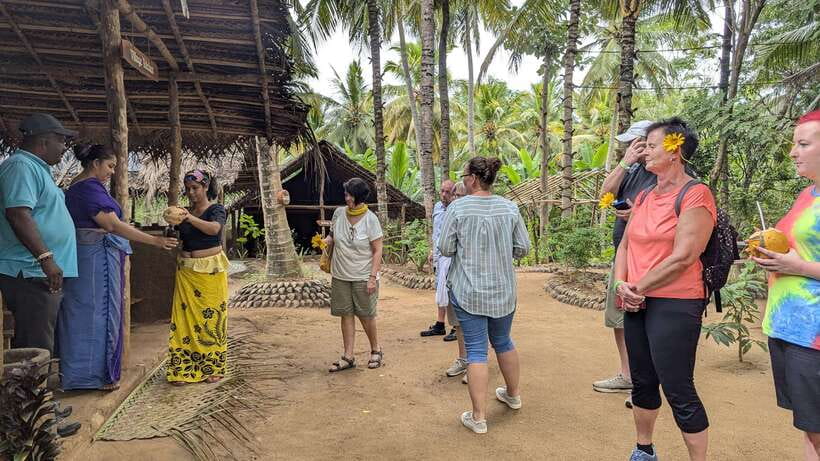
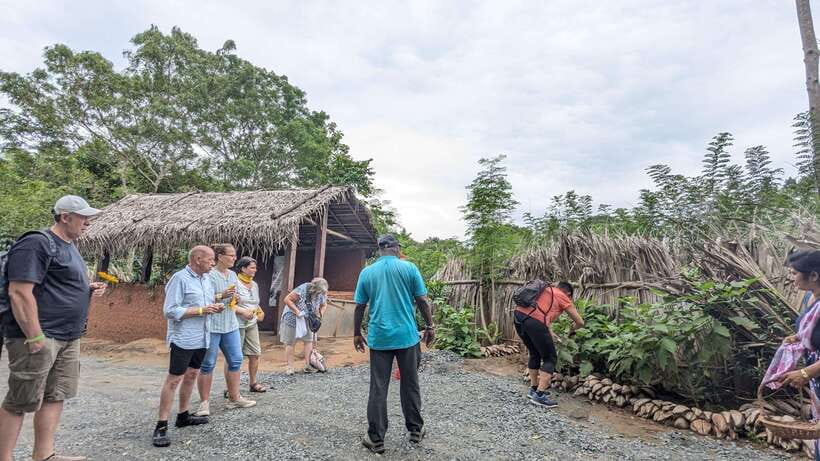
This experience runs about 2 hours total, and it’s designed as a full walking tour for roughly 90 minutes. That timing matters because you’ll likely cover a few different areas around the property—garden, demonstration spaces, then the cooking area—before finishing with the village fair atmosphere.
You’ll also know where you are right away. The meeting point is about 1.2 km from the Udawalawe Elephant Orphanage, so it’s easy to build into a day without complicated routing. And because it’s a private group, you should get more personal attention from your guide rather than feeling rushed with a big crowd.
Comfort-wise, plan for sun and a steady pace. This isn’t listed as wheelchair-friendly, so if mobility is tight for you, this one may be a mismatch.
Cinnamon tea welcome and the spice culture that shapes the day
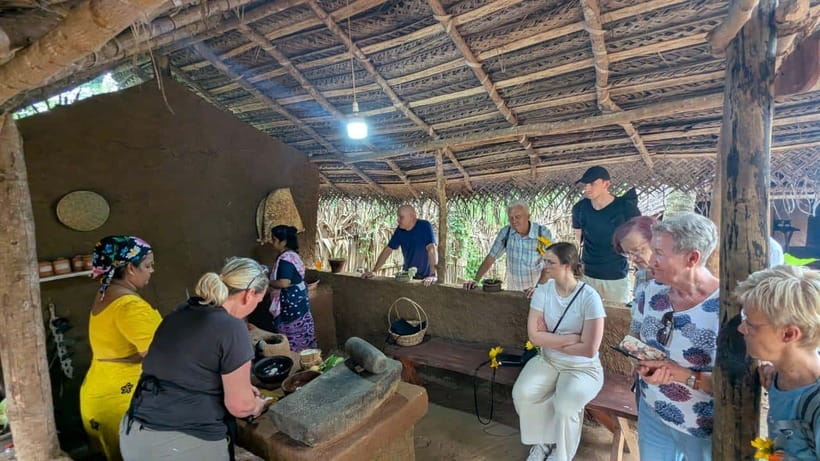
Your morning or afternoon starts with a local welcome drink—cinnamon tea is specifically called out, and the included welcome drink list also mentions king coconut. Either way, the point is the same: you’re warmed up for a day built around Sri Lankan flavor basics, before anyone asks you to stand around and watch.
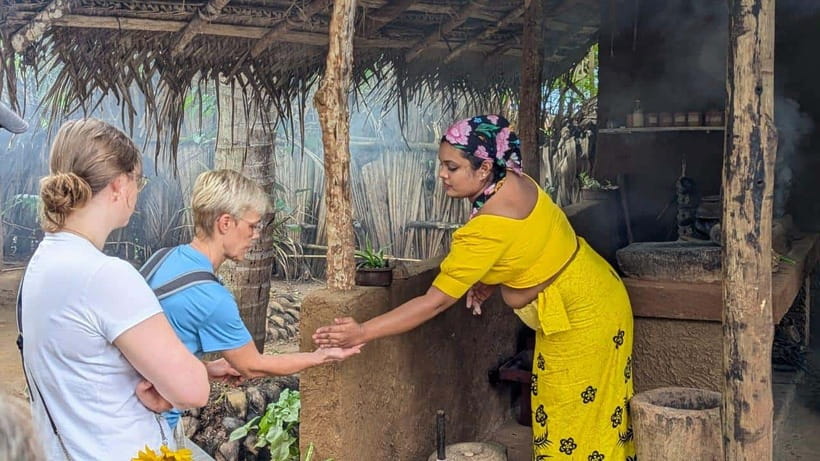
Next comes the cinnamon peeling demonstration, led by skilled artisans. This isn’t just a show. You’ll see how cinnamon is handled and prepared, and that context helps you understand why it’s such a big deal in Sri Lanka—economically and culturally. When you later taste cinnamon in food, it lands differently because you’ve already seen how it turns into usable sticks.
Practical tip: wear something light and breathable. Cinnamon and spices smell amazing up close, but they can also cling to clothes and hair. If you’re sensitive to strong smells, you might want a light scarf or a cover for hair just in case.
The precious-stone mine stop: old methods and practical questions to ask
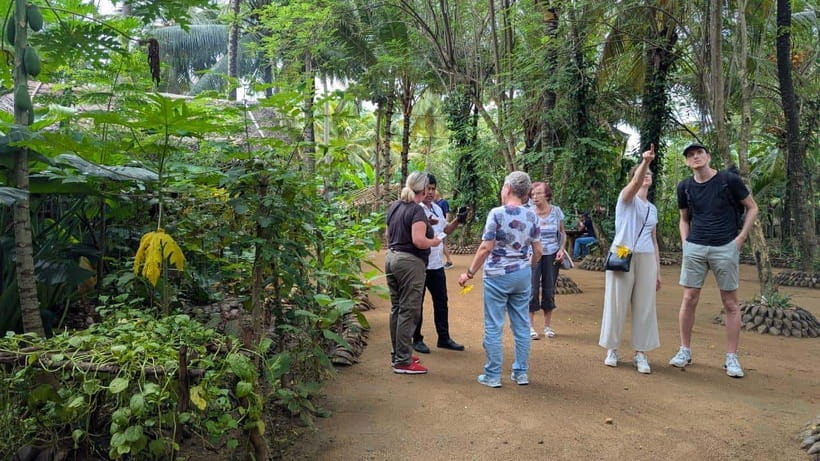
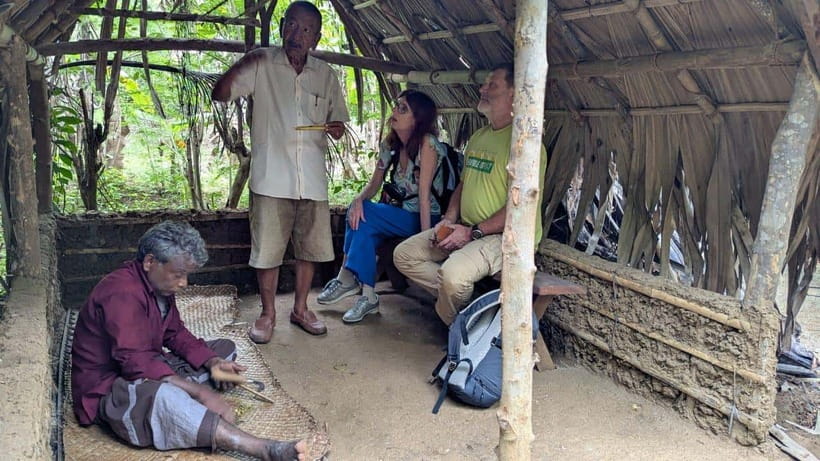
A major part of the experience is an exclusive visit to an ancient precious-stone mine, including a guided explanation of the gem-mining process. You’re not just getting a location—you’re getting the story of how stones were uncovered and worked, using techniques tied to the past.
This stop is valuable for two reasons. First, it gives context for why Sri Lanka’s stone trade is so well-known. Second, it connects naturally to what you’ll do later—because cinnamon, cooking spices, and agricultural work are all forms of village knowledge tied to labor and daily routine.
Keep your expectations practical. This isn’t a museum tour with polished signage. It’s a guided walk where the guide’s job is to make the process understandable and respectful. If you have questions—like how people identify or handle stones—you’ll probably get clearer answers by asking on the spot rather than waiting.
Garden picking and a hands-on cooking class in a village kitchen
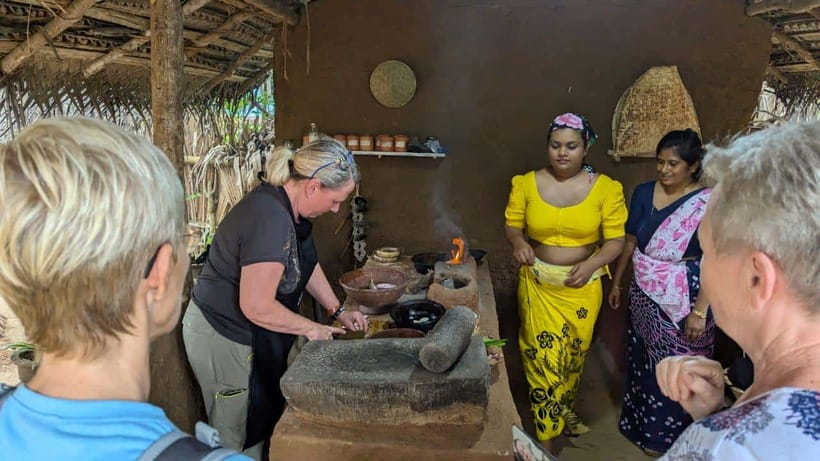
After the mine and spice work, the day shifts to what you can smell and taste. You’ll pluck vegetables from an organic garden, guided step-by-step so you end up with produce that fits the meal you’ll cook.
Then you move into the village kitchen, where local women teach a traditional cooking class. The hands-on portion is the real value here. You’ll learn how Sri Lankan dishes come together using time-tested methods—things like grinding spices and cooking over an open flame.
What I’d pay attention to is how the instruction changes your instincts. Instead of memorizing recipes, you learn process: when to adjust heat, how spices are used for aroma, and how certain flavor combinations repeat across dishes. That’s why this class feels more useful than a basic cooking demo.
The meal itself is built from what you learn. One standout detail from the experience is that the final spread can include excellent local staples—like coconut sambal and dahl—made with the same approach you practiced during the class.
Practical tip: go in with an appetite for hands-on work. If you’re hoping for only a quick sample and a few photos, you’ll miss the point. This is a kitchen session where you do the steps.
The communal meal: what you eat, how it works, and a key budget note
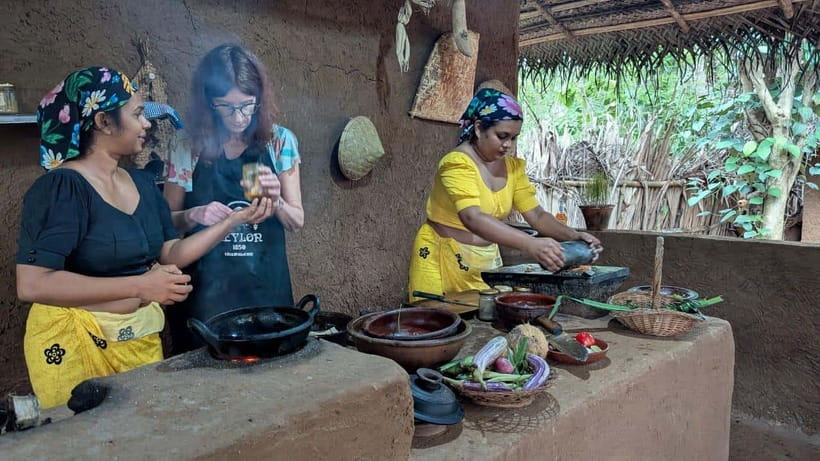
After cooking, you sit down for a local meal featuring dishes you helped prepare. It’s served communally, which changes the feel of the meal. You’re not eating alone or waiting silently—people are involved, and the environment is built around sharing the results of everyone’s effort.
This is also where a key caution comes in. Drinks may not be fully included with the meal, and there’s a real possibility of getting billed at a much higher rate than you expect. The important move is simple: ask what’s included before you order. If you want a soda, bottled water, or anything else, confirm pricing upfront so you’re not dealing with a surprise at the end.
If you’re trying to keep the cost predictable, plan your budget around the $30 you’re paying for the experience, then treat drinks as a separate line item unless you’re told clearly otherwise.
Local melas after cooking: music, crafts, and village fair energy
To close out the day, you join local melas, which are traditional village fairs. This part is less about a formal lesson and more about experiencing how village culture shows up in public—through music, dance, crafts, and local delicacies.
Even if you’re not hunting for souvenirs, melas are useful. They’re where you get a more everyday Sri Lanka snapshot, not just the staged version. You’ll have a chance to mingle and observe how people celebrate and socialize, and it’s a nice contrast after the structured cooking class.
Practical tip: bring small cash if you want to buy crafts or snacks. The included experience covers your participation and the general fair atmosphere, but any extra purchases are typically on you.
Price and value: is $30 fair for two hours?
At $30 per person for about 2 hours, the value comes from stacking multiple activities into one tight time block. You’re paying for more than a cooking class.
You get:
- a welcome drink
- guided visit to an ancient precious-stone mine and the mining process explanation
- cinnamon peeling by artisans
- vegetable picking from an organic garden
- a hands-on traditional cooking class with local women
- a meal featuring what you cooked
- participation in local melas
That’s a lot of “learning + doing,” especially for a half-day experience. Many paid food experiences stop at cooking only, or they cover a market and send you on your way. Here, the day connects spices, agriculture, and rural culture in one flow.
The biggest reason it can feel expensive is also the biggest reason it can feel worth it: you’re paying for coordination, guide time, and people’s labor, including time from local women teaching the class. If you’re genuinely interested in process and culture, $30 can feel like a fair exchange.
If you hate walking, dislike open-flame cooking, or you’re only in Sri Lanka for quick photo stops, you might prefer a shorter or less active option.
Who should book this (and who should skip it)
This is a great match if you:
- want a hands-on cooking experience rather than watching someone else cook
- like learning about Sri Lankan food basics, especially spices like cinnamon
- are curious about village life beyond elephants and beaches
- enjoy small, guided, culturally focused stops with local hosts
It may not be a fit if you:
- need wheelchair-friendly access (it’s not suitable for wheelchair users)
- have limited tolerance for walking and sun (it’s a full walking tour for about 90 minutes)
- want a totally predictable final cost with no extras (ask about drink inclusion)
Also, since the guide works in English and Singhalese, you’ll have an easier time following the story and the steps if you’re comfortable communicating in either language.
Should you book Udawalawe: Farm to Table Cooking & Village Experience?
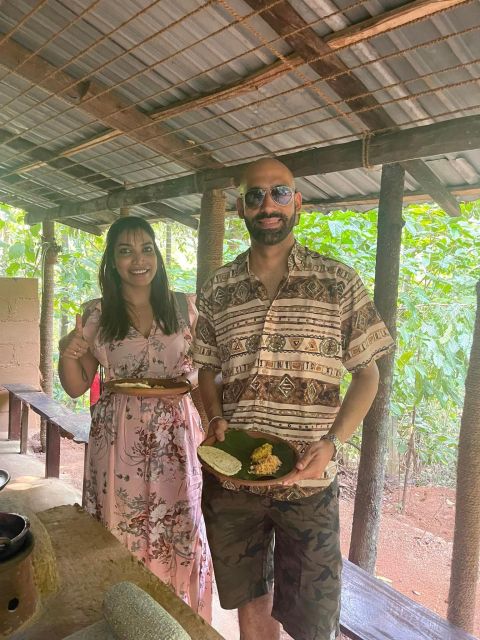
If you’re looking for something practical—something you can take home with you in your head and on your tongue—this is a strong pick. The combination of vegetable picking, a real cooking class, and cultural stops like the cinnamon peeling and precious-stone mine visit makes it more than a one-note activity.
I’d book it if you enjoy food work, ask questions, and don’t mind walking. I’d think twice if mobility is limited or if you strongly dislike surprise add-ons like paid drinks.
FAQ
FAQ
Where is the meeting point?
The meeting point is about 1.2 km from the Udawalawe Elephant Orphanage.
How long does the experience last?
The duration is about 2 hours.
Is this a walking tour?
Yes. It’s described as a full walking tour for around 90 minutes.
Is the group private?
Yes, it’s a private group experience.
What languages will the guide speak?
The live guide provides information in English and Singhalese.
What’s included in the price?
Included items are a welcome drink, a guided visit to an ancient precious-stone mine and demonstration, a cinnamon peeling demonstration, vegetable picking from the organic garden, a traditional cooking class with local women, a meal featuring the dishes you prepare, and participation in local melas with crafts and local delicacies.
Do I get to pick vegetables?
Yes. You’ll pick vegetables from the organic garden as part of the experience.
Is a wheelchair user able to join?
No. It’s listed as not suitable for wheelchair users.
What are the cost and cancellation rules?
The price is $30 per person. It includes free cancellation up to 24 hours in advance for a full refund, and it also offers reserve now & pay later.
Who runs the experience?
The experience provider is OwinRich Hospitality.