REVIEW · VOLOS
Volos: Cook Like a Local at a Greek Farm
Book on GetYourGuide →Operated by Karaiskos Farm · Bookable on GetYourGuide
A working farm turns cooking into a lesson. This half-day near Volos in Thessaly lets you harvest ingredients, cook alongside locals, and sit down to the meal you make in an open-air kitchen.
I love the hands-on garden time—you pick vegetables and herbs, plus you get fresh eggs from the chicken house. I also like the wood-fired cooking part, where the lesson happens right where the food actually gets made.
One consideration: hotel pickup isn’t included, so you’ll want to plan how you’ll get to Karaiskos Farm from Portaria.
In This Review
- Key highlights in plain language
- A hands-on Greek farm kitchen near Portaria
- Getting to Karaiskos Farm (and why it matters)
- The ingredient walk: vegetables, herbs, and fresh eggs
- Cooking at the wood-fired oven: where the lesson becomes real
- Tsipouro and a small meze during the lesson
- Sit down and eat what you cooked
- What you actually learn (so it sticks)
- Price and value: is $113 per person worth it?
- The small details that make it feel local
- Who this tour suits best
- Should you book Volos Cook Like a Local at a Greek Farm?
- FAQ
- FAQ
- Where does the experience start?
- How long is the cooking experience?
- Is it a private group?
- What languages are used during the lesson?
- What do we do during the half day?
- What is included in the price?
- Is hotel pickup or drop-off included?
- Can I cancel if my plans change?
- Can I pay later?
Key highlights in plain language
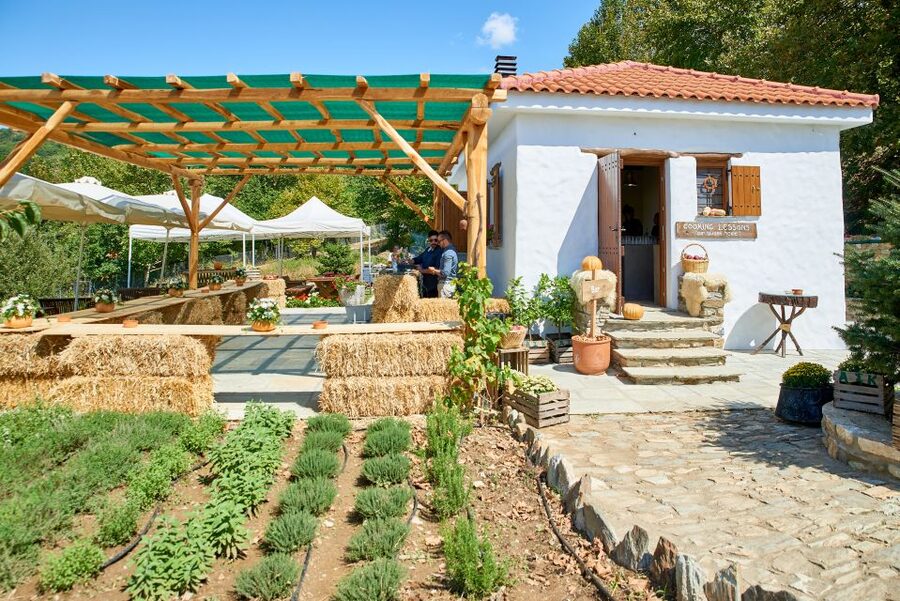
- Harvest what you cook in the farm’s organic garden, then use those ingredients immediately
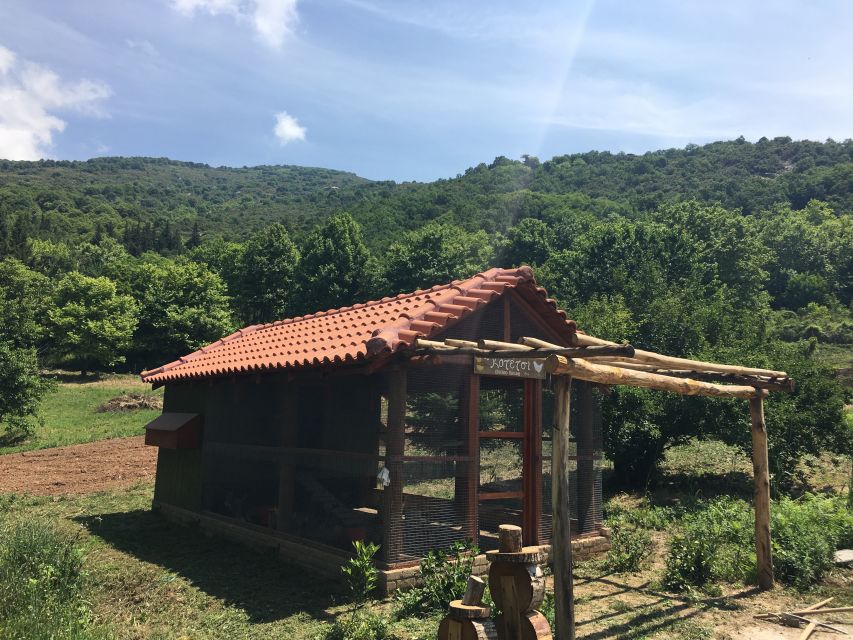
- Fresh eggs and herbs gathered on-site, including from the chicken house
- Wood-fired oven open kitchen cooking, with locals teaching traditional recipes
- Tsipouro + a small meze during the lesson to keep things relaxed and social
- Private group setup with instruction in English and Greek
- Small gifts at the end, packed into a bag when you finish
A hands-on Greek farm kitchen near Portaria
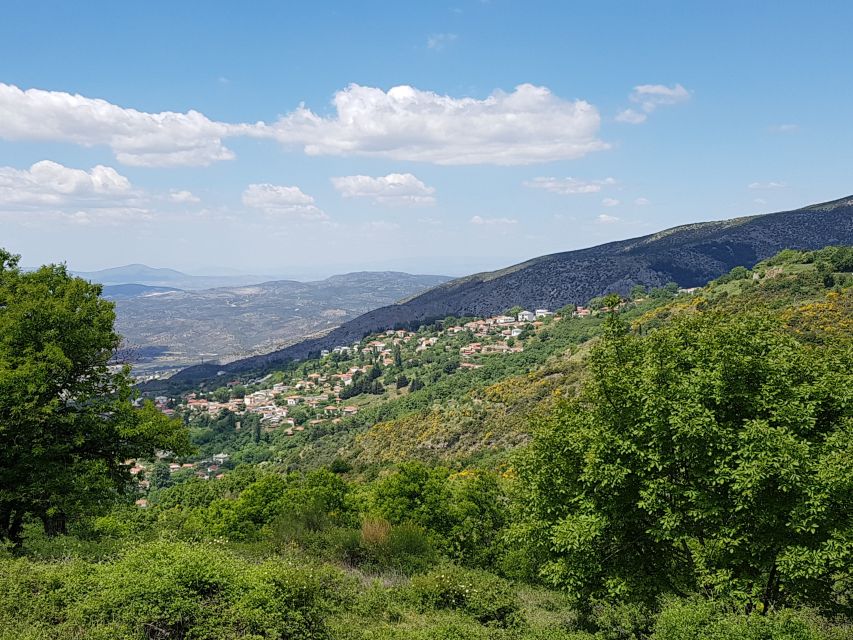
If you’re the type who learns by doing, this experience fits like an apron. It’s set at Karaiskos Farm in Thessaly, and the format is simple: you gather ingredients, you cook them with locals, then you eat what you cooked. No museum vibes. This is real food work.
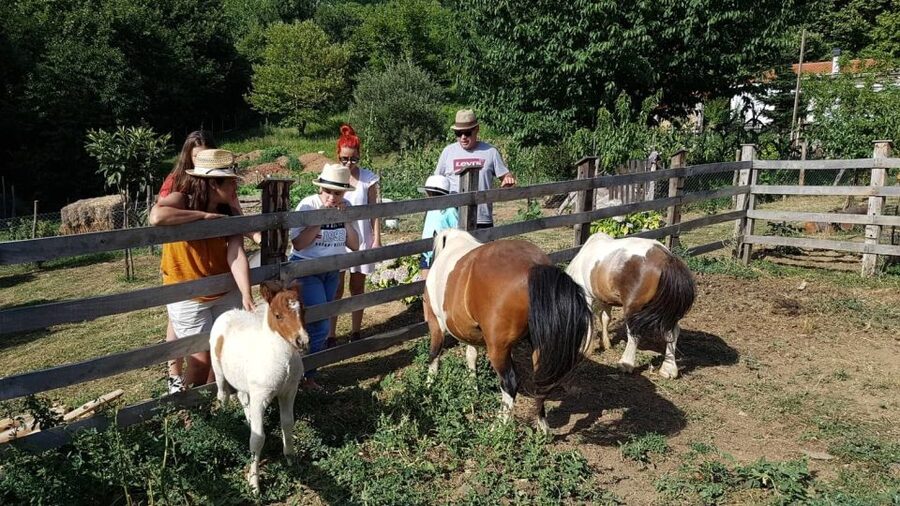
The setting matters. You’re not just watching a kitchen demo; you’re in an organic farm environment, walking the garden and moving through the steps of a typical Greek home-cook rhythm. That “from dirt to table” flow is what makes this feel practical, not performative.
The private group style is also a real plus. It means the instructor can help you with what you’re actually doing, not just what you’ll do in theory.
Getting to Karaiskos Farm (and why it matters)
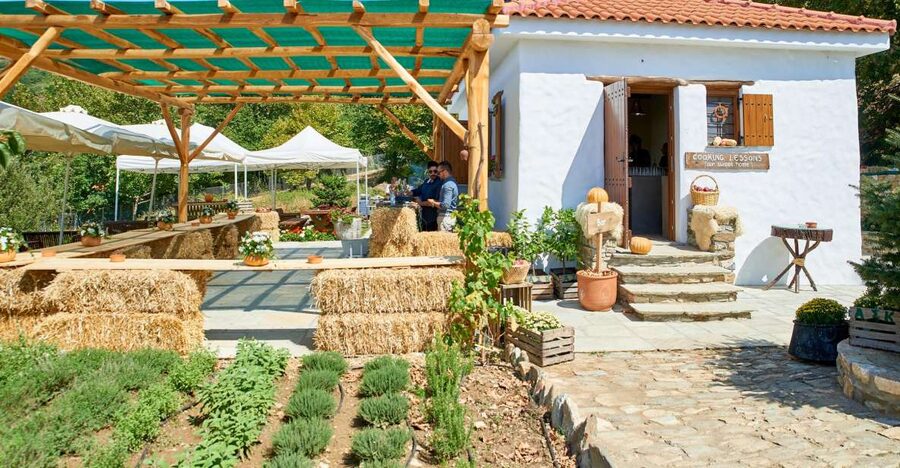
The activity meets at Karaiskos Farm, about 2 km by car from the center of Portaria village. From the meeting point, you’ll walk to the farm’s organic garden to start the ingredient collection.
Because there’s no hotel pickup or drop-off, you should think through transport before you book. If you’re staying in Portaria, it may be manageable to self-arrange your way. If you’re based farther out, you’ll want a clear plan so you’re not stressed right when the class starts.
Why this matters: cooking classes run on timing. When you show up late, you miss the early harvest window—which is a big part of the value here. Show up ready to walk and work.
The ingredient walk: vegetables, herbs, and fresh eggs
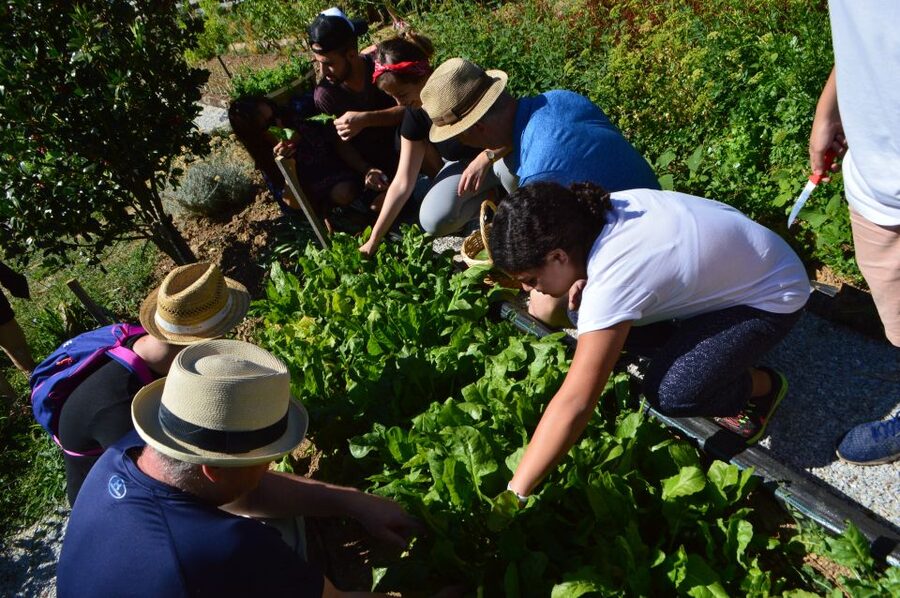
First stop is the farm’s organic garden. This is where you’ll collect the ingredients you’ll use in the cooking lesson. It’s not just a photo break; you’re actively gathering what the recipes call for.
You’ll also collect fresh eggs from the chicken house and herbs from the herb garden. That combination—eggs, herbs, garden vegetables—signals what you’re in for: Greek home cooking built on straightforward, seasonal ingredients.
This part is great for two reasons.
First, it makes the recipes feel doable back home, because you know exactly where key flavors come from.
Second, it helps you understand the logic of Greek cooking: herbs and simple ingredients treated with respect, not hidden under heavy sauces.
Wear shoes you don’t mind getting slightly farm-dusty. You’ll be moving around, and comfort beats fashion here.
Cooking at the wood-fired oven: where the lesson becomes real
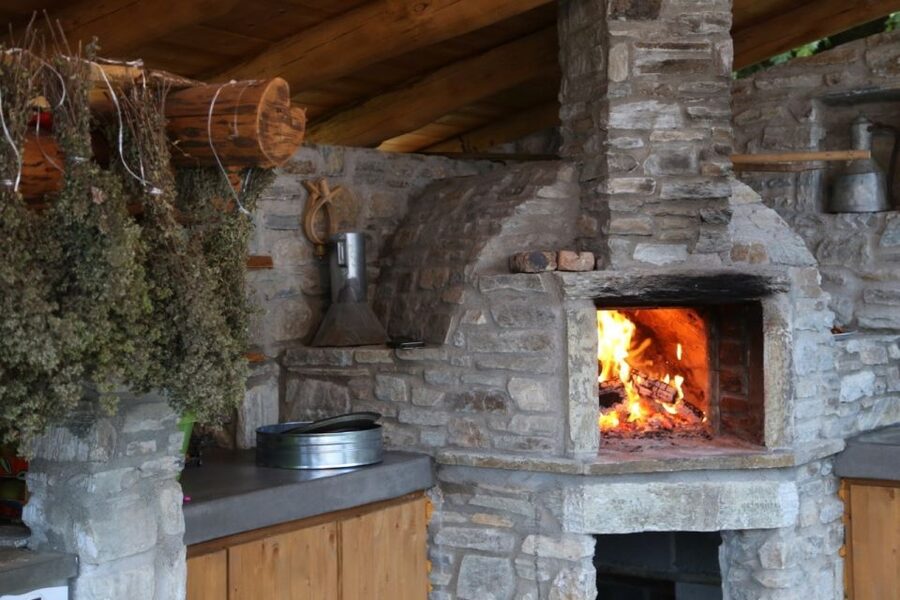
After the ingredient gathering, you move to the wood-fired oven in the open kitchen. This is the core teaching moment. You’ll cook local recipes using traditional techniques, guided by your hosts.
A wood-fired setup changes the pace and feel of cooking. Heat behaves differently than standard ovens, and that means the hosts’ instructions are practical. Watch closely, then do. That’s the best way to learn here—hands on, with feedback.
You’ll also be working in the same space where food is being prepared for the meal you’ll later sit down to eat. That reduces the usual “cooking class disconnect,” where the lesson is separate from the dinner.
And yes, it’s social. The cooking isn’t sterile. You’re working with real tools and real timing.
Tsipouro and a small meze during the lesson
Greek food often includes the slow rhythm of eating and drinking alongside cooking. Here, that rhythm is built in. Throughout the cooking lesson, you’ll sip tsipouro, and you’ll have a small meze.
This adds two things to the experience:
You get a taste of local drinking culture without turning the class into a party.
And you get a chance to talk with your hosts while the food is going.
Tsipouro is a traditional Greek spirit, and having it during the lesson makes the whole thing feel like a local kitchen experience rather than a staged demonstration. Even if you only sip, it helps you settle in.
Sit down and eat what you cooked
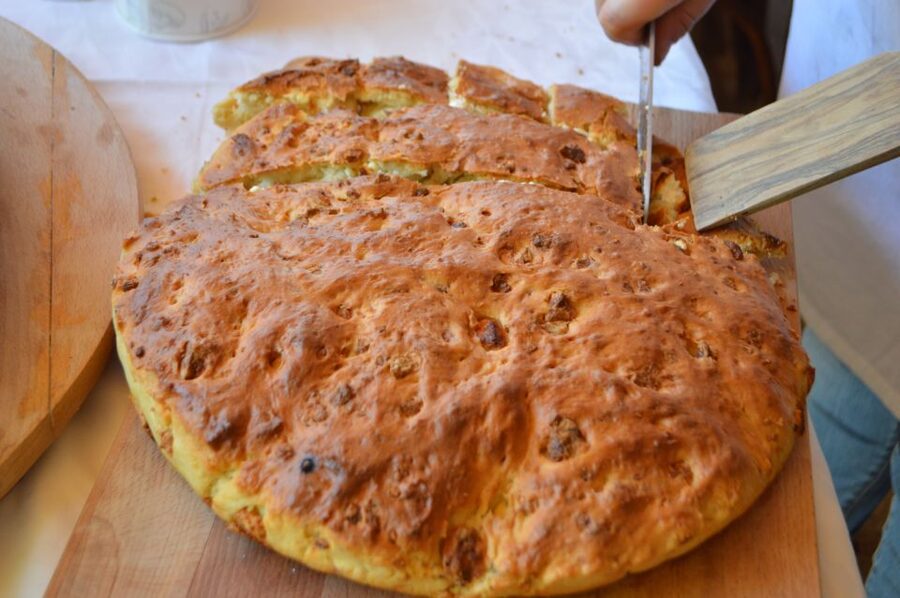
Once the cooking lesson finishes, you set the table and sit down to enjoy what you prepared. This is the payoff: the meal isn’t an extra add-on. It’s included as part of the experience.
That sit-down component matters. Many cooking classes teach technique but shortcut the actual eating. Here, you experience the full loop: ingredients, prep, cooking, and then the real moment of tasting what you made.
Because snacks and drinks are also included, you’re not constantly checking what’s missing. You’re fed, and you’re focused.
The hosts also provide a laid-back atmosphere. From the feedback you can expect from this kind of farm class, people consistently describe the guidance as friendly and the food as delicious—exactly what you want when you’re learning new techniques.
What you actually learn (so it sticks)
Even when recipes are straightforward, people often forget cooking classes are also about method. This one leans into traditional approaches: ingredient timing, oven cooking realities, and how Greeks build flavor through fresh items.
From the flow of the experience, you’ll come away understanding:
- How a Greek dish can start with simple garden ingredients and still feel special
- How herbs and eggs can give structure and richness without complicated processes
- How wood-fired heat influences cooking steps, so you can respect timing when you recreate it later
If you’re hoping for a list of restaurant-style tricks, you might find yourself thinking more in terms of home cooking. But that’s the point. This is about becoming comfortable with the basics that make Greek food taste like Greek food.
Price and value: is $113 per person worth it?
At $113 per person for about 3.5 hours, you’re paying for more than instruction. You’re paying for:
- A real farm setting in Thessaly
- Ingredient harvesting (vegetables, herbs, eggs)
- A wood-fired oven cooking lesson with locals
- A sit-down meal plus snacks and drinks
- All necessary equipment
- A private group format
When you total it up, the value comes from the complete package. You’re not just learning to cook—you’re also eating your results in a location that gives the ingredients real context.
The main cost risk is transportation, since hotel pickup isn’t included. If you can get there easily, this price feels like a “full experience” deal. If you have to spend extra to reach the farm, you’ll want to factor that in before committing.
The small details that make it feel local
It’s the in-between parts that often decide whether a tour feels authentic. Here, the experience is built around everyday kitchen moments: gathering ingredients, cooking at an open wood-fired oven, sipping tsipouro with a small meze, and setting the table together.
You’ll also finish with a bag of small gifts. It’s not usually the headline item, but it’s a nice touch that supports the “local hospitality” vibe.
And the hosts’ communication style matters. The instruction is provided in English and Greek, which helps if you want clarity without feeling locked out. Even in a private group, having the ability to switch languages can make the lesson smoother.
Who this tour suits best
This is best for people who want hands-on learning and a meal included in the same experience. If you like cooking classes where you touch ingredients and work on real equipment, you’ll likely enjoy this format.
It also suits:
- Foodies who want regional Greek cooking, not generic Greek branding
- Travelers who enjoy organic farm settings and seasonal ingredients
- Groups who prefer a private group rather than a mixed crowd
If you dislike walking around farms or want everything set up without movement, you might find the harvest walk and garden steps a bit active. But for most active travelers, it’s a fun part, not a chore.
Should you book Volos Cook Like a Local at a Greek Farm?
Book it if you want the kind of cooking lesson that starts in the garden and ends at the table. The combination of ingredient harvesting, wood-fired oven cooking, and a sit-down meal makes it feel complete, not partial.
Skip—or at least plan extra carefully—if you need hotel pickup or if your transportation to Portaria/karaiskos Farm is complicated. Since pickup and drop-off aren’t included, your ability to show up on time affects your experience.
FAQ
FAQ
Where does the experience start?
You’ll meet at Karaiskos Farm. It’s about 2 km driving from the center of Portaria village.
How long is the cooking experience?
It lasts about 3.5 hours. Starting times depend on availability.
Is it a private group?
Yes, the experience is offered as a private group.
What languages are used during the lesson?
The instructor teaches in English and Greek.
What do we do during the half day?
You gather ingredients in the organic garden, collect eggs and herbs, cook local recipes in a wood-fired oven in the open kitchen, sip tsipouro with a small meze, then set the table and eat your meal.
What is included in the price?
The experience includes the sit-down meal, snacks and drinks, and all necessary equipment.
Is hotel pickup or drop-off included?
No. Hotel pickup and drop-off are not included.
Can I cancel if my plans change?
Yes. There is free cancellation up to 24 hours in advance for a full refund.
Can I pay later?
Yes. You can reserve now and pay later.