REVIEW · FUERTEVENTURA
Fuerteventura farm, caves and rural villages tour with lunch
Book on GetYourGuide →Operated by TUI Spain · Bookable on GetYourGuide
Fuerteventura gets under your skin fast. This 8-hour loop mixes rural villages, sea caves, and two hands-on food stops, so you see more than the quick photo spots. What I like most is the way the day is paced around places you can actually walk through, not just point-and-drive viewing.
I also really enjoy the culture stops. Betancuria’s church scene and Pajara’s unusual Aztec-looking façade give you that wow feeling, even on a day that also includes viewpoints and practical island talk from the guide. And the best part for me is the food: you’ll taste locally made goat cheese, plus honey rum liqueur, and you’ll get an aloe vera farm intro that’s more useful than it sounds.
One drawback to plan for: it can feel like a long day on a coach. A few timing details depend on pickup flow, so if you’re hoping for lots of unhurried time at the caves or you want explanations at each exact site, you’ll need to set expectations and keep your shoes ready.
In This Review
- Key moments worth circling on your map
- Fuerteventura in Eight Hours: a practical route across the island
- Aloe Vera Farm Start: wellbeing talk with real-world context
- Pajara’s church façade: Aztec-looking details in a small village
- Ajuy’s black-sand beach and sea caves: the west coast effect
- Betancuria: Santa María, museums, and Las Peñitas viewpoints
- Valle de Santa Inés lunch: local ingredients in a family-run setting
- Goat farm tasting: the food stop most people remember
- What Marta’s guide style adds (and what can feel rushed)
- Price and value: is $74 a good deal for this day?
- Logistics you should plan around: pickup, walking, and timing
- Who should book this and who should skip it
- Should you book this Fuerteventura farm, caves, and rural villages tour?
- FAQ
- How long is the tour?
- What’s included in the price?
- What kind of tastings will I get?
- Do I get lunch on the tour?
- Which villages and sites does the tour include?
- Do you visit an aloe vera farm?
- What languages is the guide available in?
- Is the tour suitable for wheelchair users?
- What should I bring for the day?
Key moments worth circling on your map
- Marta’s bird fact: 44 bird species on a tree-light island (she compares it to Madeira).
- Pajara’s Nuestra Señora de la Regla church façade with Aztec-style carving.
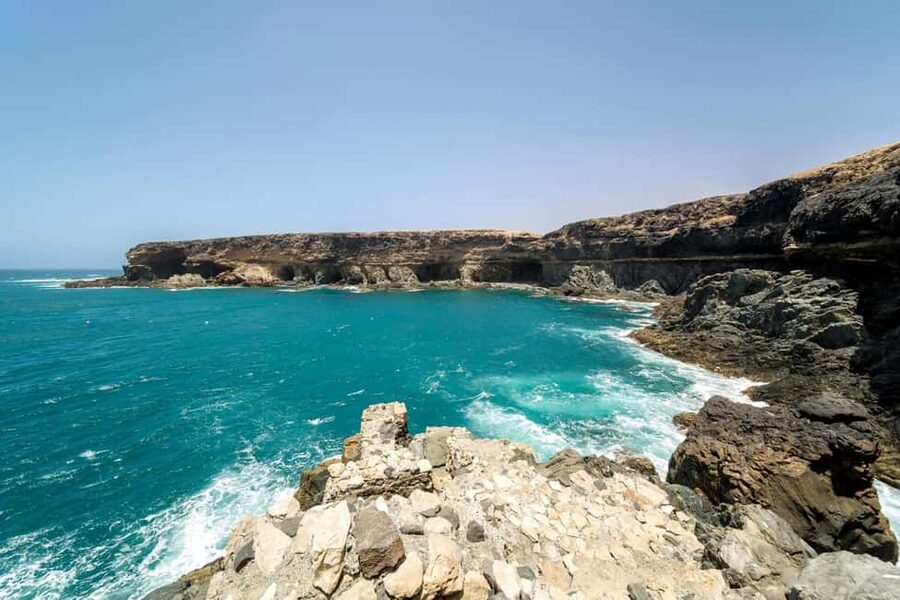
- Ajuy’s black-sand beach and sea caves carved into chalky cliffs.
- Betancuria’s Santa María church linked to 1424 and the Canaries’ oldest church claim.
- Lunch in Valle de Santa Inés at a family-run restaurant using local ingredients.
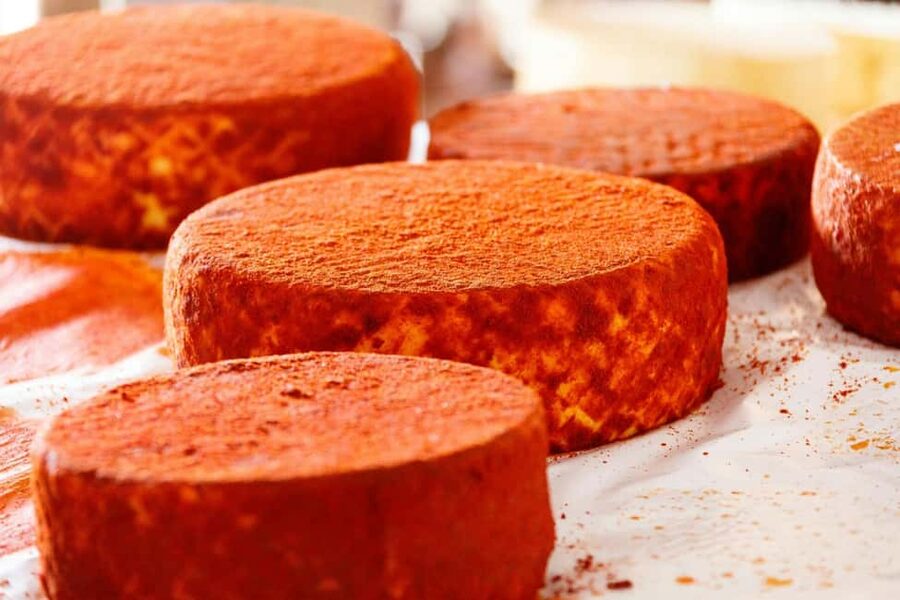
- Goat farm tasting: goat cheese, jams, and honey rum liqueur.
Fuerteventura in Eight Hours: a practical route across the island
This tour is built for first-timers who want a lot of variety without driving. You’re out for about 8 hours, and the route is a smooth back-and-forth across the island’s interior towns and west-coast scenes. Expect a mix of short walking stretches and photo stops, plus several moments where you’ll stand around and take in dry mountain views before heading to the next village.
The coaching matters here. You’ll be on a bus for transfers, and that’s where the day can stretch long if pickup runs late. Still, the route gives you a real sense of what Fuerteventura is like: stark terrain, white-stone towns, and the contrast of dark sand against pale cliffs.
You can also read our reviews of more tours and experiences in Fuerteventura.
Aloe Vera Farm Start: wellbeing talk with real-world context
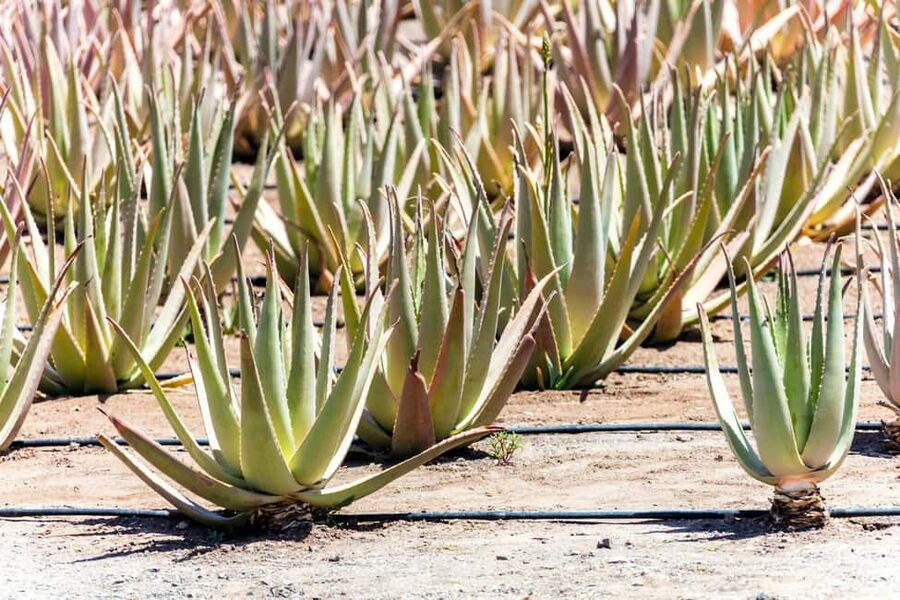
You begin with one of the island’s best-known products: aloe vera. You’ll visit an aloe vera farm where you learn how aloe became an all-rounder in wellbeing and why it fits island life as a crop. It’s not just a sales pitch type stop; it’s an educational start that sets you up for the rest of the day’s theme: how Fuerteventura’s land and traditions shape what you taste and see.
Why I think this stop works: it’s a calm beginning before you hit churches and coastal caves. If you’re the type who likes to understand where things come from, you’ll appreciate this because it connects the island’s agriculture to modern uses.
Pajara’s church façade: Aztec-looking details in a small village
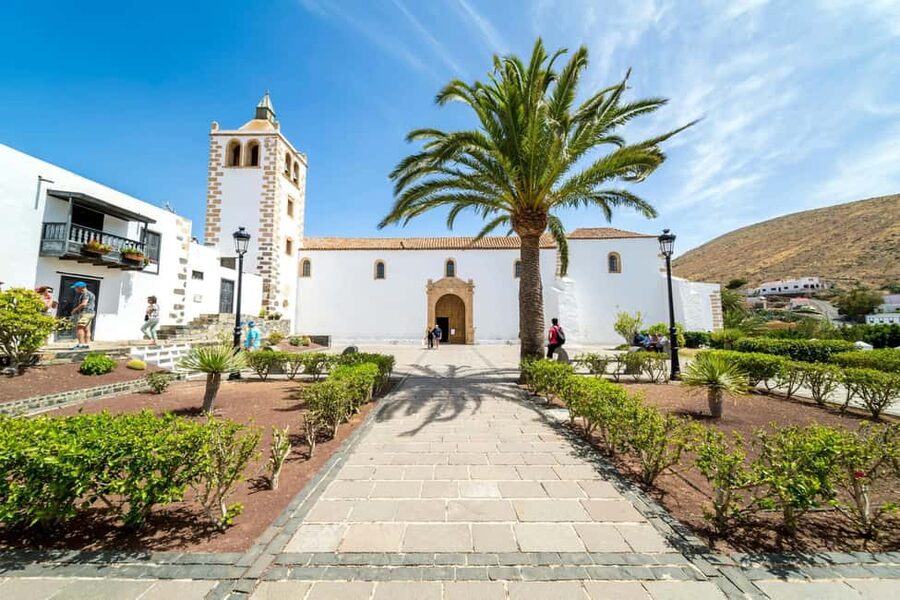
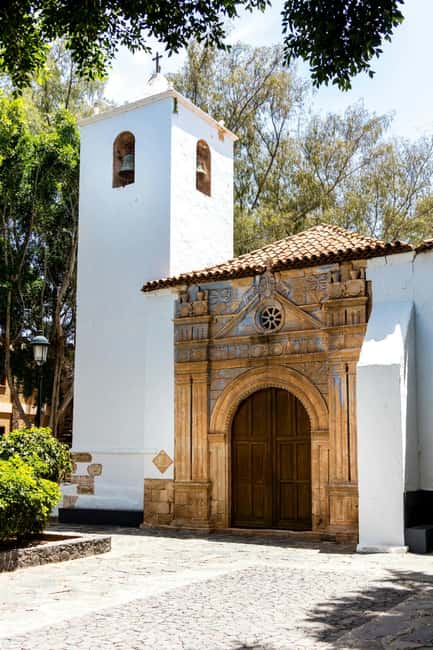
Next, you head to Pajara to see Nuestra Señora de la Regla. The headline is the standout façade, described as Aztec-looking, with carved elements that feel surprising on this island. Even if you’re not a hardcore architecture person, churches like this are easy to read visually: face, doorway details, and the way the stone catches light in a town that looks almost sun-bleached.
There’s also a bigger point. This is a village where the past still shapes how people move through town. You’re not just taking a picture; you’re looking at how local identity shows up in religious buildings and public space.
Ajuy’s black-sand beach and sea caves: the west coast effect
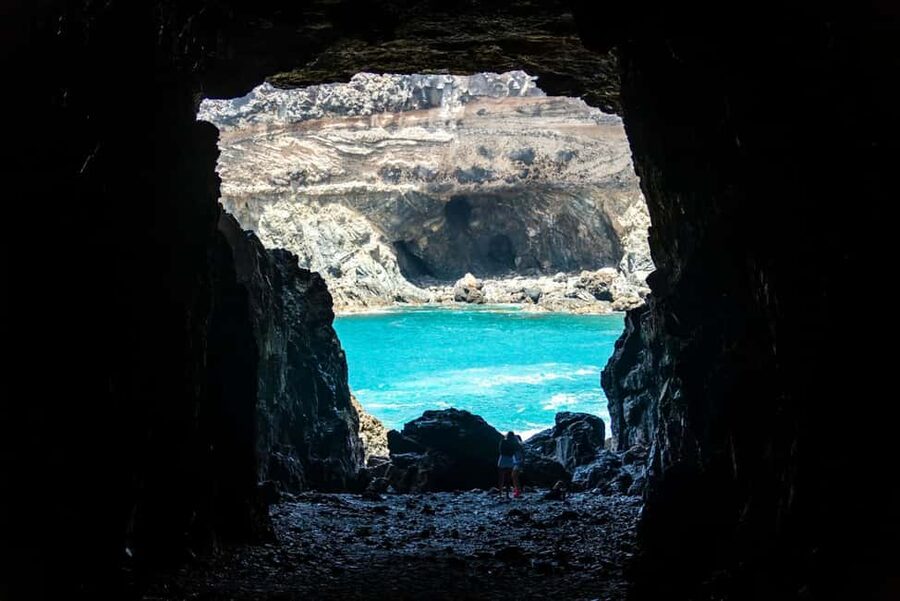
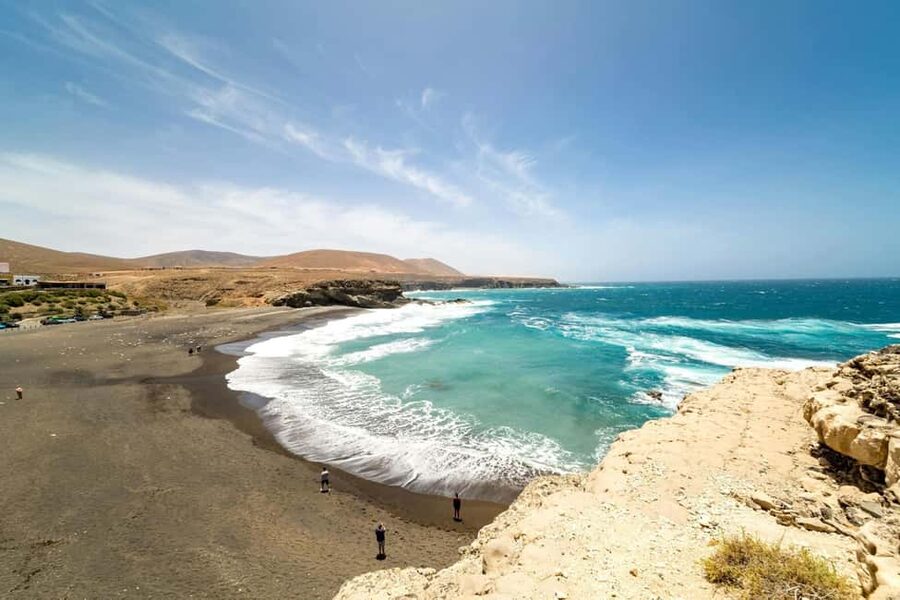
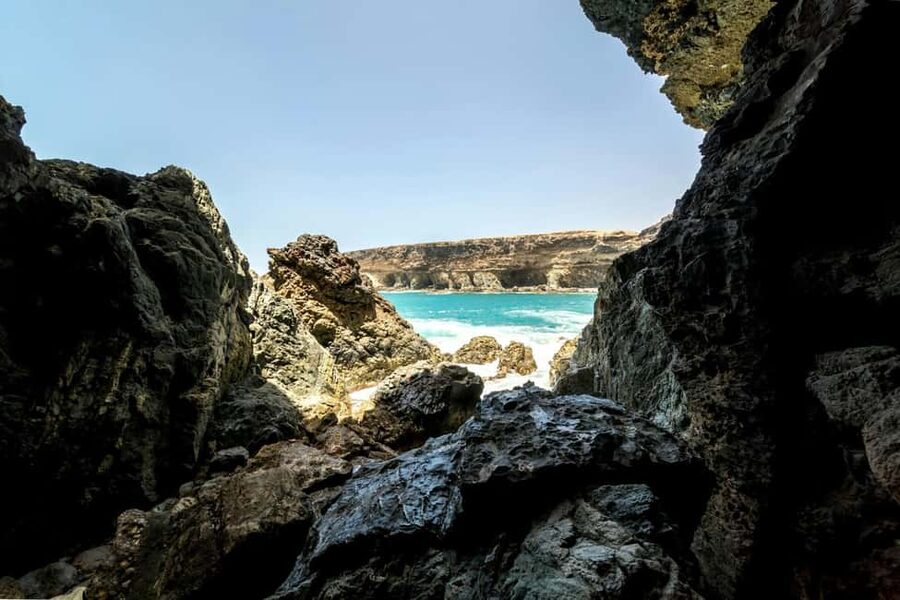
Ajuy is one of those places where the first sight hits you. You’ll drive to the tiny west-coast fishing village and then explore a black-sand beach along with sea caves in chalk cliffs. It’s a dramatic contrast: dry inland terrain meets dark sand and rugged coastal rock.
Here’s the practical part. Sea caves and coastal cliffs depend on timing and how quickly the group needs to move. If you’re hoping for deep cave wandering or lots of lingering time, keep in mind the day is packed with other stops. Still, Ajuy is the kind of place where even a shorter visit can feel memorable because the setting is so distinctive.
Also, this is a good place to slow down for photos. The cliffs create natural framing, and the dark sand makes the whole scene pop even in plain daylight.
Betancuria: Santa María, museums, and Las Peñitas viewpoints
Betancuria is where the tour leans more historical and less coast-and-caves. You’ll have a photo stop at Las Peñitas, looking out over parched mountains and the ocean. Then you step into Betancuria itself, where Santa María is a key draw.
Santa María is consecrated in 1424, and the tour positions it as the oldest church in the Canaries. Even if you don’t focus on dates, it gives you a concrete sense of age, and the village setting helps. Betancuria is compact enough that it feels like you’re walking through a lived-in past rather than a fenced-off exhibit.
You may also visit an archaeological museum with exhibitions that help explain the area beyond the church walls. If you like connecting architecture with human activity, this museum stop can add meaning to the surrounding streets.
Valle de Santa Inés lunch: local ingredients in a family-run setting
Lunch happens in Valle de Santa Inés at a family-run restaurant. The meal is described as made with locally sourced ingredients, and the lunch is included in the price, so you’re not scrambling for food mid-day.
What to expect from a value lunch on a tour like this: it’s meant to be filling, straightforward, and convenient. The upside is that it gives you a taste of the island without forcing you to research restaurants and wait times. The main downside is you won’t control the schedule, so lunch quality is still best thought of as solid and local, not a gourmet experience built for a food review.
Goat farm tasting: the food stop most people remember
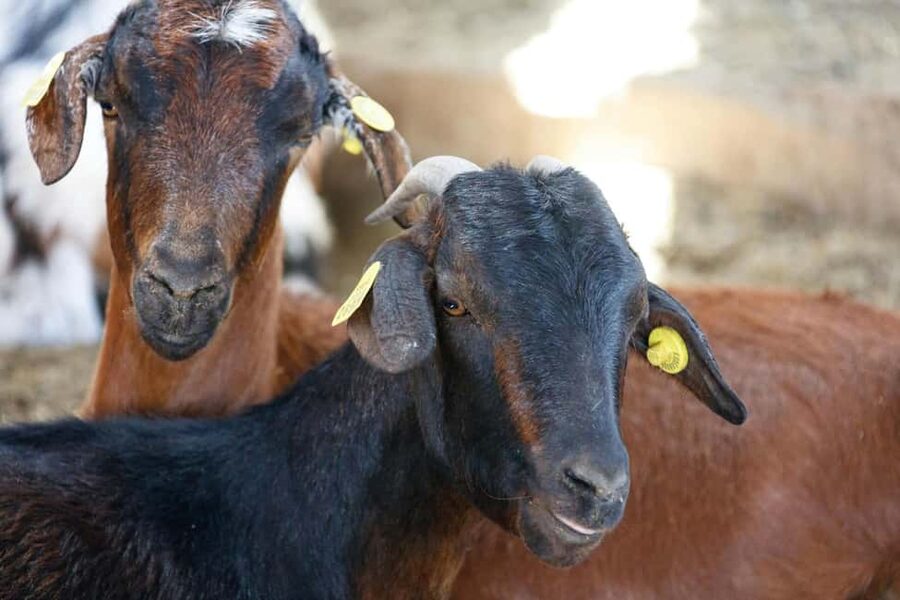
If you care about animal produce and “how it tastes” over “how it looks,” this goat farm is your highlight. You’ll visit a goat farm and then sample locally made goat cheeses, plus local jams and honey rum liqueur. The tasting is a big part of the overall value because it ties directly to what you’re seeing and why it exists in a farming village.
This is also where you’ll notice the biggest variation in how tours feel. Some people love the farm experience as the best part of the day, while others felt the tasting was short and the setup could have used more explanation. You can still treat this stop like a chance to try multiple flavors, but if you’re the type who wants a full guided production walkthrough, go in with flexibility.
What Marta’s guide style adds (and what can feel rushed)
A huge part of why this tour works is the guide, including Marta. She shares that striking island bird fact: 44 different bird species on Fuerteventura, even with few trees. That kind of detail makes the day feel less like bus tourism and more like guided discovery.
In practice, though, the pacing can decide how satisfying the day feels. Some people prefer learning at the actual spots, not just from the bus while moving between them. Others also felt the cave time could be tighter than ideal, especially when pickup and in-between bus flow starts late.
So here’s my advice: listen on the bus, yes, but plan to ask yourself what you want to see most. If caves are your top priority, keep your camera handy and don’t assume you’ll get unlimited time at each stop.
Price and value: is $74 a good deal for this day?
At $74 per person for about 8 hours, this tour is priced like a classic island coach excursion: you’re paying for transport, guide time, admission fees, and the included meal plus tastings. That matters on Fuerteventura because distances are real, and public transport or rental-car planning can eat your day.
For value, the key is the mix:
- You get at least two strong “sense of place” stops (Ajuy’s coast and Betancuria’s village).
- You get two food tied experiences (lunch plus goat cheese and honey rum tasting).
- You don’t have to coordinate between multiple locations.
Where value can feel lower is when the day runs late or a stop feels brief. That doesn’t automatically mean the sites are bad; it means the experience relies on good timing. If you’re the type who hates rushed schedules, you might feel the coach part more than you expect.
Logistics you should plan around: pickup, walking, and timing
First, this tour isn’t built for mobility needs. It’s not suitable for wheelchair users and it’s also not suitable for reduced mobility due to moderate walking distance. You’ll want suitable footwear because you’ll be moving on village streets and uneven terrain in a few stops.
Now for pickup and timing. Even when the tour itself is good, your day can wobble if pickup points aren’t clear or if you’re not in the right place at the right moment. Some people ended up at the wrong pickup spot and missed the initial departure, then needed a quick fix. Others noted they were collected from a more distant point and then spent extra time waiting to join the group.
My practical takeaway: confirm your pickup location and meeting instructions before you leave. If the pickup point seems vague, double-check by phone or message with the operator so you don’t lose the first chunk of your day.
Who should book this and who should skip it
This tour is a great match if you:
- Want a first-timer overview of villages, coast, and farming without renting a car.
- Enjoy guided context, especially when a guide connects island traits like agriculture and birds to what you’re seeing.
- Like included food stops and don’t mind that lunch and tastings are part of the tour rhythm.
You may want to skip it if you:
- Need lots of slow time at each stop, especially caves.
- Have mobility limits that make moderate walking hard.
- Get stressed by pickup confusion and coach schedules.
If you’re comfortable with a day that runs on timing and you want a lot of variety, this fits well.
Should you book this Fuerteventura farm, caves, and rural villages tour?
I’d book it if your top goal is variety with a guide, and you’re happy to trade some free time for a well-packed route. Betancuria, Ajuy’s black-sand coastline, and the Pajara church façade are strong anchors, and the goat farm tasting plus honey rum liqueur give you a memorable food payoff.
I’d think twice if you hate tight stop schedules or you’re very sensitive to pickup logistics. If you go, show up prepared: wear good shoes, confirm meeting instructions, and treat the day like a guided highlights reel rather than a slow wander.
If that sounds like your style, you’ll likely end the day with more than photos. You’ll have a feel for the island’s farming side, coastal character, and village history—without needing to plan every turn yourself.
FAQ
How long is the tour?
The tour lasts 8 hours.
What’s included in the price?
It includes transport, a live guide, admission fees, lunch, and a local delicacy tasting.
What kind of tastings will I get?
You’ll sample local specialties including locally made goat cheese, local jams, and honey rum liqueur, plus you’ll visit a goat farm.
Do I get lunch on the tour?
Yes. Lunch is included, served at a family-run restaurant in Valle de Santa Inés with locally sourced ingredients.
Which villages and sites does the tour include?
You’ll visit Pajara (including Nuestra Señora de la Regla church), Ajuy (black-sand beach and sea caves), and Betancuria (including the Santa María church and a chance to see an archaeological museum).
Do you visit an aloe vera farm?
Yes. The tour starts with a visit to an aloe vera farm where you learn how aloe became used in wellbeing.
What languages is the guide available in?
The live guide is available in English and German.
Is the tour suitable for wheelchair users?
No. It is not suitable for wheelchair users and not suitable for those with reduced mobility due to moderate walking.
What should I bring for the day?
Bring suitable footwear, since the tour involves moderate walking and village/coastal terrain.