REVIEW · FUERTEVENTURA
Fuerteventura Villages Caves and Farm Tour with Lunch from South
Book on Viator →Operated by Destination Services Spain · Bookable on Viator
One day, lots of textures: sand, chalk cliffs, old churches, and working farms. This is a solid way to get your bearings on Fuerteventura without renting a car, thanks to pickup by coach and a guided route that mixes village charm with food and farming.
I especially like the pairing of aloe vera (you’ll learn why it matters on the island) with tastings that actually connect to what you’re seeing. I also like that the day includes lunch and several admission fees, so you’re not constantly checking prices mid-trip. One drawback to keep in mind: the schedule is packed, and if you want long, slow hangs at every stop, the timing can feel a bit tight—especially at the caves.
In This Review
- Key Highlights You’ll Care About
- Price and Logistics: What $72.10 Really Buys
- Starting at the Aloe Plantation: A Fast Way to Understand the Island
- Pajara and Nuestra Señora de la Regla: Village Charm With Real Character
- Ajuy Black-Sand Beach and Sea Caves: Short Time, Strong Impact
- Betancuria’s Santa María Church: Oldest Canarian Roots
- Finca Canarias Aloe Vera: Cava and a Second Look at the Farm Story
- Lunch at Valle de Santa Inés: Simple, Local, and Actually Useful
- Los Alares Goat Farm: Tastings That Make Fuerteventura Feel Personal
- Group Size, Guide Style, and the Pace Reality
- Practical Tips to Get More From Every Stop
- Who This Tour Fits Best (and Who Should Skip)
- Should You Book This Fuerteventura Caves and Farm Tour?
- FAQ
- How long is the tour?
- What time does the tour start?
- Do I get hotel pickup?
- Is the tour in English?
- What’s included in the price?
- Is lunch included?
- Are admission fees included for all stops?
- Is the tour suitable for reduced mobility?
- What should I bring?
Key Highlights You’ll Care About
- Aloe vera plantation stop with real island context and a included cava glass
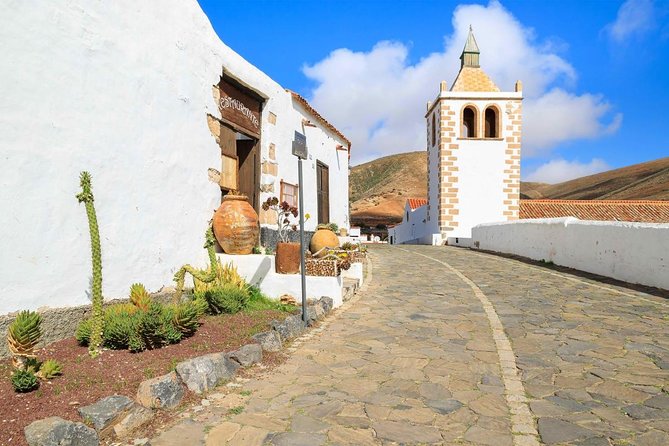
- Pajara village visit centered on Nuestra Señora de la Regla’s standout façade
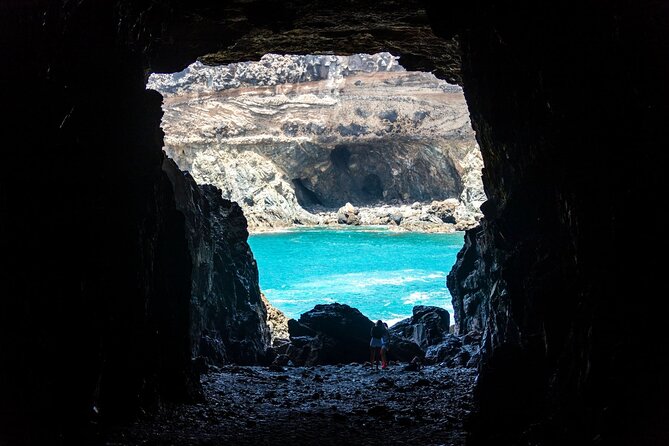
- Ajuy black-sand coast and sea caves set into chalk cliffs
- Betancuria’s Santa María church (consecrated in 1424) plus optional museum time
- Valle de Santa Inés lunch at a family-run restaurant using locally sourced ingredients
- Los Alares goat farm tasting with local cheeses, jams, and honey rum liqueur
Price and Logistics: What $72.10 Really Buys
For about $72.10 per person, you’re getting an 8-hour day that includes transport, a guide, lunch, tastings, and admission fees. That matters on Fuerteventura, where driving yourself means paying for a rental, fuel, and parking—plus figuring out opening hours. Here, you’re paying mainly for convenience and for the guide to stitch the day together.
It runs from 8:35 am, and the company arranges pickup based on where you’re staying. You’ll get your exact pickup time and place after confirming, and if you haven’t heard back at least 48 hours before, you should reach out. Your ticket is mobile, and the tour caps out at 50 travelers, which is big enough to feel lively but small enough that you’re not disappearing into the crowd.
This is also a day with moderate walking, so it’s not the best choice if mobility is limited. And since the tour includes pickup and drop-off, the time you’re out the door is the full day experience—not just the sightseeing portions.
You can also read our reviews of more tours and experiences in Fuerteventura.
Starting at the Aloe Plantation: A Fast Way to Understand the Island
The day begins with a learning-first stop at an aloe vera plantation. This isn’t just a pretty photo moment. The point is to explain how aloe became one of Fuerteventura’s best-known products and why it shows up in the wellbeing world.
You’ll meet the idea of aloe the way locals likely experience it: as a working part of the island’s economy, not a souvenir idea. It also sets an easy tone for the rest of the day. Once you’ve seen the plant and heard the reasoning, you’ll start noticing how farm stops and village life connect.
A nice touch here is pacing. You’re not jumping straight into church façades and cliffs. You’re building context first. And later, you’ll return to aloe again at Finca Canarias Aloe Vera, so you get a bigger picture rather than a one-off stop.
Pajara and Nuestra Señora de la Regla: Village Charm With Real Character
Next up is Pajara, a village stop that feels made for wandering—slow, curious wandering. You’ll visit Nuestra Señora de la Regla, known for its Aztec-looking façade. That mix of styles is exactly the kind of thing that makes these smaller Canarian towns more interesting than generic “white village” postcards.
Pajara is also where the guide’s storytelling starts to land. The day doesn’t feel like a checklist. It feels like you’re being given a lens: how people built, worshiped, and expressed identity in a place that’s both dry and surprisingly expressive.
The time here is about 20 minutes, and that’s a key point. If you want detailed photos of architecture, move early within that window. In short stops like this, you don’t get a second chance.
Ajuy Black-Sand Beach and Sea Caves: Short Time, Strong Impact
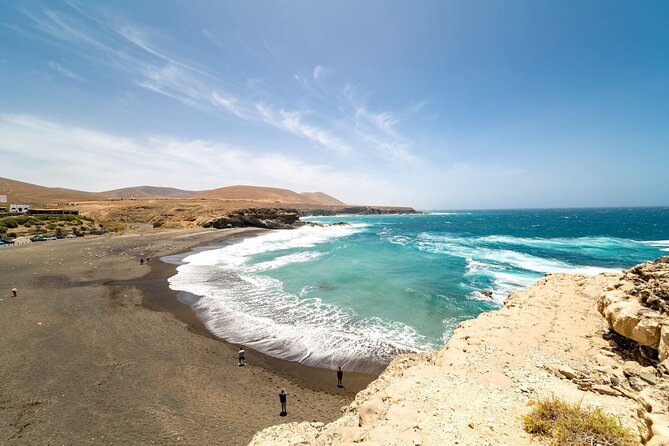
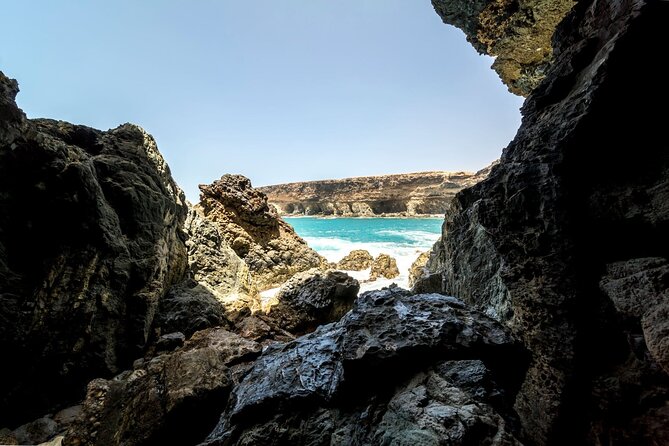
Ajuy is one of the most dramatic stops on the route. You’ll drive by the tiny fishing village on the west coast, then have time to explore black-sand beach and sea caves in chalk cliffs.
This is one of those places where you can’t fully appreciate it from a bus seat. You need your own steps to notice the way the coastline cuts the rock, and how the caves sit like scars carved into the cliffs. The chalk cliff setting gives everything a pale, ghostly edge that contrasts hard with the dark sand.
You’ll have about 45 minutes for this part. That’s often enough to see it properly if you keep a simple game plan: look from the key viewpoint first, then walk to where you can see the caves and return before you feel rushed. Some organization feedback mentioned that cave time can feel tight, so I’d treat it as a do-the-must-see list kind of stop. Bring comfortable footwear and don’t plan to linger longer than your tour timing allows.
On the way to the next area, you’ll also stop at Las Peñitas for a viewpoint photo stop over parched mountains and the ocean.
Betancuria’s Santa María Church: Oldest Canarian Roots
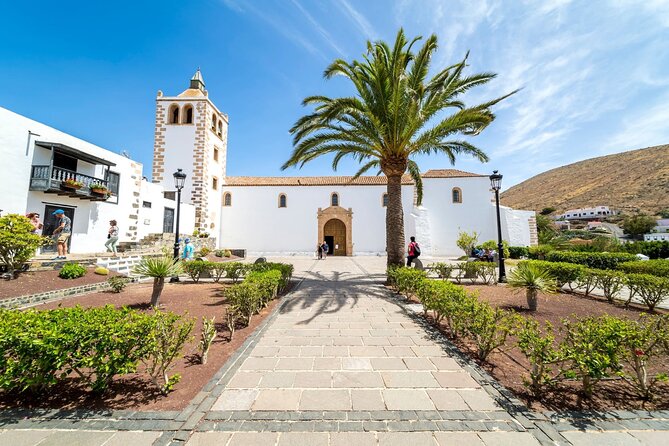
Then the day slows into history at Betancuria. Your main focus is Santa María, described as the oldest church in the Canaries, consecrated in 1424. Even if you’re not a church-architecture superfan, the age alone gives it weight. The point isn’t just the building. It’s what the building represents: the way the island’s identity formed and endured.
You’ll have about 30 minutes here. The church visit time is relatively short, but it’s framed with the option to see the archaeological museum as well. Museum admission is not included, so if that part matters to you, plan for an extra paid stop inside the time window.
This is also a good example of the tour’s style: you get guidance and context, but you’re still expected to make choices quickly. I like that approach for a day tour. It keeps you moving and avoids long museum marathons.
Finca Canarias Aloe Vera: Cava and a Second Look at the Farm Story
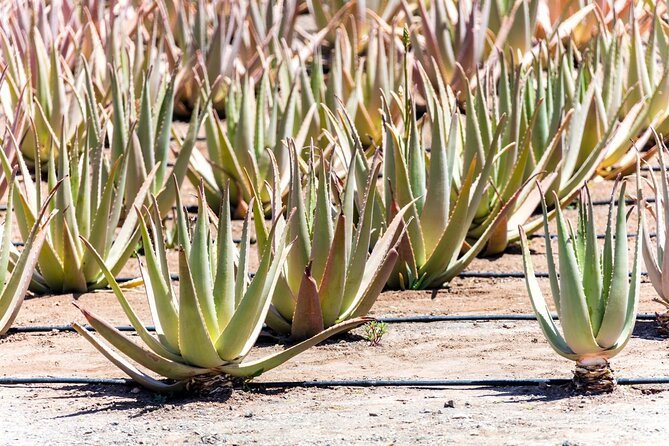
After history, you return to the natural-and-farm side at Finca Canarias Aloe Vera. This is the stop where the day brings a reward. You’ll get a glass of cava included, which makes the aloe lesson feel more like a celebration than a lecture.
You’ll have about 40 minutes, which is long enough to ask questions, walk at a calm pace, and take a few notes for later. Admission is included here, so you’re not juggling tickets on the spot. This helps the day feel smoother, especially if you’re the type who hates paying twice for what should be part of the experience.
This stop is popular in the day’s overall feedback pattern because it combines learning with a tangible payoff. You taste, you look, you understand. If you care about food and local production, this is one of the better “value-per-minute” sections of the route.
Lunch at Valle de Santa Inés: Simple, Local, and Actually Useful
The lunch stop is at a family-run restaurant in Valle de Santa Inés, with roughly 1 hour allocated. The big advantage is that it’s built from locally sourced ingredients.
Lunch is where many group tours get weak—think dry sandwiches and rushed plates. Here, lunch has a stronger role. It gives you a break from walking and a chance to taste something connected to the island’s farms and produce rather than generic tourist meals.
If you’re the kind of traveler who schedules meals around the local food culture, you’ll likely appreciate this part more than most. And if you’re not, it’s still a relief to have a dependable sit-down meal included in the price.
One thing to note: extra drinks aren’t included, so if you want more than water, you’ll be paying at the table.
Los Alares Goat Farm: Tastings That Make Fuerteventura Feel Personal
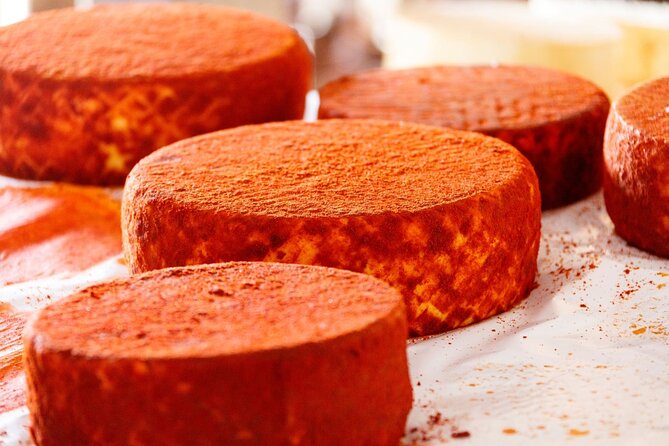
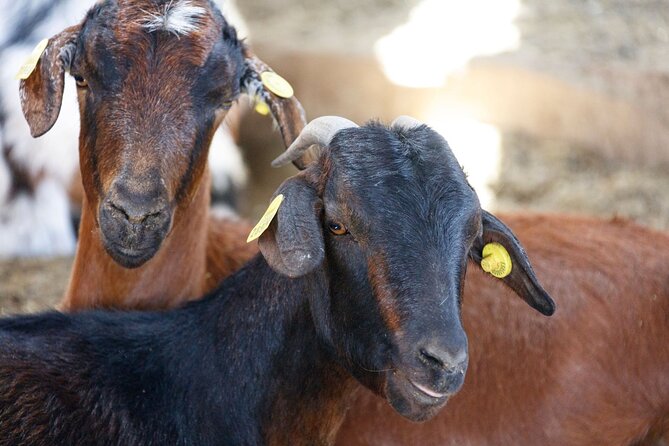
The final stop is Los Alares, a goat farm where you’ll sample local items: cheeses, jams, and honey rum liqueur. It’s only about 30 minutes, but the tastings are the point, not a long tour.
This stop is a great closer because it brings everything together:
- You learned about working farms earlier.
- You ate a locally sourced lunch.
- Now you taste products that feel like a local supply chain, not just food on a plate.
A quick word on pace: in short tasting stops, don’t spend your whole time asking one person everything. Take in the line of sight first, then ask a couple targeted questions. You’ll get more out of the time.
Group Size, Guide Style, and the Pace Reality
This tour keeps things moving with a coach and multiple stops across Fuerteventura’s south. The upside: you see a lot without driving. The downside: you’re always aware you’ve got to get back to the bus.
The best part, when it clicks, is the guide’s storytelling. Some feedback highlighted hosts and guides as informative and friendly, and the coach ride felt safe even on windy roads. I think that’s important for a day like this, because the route depends on the driver hitting timing across different roads and meeting points.
At the same time, there’s a caution flag. Organization can feel uneven in the way you’re guided from stop to stop. If you’re hoping for very specific pointing—where to walk, what exactly to look for, and how to prioritize within limited time—plan to ask questions and stay flexible. The tour gives you a framework. You make the final magic with your own choices.
Practical Tips to Get More From Every Stop
Bring comfortable footwear. You’ll be doing moderate walking across village areas and around the coast. Also, keep your phone charged—this is a mobile ticket tour, and a photo-heavy day makes battery drain real.
Pack light and think in layers for a long day. And bring your own water/snacks mindset. Lunch is included, but timing is fixed, so you’ll feel better if you don’t end up hungry between stops.
If you’re serious about photos at Ajuy’s caves, prioritize getting your shot early in the allocated time. That’s the stop most likely to feel compressed.
Who This Tour Fits Best (and Who Should Skip)
This works best if you want:
- A single-day overview of Fuerteventura beyond the beach
- A balance of culture, coast, and farms
- A tour that covers admission fees and includes lunch
Skip it if you:
- Need long stays at each location
- Have limited mobility for moderate walking
- Want an ultra-slow pace with lots of unstructured time
Should You Book This Fuerteventura Caves and Farm Tour?
I’d book this if you like practical touring: a guided day with solid included value and tastings that match what you’re seeing. The aloe stops, the historic church, and the goat farm tasting give you a storyline from plant to plate to place.
I would hesitate if you hate tight time windows. You’ll be back on the bus often, and Ajuy’s caves can feel rushed if you want to linger. In that case, consider booking a more flexible add-on day later—or plan to return to Ajuy on your own time.
If your goal is a fun, structured day that introduces the island’s real food-and-farm side while hitting key villages and coastlines, this is a good bet.
FAQ
How long is the tour?
The tour lasts about 8 hours, including pickup and drop-off.
What time does the tour start?
The start time is 8:35 am.
Do I get hotel pickup?
Yes. Pickup is offered, and the exact pickup time and place depend on your hotel. You’ll be contacted after booking with details.
Is the tour in English?
Yes, it’s offered in English.
What’s included in the price?
The price includes transport, guide, local delicacy tasting, lunch, and admission fees.
Is lunch included?
Yes, lunch is included and is served at a family-run restaurant in Valle de Santa Inés using locally sourced ingredients.
Are admission fees included for all stops?
Admission fees are included for some stops. For example, the church/museum time in Betancuria has an admission fee that is not included, so you may need to pay if you want the museum.
Is the tour suitable for reduced mobility?
No. It is not suitable for those with reduced mobility due to a moderate walking distance.
What should I bring?
Bring suitable footwear for walking.
If you want, tell me what part of Fuerteventura you’re staying on and whether you’re more into churches, caves, or food. I can help you decide if this pacing fits your style.