REVIEW · PUERTO DEL ROSARIO
Fuerteventura Villages Caves and Farm Tour with Lunch from North
Book on Viator →Operated by Destination Services Spain · Bookable on Viator
Fuerteventura feels like two islands at once—dry and dramatic, then suddenly ocean-made. I love the way this day connects inland churches with Ajuy’s black-sand caves, so you’re not stuck doing the same kind of sightseeing. I also like the food focus: cheese, jams, and local liqueur show up more than once. One drawback: the schedule is tight, and a couple of past guests felt some early stops (goats/cheese and caves) could move along a bit fast, plus vegetarian diners should plan carefully.
The best part is the guide storytelling. On the route, the guide Marta points out a surprisingly big fact about bird life—Fuerteventura has 44 bird species despite the lack of trees. And if you get Jane as your guide, you’re likely to get lots of clear local context; one review also praised driver Fransisco for being friendly. Expect moderate walking and bring sturdy shoes, because this isn’t built for slow, mostly-flat wandering.
In This Review
- Key highlights before you go
- A full-day route that actually changes pace
- Pajara’s Aztec-looking church façade
- Ajuy’s sea caves and black-sand beach at Monumento Natural de Ajuy
- Betancuria’s Santa María church, consecrated in 1424
- Finca Canarias Aloe Vera and the cava toast
- Valle de Santa Inés lunch at a family-run restaurant
- Los Alares goat farm: cheeses, jams, and honey rum liqueur
- Viewpoints and the bird-life lesson that reframes the island
- Price and logistics: what you’re really paying for
- Who should book this Fuerteventura villages, caves, and farm tour?
- Should you book it?
- FAQ
- How long is the tour?
- What time does the tour start?
- Is pickup included?
- What’s included in the price?
- Are admission tickets included for the sites?
- Is there a vegetarian lunch option?
- What kind of walking should I expect?
- How big are the groups?
Key highlights before you go
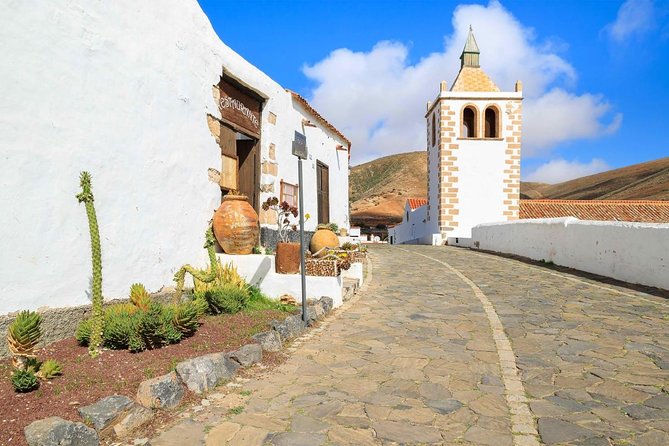
- Pajara’s Aztec-looking church façade: a standout stop where the architecture does all the talking.
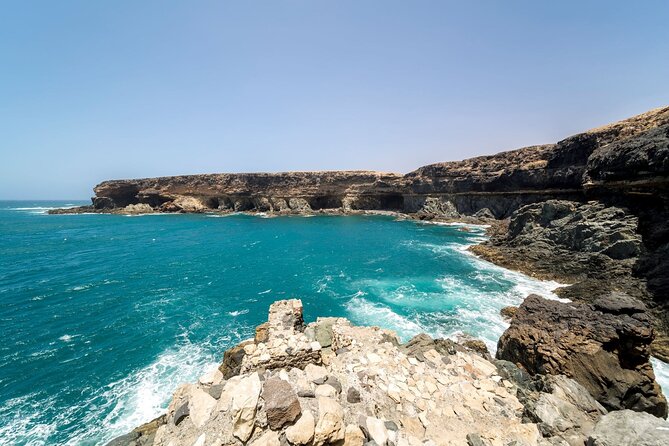
- Ajuy’s black-sand beach and sea caves: dramatic chalk cliffs and ocean views in one hit.
- Betancuria’s Santa María church (1424): one of the oldest Canarian churches, plus a museum option.
- Finca Canarias Aloe Vera stop with cava: a break that still feels tied to local life.
- Los Alares goat farm tastings: cheeses plus the sweeter side (jams, honey rum liqueur).
- Big scenery in limited time: viewpoints between villages help you make sense of the island’s stark look.
A full-day route that actually changes pace
This is an 8-hour circuit that starts at 8:35 am and includes pickup and drop-off. The day is designed like a string of “mini worlds,” moving from inland villages to a west-coast fishing area, then back through farms and lunch. With a maximum group size of 50, you won’t be alone, but it’s also not a huge crowd situation where you lose your bearings.
The price ($72.23 per person) is in the midrange for Fuerteventura day tours, and the value comes from what’s bundled. You’re not only paying for transport and a guide—you’re also getting lunch and tastings, plus admission fees are included. That matters here because several stops are paid entries or set visits, and it keeps the day from turning into surprise add-ons.
The trade-off is time pressure. This tour covers a lot of ground, and if you’re the type who likes to linger in one place, you may feel the itinerary compress. A past guest specifically called out a rushed feel in the early parts, so it helps to go in with a flexible mindset: this tour is built for seeing and tasting, not for slow roaming.
Pajara’s Aztec-looking church façade
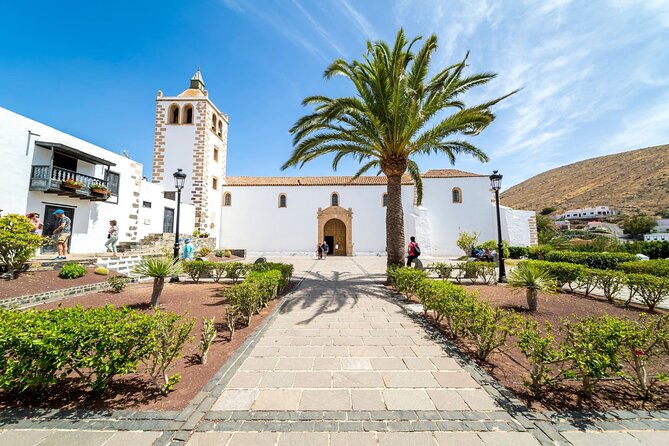
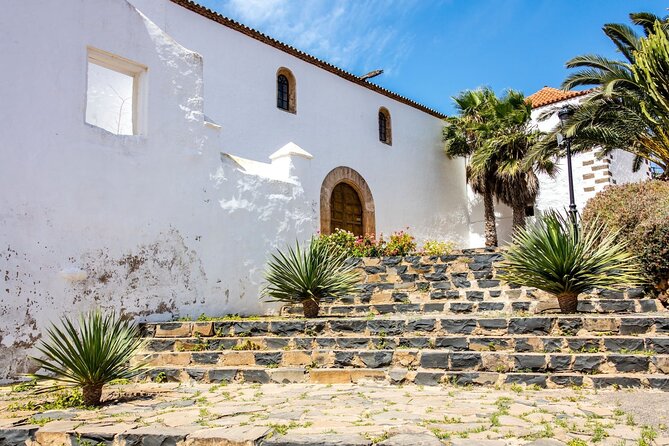
Pajara is a small village stop, but the church makes it worth the detour. You’ll visit Nuestra Señora de la Regla, known for its striking Aztec-looking façade. It’s the kind of architecture that makes you pause even if you usually skip “just another church” moments.
The visit here is short—about 20 minutes—and the admission is listed as free. That means you’ll want to use your time well: take a step back for the overall shape, then move closer for details. If you like photos, this is one of the easiest stops to get a good shot without rushing between multiple locations.
A practical note: church entrances and steps can vary. Since the tour includes moderate walking, wear footwear with good grip, even if you’re only on site briefly.
Ajuy’s sea caves and black-sand beach at Monumento Natural de Ajuy
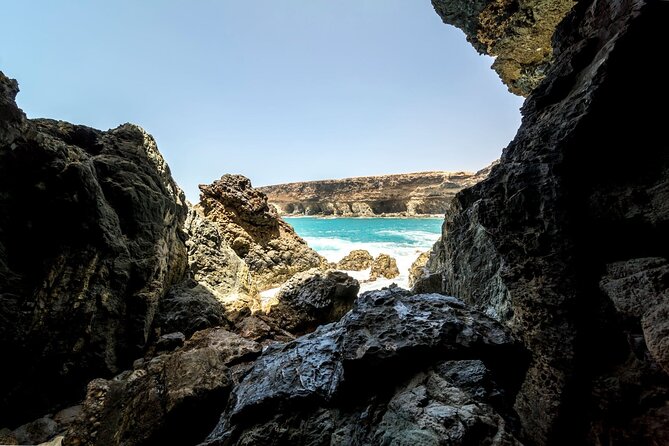
Ajuy is where the island shifts from dry and inland to ocean-facing and rugged. You’ll head to Monumento Natural de Ajuy, where the main draw is the black-sand beach and the sea caves carved into chalk cliffs. It’s the kind of coastline that looks sculpted rather than “natural beach plus view.”
You’ll get about 45 minutes here. That’s enough time to:
- walk along the beach edge,
- watch how the caves relate to tide and waves,
- and take in the cliffs from the right angles.
One reason this stop works in a single-day tour is that you’re not just looking at one point. The caves, the beach, and the cliffs give you multiple ways to experience the same coastline. It’s also visually different from the inland villages, so the mental switch refreshes you instead of tiring you.
If you’re sensitive to uneven ground, keep your eyes on where you step. Sea cave areas and cliff-adjacent spots can be rocky or slippery. Good shoes do more than help—they keep you from cutting your visit short.
Betancuria’s Santa María church, consecrated in 1424
Betancuria is the historical heart of this route. You’ll have time at the Iglesia Catedral de Santa Maria de Betancuria, described as the oldest church in the Canaries, consecrated in 1424. Even if you’re not a church-history person, dates like that change how you see a place. You’re standing in something that’s been part of the island story for a very long time.
This stop runs about 30 minutes. Admission isn’t included for the church itself, but you’ll also have the option to visit an archaeological museum during the time you’re there. That museum option can be a nice way to convert quick sightseeing into “I understand what I’m looking at,” especially for visitors who enjoy context beyond the photos.
Drawback to consider: because time is limited, this isn’t a sit-and-read stop. If museums and slow interior viewing are your priority, you may want to treat this as a taste of history and save deeper exploration for another day.
Finca Canarias Aloe Vera and the cava toast
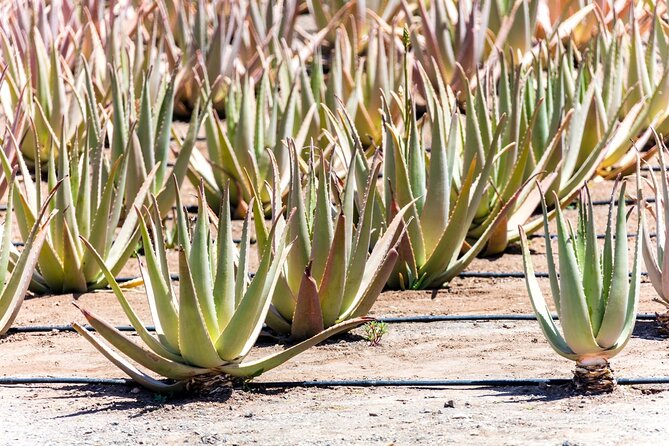
Halfway through the day, you’ll stop at Finca Canarias Aloe Vera for a 40-minute visit. This is one of those “local industry” moments that can feel either educational or commercial—depending on what you’re hoping to get out of it.
What helps here is the included glass of cava. It turns the stop into a small reward moment, not just a factory-like walkthrough. Even if you don’t buy anything, it gives the visit a lighter tone and a clear reason to take a break.
The aloe plantation is also a good match for Fuerteventura’s climate. Aloe thrives in the kinds of conditions you see across the island—dryness, sun, and a landscape that doesn’t pretend it’s easy for plants. During the day, that theme keeps repeating: the island looks harsh, yet life finds ways to grow.
If you’re the type who wants to shop, you might find aloe products or related souvenirs here, but souvenirs aren’t included in the tour cost—plan for extra spending if you want to take something home.
Valle de Santa Inés lunch at a family-run restaurant
Lunch is served in the Valle de Santa Inés at a family-run restaurant. You’ll get about an hour, which is enough time to eat without feeling like you’re grabbing food on the move. The meal is described as made from locally sourced ingredients, and this stop is part of the tour’s “slow down for a breather” rhythm.
One caution: the tour information doesn’t spell out vegetarian choices. In one review, a guest noted there was no veggie option for those who needed it. That doesn’t mean you’ll definitely be out of luck, but it does mean you should check ahead if you eat vegetarian or need other dietary accommodations.
For best results, treat lunch as part of the cultural experience, not just fuel. If you’re curious about what’s grown or produced locally, this is where the tour connects those dots. And since the day includes tastings later, lunch often becomes your “main course” anchor.
Los Alares goat farm: cheeses, jams, and honey rum liqueur
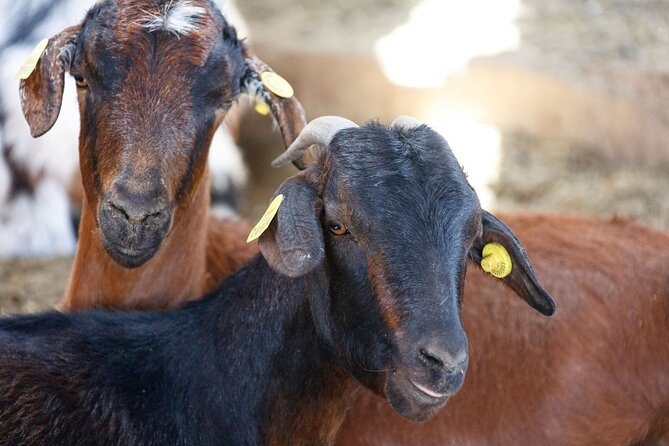
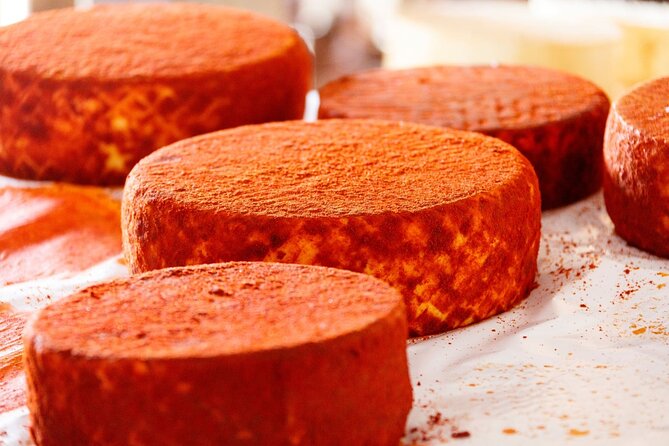
The final “food and farm” stop is Los Alares, a goat farm where you’ll sample local cheeses, jams, and honey rum liqueur. This is also where the tour leans into Fuerteventura’s reputation for dairy and sweet preserves.
You’ll have about 30 minutes here. That’s short enough that you’ll likely do tasting and a quick orientation rather than a long farm walk. Still, it’s one of the most rewarding stops because it turns “I visited a farm” into “I tasted what that farm produces.”
One more reason this stop matters: it gives you something you can remember beyond a photo. Cheese and liqueur are personal tastes—what you like (or don’t) sticks with you. And if you’re planning to bring food back, this is often where you’ll spot the strongest local flavor options.
If pacing is a concern for you, note that one review mentioned the early part felt rushed, calling out goats/cheese factor. So if you want a long tasting conversation, keep your expectations aligned with the 30-minute structure.
Viewpoints and the bird-life lesson that reframes the island
Between stops you’ll drive through Fuerteventura’s unusually stark terrain, with viewpoints used along the way. The tour description notes that the island can look barren at first glance, and that’s exactly why the bird-life fact is useful.
Guide Marta points out that you can find 44 different bird species on Fuerteventura, despite the lack of trees. That detail changes how you look when you’re watching a coastline or standing in a dry stretch. Instead of thinking it’s empty, you start looking for signs of life: movement in the sky, small silhouettes, and the way birds use open terrain.
If you like “explain what you’re seeing” moments, this tour delivers. It doesn’t require you to already know Fuerteventura’s ecology—it hands you a reason to pay attention.
Price and logistics: what you’re really paying for
At $72.23 per person, you’re paying for a full day of transport, a guide, lunch, tastings, and admission fees. For many islands, those categories can get nicked separately if you do them on your own. Here, the structure keeps the day simpler.
You also get:
- pickup offered (so you’re not navigating buses and timetables),
- a mobile ticket,
- and a group capped at 50.
Timing wise, start at 8:35 am means you’ll feel the day, but you’ll also get the benefit of being out before the heat peaks. With only moderate walking required, it’s a manageable day if you show up prepared.
The value question really comes down to your style. If you like packed itineraries that blend villages, caves, and tastings, this is a strong fit. If you hate rushing, consider pairing it with more free time in Puerto del Rosario or planning a slower second day elsewhere.
Who should book this Fuerteventura villages, caves, and farm tour?
This tour suits you if you want:
- a single-day overview of inland history plus west-coast scenery,
- a practical mix of sights and food,
- and a guided day where someone else handles the driving between spots.
It’s especially good for first-time visitors to Fuerteventura who feel overwhelmed by the island’s size. The viewpoints and bird-life lesson help you understand what you’re looking at, not just where to stand for a photo.
Skip or rethink if:
- you need vegetarian-friendly lunch options (the info doesn’t confirm them, and one review flagged no veggie choice),
- you dislike any schedule that feels rushed,
- or you have reduced mobility, because the tour is not suitable for that due to moderate walking distance.
Should you book it?
I’d book this tour if you’re happy with a fast-moving day and you care about mixing scenery with tastings. The standout strengths are the combination of Pajara’s Aztec-looking church façade, Ajuy’s black-sand caves and coastline, and the goat farm cheese-and-sweet lineup that turns the day into something you can taste, not just see.
I’d hesitate if you’re vegetarian or you need a slower pace. The tour runs on a 8-hour structure with short stops, and the lunch/tasting parts are fixed. If that sounds like your kind of plan, you’ll probably enjoy it a lot.
If you want, tell me your travel dates and whether you eat vegetarian, and I’ll help you decide what to prioritize before you go.
FAQ
How long is the tour?
It lasts about 8 hours, and that total includes pickup and drop-off.
What time does the tour start?
The start time is listed as 8:35 am.
Is pickup included?
Pickup is offered, and transport is included as part of the tour.
What’s included in the price?
The price includes transport, a guide, lunch, local delicacy tasting, and admission fees.
Are admission tickets included for the sites?
Admission fees are included as part of the tour, and the church stop in Pajara is listed as free.
Is there a vegetarian lunch option?
The tour details don’t mention vegetarian options, and one review specifically mentioned no veggie option.
What kind of walking should I expect?
The tour involves a moderate walking distance, and it is not suitable for those with reduced mobility.
How big are the groups?
The tour has a maximum of 50 travelers.