REVIEW · MARRAKECH
Moroccan Cooking Class In Farm with Transfer Marrakech
Book on Viator →Operated by Lalla Zahra Cooking Class - Atelier de cuisine · Bookable on Viator
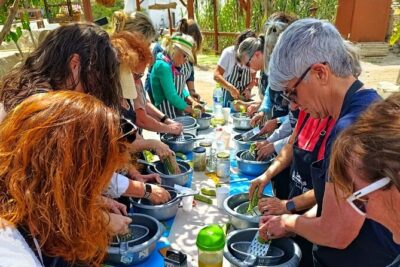
Cooking in the Atlas foothills changes your mood. This Marrakech farm cooking class turns dinner planning into a real skill session: you’ll cook classic dishes like tagine and couscous, make bread with the group, and finish with a meal you helped create. I like that it’s done in a relaxed outdoor setting with mountain views, not a cramped kitchen, and that the guides keep the pace friendly so you actually learn, not just watch.
One consideration: alcohol isn’t included, so if you want beer or wine with lunch, you’ll need to plan ahead.
In This Review
- Farm Pickup and Arrival: Getting a Real Break From Marrakech
- What You’ll Cook: Tagines, Couscous, and Pastilla the Practical Way
- Tagines: Learn the logic, not just the recipe
- Couscous: Speed with structure
- Pastilla: Where sweet and savory meet
- Bread-Making and Kitchen Rhythm: How the Day Actually Feels
- The Meal You Make: Salads, Seasonal Fruit, and Moroccan Tea
- Cooling Off at the Pool: Turning Cooking Into a Full Afternoon
- Vegan and Vegetarian Options: Real Flexibility, Not Just a Label
- Price and Value: What $82.46 Really Buys You
- Guide and Group Size: Why It Matters for Learning
- Who Should Book This Moroccan Cooking Class (and Who Might Not)
- Should You Book This Marrakech Farm Cooking Class?
- FAQ
- How long is the Moroccan cooking class experience in Marrakech?
- Is pickup from Marrakech included?
- What dishes will I learn to cook?
- Does the class include lunch?
- Is there a vegetarian or vegan option?
- What else is included besides the meal?
- Are alcoholic drinks included?
- How many people are in the group?
- What is the cancellation policy?
Farm Pickup and Arrival: Getting a Real Break From Marrakech
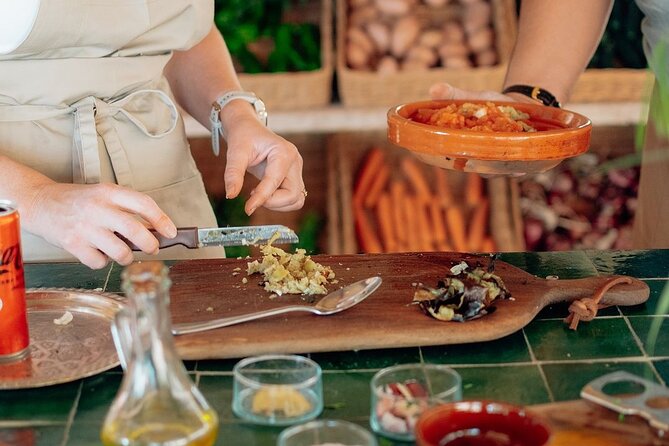
The experience starts with transport from Marrakech in an air-conditioned vehicle, which matters more than it sounds like. You’re leaving the city for a working farm area outside Marrakech, so you want the ride to be comfortable and simple.
When you arrive, the vibe is calm and grounded. You get a quick look at the farm itself and the reality of being outside the city, along with the big payoff: views of the Atlas Mountains. It’s a nice contrast to the medina energy, and it sets the tone for the day. One review highlighted how close it felt to Marrakech (about a half-hour), and the setting was described as original with a beautiful outdoor cooking setup.
Then it’s time to get hands-on. The class is capped at a maximum of 20 people, which helps keep it personal. In other words, you’re not stuck shouting over a crowd while you try to learn a sauce technique.
What You’ll Cook: Tagines, Couscous, and Pastilla the Practical Way
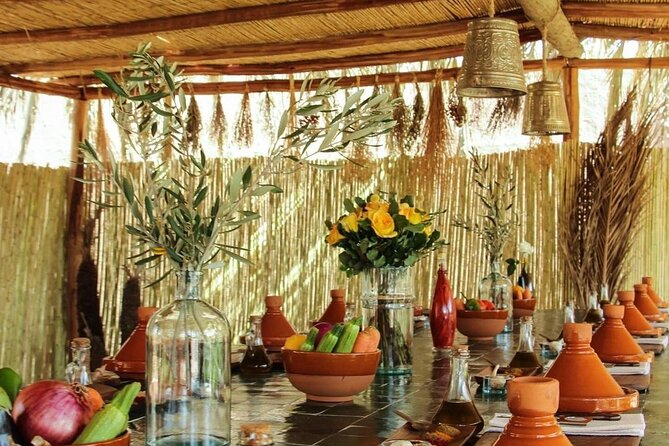
This is a Moroccan food class built around the dishes tourists actually want to learn. Expect a menu that can include multiple tagines (chicken tagine with olives, meat and vegetable tagine, and options like meat and prune tagine) along with couscous variations (with meat and vegetables, and also versions with raisins and onions). You also work on pastilla, including chicken pastilla.
Here’s what I think you’ll enjoy most: the class is structured around technique and teamwork. You’re not just making one dish and calling it a day. You’ll learn how flavor builds in stages, and how Moroccan cooking balances savory with sweet notes, especially in dishes like pastilla.
Also, you’ll cook with support. One review praised Chef Othman specifically for making sure everyone got clear cooking instructions. That’s the difference between a fun activity and a class you’ll still remember at home.
You can also read our reviews of more tours and experiences in Marrakech.
Tagines: Learn the logic, not just the recipe
Tagines are more than a cooking vessel. You’re learning how to layer ingredients and manage time so the dish tastes finished, not rushed. If you’ve ever wondered why Moroccan tagines taste so rounded, this is where you’ll start connecting the dots.
Couscous: Speed with structure
Couscous can feel intimidating until someone shows you how to handle the textures and mixing. You may cover more than one couscous style, including versions with raisins and onions, which is where the sweet-salty balance becomes obvious. You’ll leave with a better sense of what to aim for.
Pastilla: Where sweet and savory meet
Pastilla is the dish people remember because it’s a little theatrical. You’re likely to learn chicken pastilla, which gives you a grounded version of this classic flavor style. If your goal is to impress, pastilla is the best kind of challenging.
Bread-Making and Kitchen Rhythm: How the Day Actually Feels
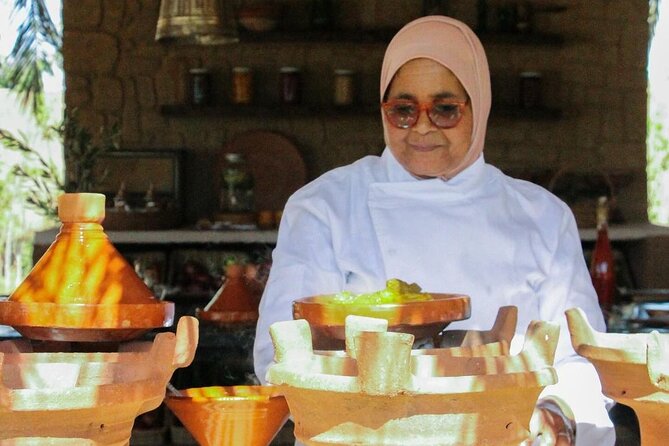
One of the key parts of this class is that you prepare dishes and bread together. That sounds simple on paper, but bread is often the missing piece in cooking classes. Here, it ties the whole meal together and gives you something you can recreate, not just a plate you ate.
The day runs about five hours, and the flow matters. You’ll start with an introduction and then move through cooking in a sequence that keeps you from feeling lost. You’re supported throughout, and you’re encouraged to ask questions about Moroccan cuisine and culture.
That Q&A piece is a quiet value-add. Food is cultural here. When you ask why something is cooked a certain way, you’ll usually get more than a “because that’s how.” You’ll get a sense of how people think about meals at home.
If you prefer learning by doing, this setup fits. If you prefer quiet, watch-from-the-side activities, you might find it hands-on all day. The experience is designed for participation.
The Meal You Make: Salads, Seasonal Fruit, and Moroccan Tea
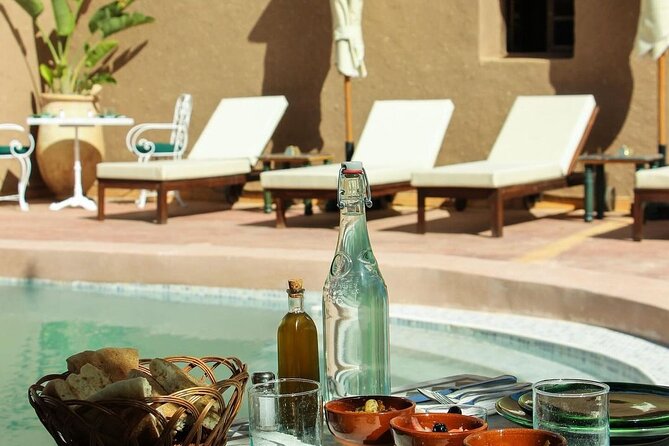
After the cooking work, you share the meal together. This part is important because it’s not separate from the class. You eat what you just made, which makes the flavors easier to understand.
The lunch includes the dishes you prepared, plus salads, seasonal fruits, and Moroccan tea. That combination is classic and practical. Salads and fruit help balance the heavier, spiced elements, and tea makes the whole experience feel complete instead of stopping at lunch.
Then there’s the tea rhythm. You’ll be able to enjoy mint tea again later, especially if you stick around after the cooking is done. Mint tea is one of those small things that signals hospitality, and it fits well with the relaxed farm setting.
One review also mentioned a special sweet from Chef Othman’s secret recipe. Even if you’re not trying to collect desserts like a hobby, it’s a fun bonus that makes the class feel personal rather than generic.
Cooling Off at the Pool: Turning Cooking Into a Full Afternoon
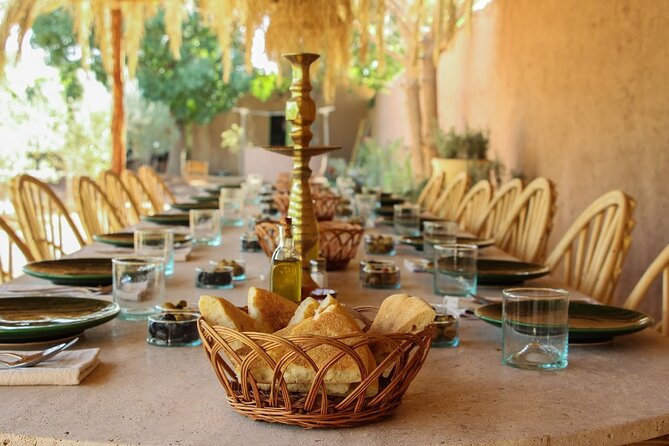
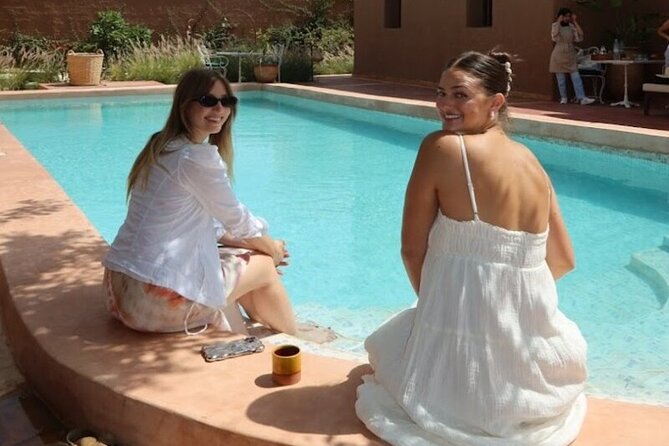
The class isn’t only about the kitchen. You can use the swimming pool to cool off, which changes the feel of a five-hour activity.
In Marrakech, heat can sneak up on you. Having a place to reset after cooking is a real comfort, especially if you’ve been walking all morning. One review tied the experience to the outdoor kitchen and the overall nice setting, and the pool fits that same “slow down” mood.
If you like finishing your experiences with a quiet moment, this helps. If you’re the type who wants nonstop sights, you might view the pool as optional. Either way, it’s a simple added benefit that you don’t always see in cooking classes.
Vegan and Vegetarian Options: Real Flexibility, Not Just a Label
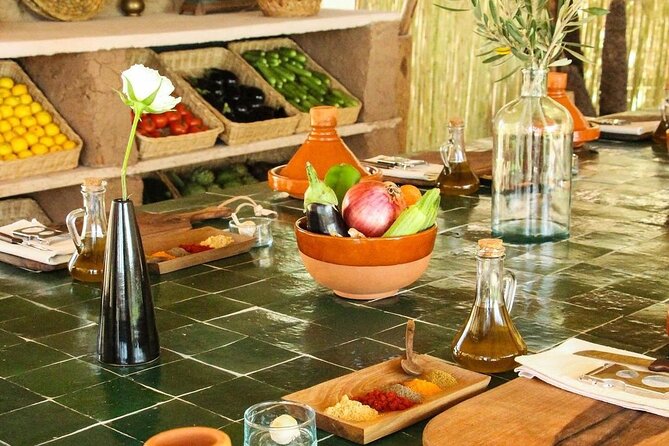
The good news: you can accommodate dietary restrictions like vegetarian and vegan. That’s stated clearly, so you should feel comfortable asking for your needs when you book.
From a practical standpoint, it matters because Moroccan cooking doesn’t only revolve around meat. You can often keep the flavor style while adjusting ingredients, and a good class will guide you so the experience still teaches technique. If you’re traveling with dietary needs, this kind of flexibility is a strong reason to choose this option.
Price and Value: What $82.46 Really Buys You
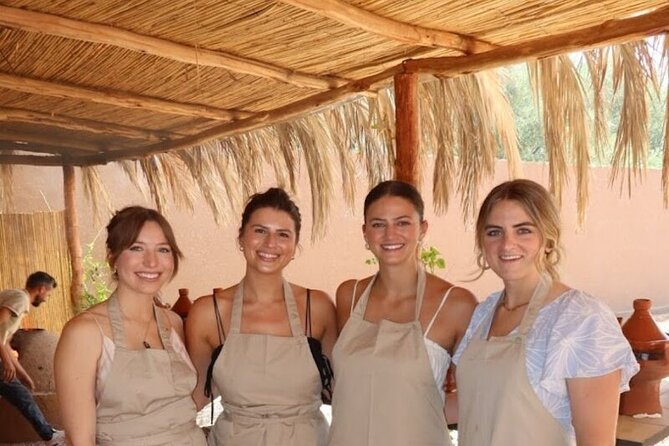
At $82.46 per person, you’re paying for more than “a lesson.” You’re getting private transportation in an air-conditioned vehicle, lunch, bottled water, coffee or tea, access to the pool, and certified guides in multiple languages.
You’re also paying for group size control. With up to 20 people, the class can actually stay instructional. If you’ve done big group tours that feel like you’re stuck at the back, this cap helps avoid that.
Also, it’s booked about 14 days in advance on average. That usually means it’s popular for a reason: it’s a format that works. You get an authentic farm setting outside the city, hands-on cooking, and a meal afterward. If you’re the kind of traveler who wants skills you can use later, this feels like better value than paying for a one-off tasting.
You’re still not getting alcohol included, so treat that as part of the cost calculus if you drink with meals. Otherwise, the package is clear and complete.
Guide and Group Size: Why It Matters for Learning
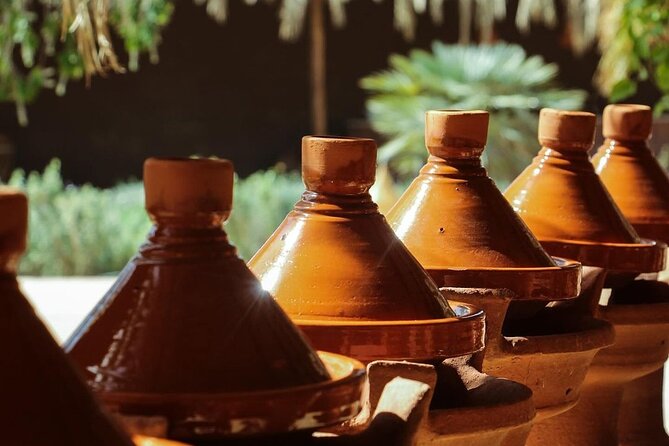
The class is run by certified guides in French, English, and Spanish. That matters because Moroccan cooking terms and technique cues aren’t always intuitive at first. When you can understand the instruction, you cook better. Your food comes out better. You enjoy it more.
In one review, Chef Othman stood out as a nice person and as someone who made sure everyone had cooking instructions that were understandable. That’s the kind of detail that points to a class that’s organized, not chaotic.
With a maximum of 20 travelers, you’re likely to get more direct attention than in a giant workshop. If you like asking questions and actually practicing, this structure supports it.
Who Should Book This Moroccan Cooking Class (and Who Might Not)
Book it if you want:
- Hands-on practice cooking classics like tagine, couscous, and pastilla
- A relaxed farm setting with Atlas mountain views
- A complete meal with salads, seasonal fruit, and Moroccan tea
- A class that can handle vegetarian or vegan needs
- A small enough group to learn real technique
Skip it or compare alternatives if you prefer:
- No cooking involvement at all (this is participation-based)
- Alcohol included with lunch (it’s not part of the package)
- A tightly packed city sightseeing itinerary (this is intentionally outside Marrakech for the cooking focus)
This is a great choice for food lovers, couples, and families with older kids who enjoy cooking. It also works well as a break day when you want something cultural but not rushed.
Should You Book This Marrakech Farm Cooking Class?
I’d book it if your goal is to learn Moroccan cooking in a way that feels doable and memorable. The combination of hands-on cooking, the farm-to-table meal, and the bonus pool time makes it feel like a full experience, not a quick tasting.
If you’re careful with planning for dietary needs, you’ll appreciate that vegetarian and vegan options are supported. And if you want clear instruction in a language you understand, the guide lineup and the small group size are strong practical wins.
Just remember the one trade-off: no alcohol is included. If that’s important to you, factor it in before you go.
FAQ
How long is the Moroccan cooking class experience in Marrakech?
The experience runs for about 5 hours.
Is pickup from Marrakech included?
Yes. Pickup is offered, and transport is provided in an air-conditioned vehicle.
What dishes will I learn to cook?
The class can include tagines, couscous, and pastilla, such as chicken tagine with olives, meat and vegetable tagine, meat and prune tagine, couscous with meat and vegetables, couscous with raisins and onions, and chicken pastilla.
Does the class include lunch?
Yes. Lunch is included, along with salads, seasonal fruits, and Moroccan tea.
Is there a vegetarian or vegan option?
Yes. The experience can accommodate vegetarian and vegan dietary restrictions.
What else is included besides the meal?
You’ll also have bottled water, coffee and/or tea, and access to the swimming pool.
Are alcoholic drinks included?
No. Alcoholic beverages are not included.
How many people are in the group?
The experience has a maximum of 20 travelers.
What is the cancellation policy?
You can cancel for a full refund if you cancel at least 24 hours before the start time. If you cancel less than 24 hours before, the amount paid is not refunded.