REVIEW · MARRAKECH
Cooking Classes Farm to Table Marrakech
Book on Viator →Operated by Farm to Table Marrakech · Bookable on Viator
Tajine lessons start in the market. In Marrakech, this small-group class has you meet at Koutoubia, tour to a local market, then cook on a calm farm kitchen setting. With pickup and a max of 12, it feels personal and not rushed.
I love the market visit because you’re picking fresh vegetables, proteins, fruits, and spices rather than staring at a vague grocery list. I also love the outdoor kitchen approach, where hands-on guidance turns Moroccan cooking from a mystery into repeatable steps.
The main thing to consider is the plan relies on good weather, since the cooking happens outside. You’ll also spend part of the morning walking through the old Medina alleys to reach the market.
In This Review
- Key Points Before You Go
- From Koutoubia to the Medina Market: The Morning Rhythm
- Picking Ingredients Like a Local (Without Feeling Lost)
- The Farm Reset: Tea, Garden Walk, Then the Cooking Starts
- Making Your Tajine: Hands-On Technique You Can Reuse
- More Than a Recipe: Why the Culture Talk Makes the Meal Better
- What You’ll Eat—and What to Think About Back Home
- Price and Logistics: Does It Feel Like Good Value?
- Who Should Book This Tajine Class (and Who Might Not Love It)
- Should You Book Farm to Table Marrakech?
- FAQ
- Where do we meet for the cooking class?
- How long does the experience last?
- Is pickup offered?
- How big is the group?
- Do I need to prepare or plan anything in advance?
- Is the class held outdoors?
- What happens if the weather is poor?
Key Points Before You Go
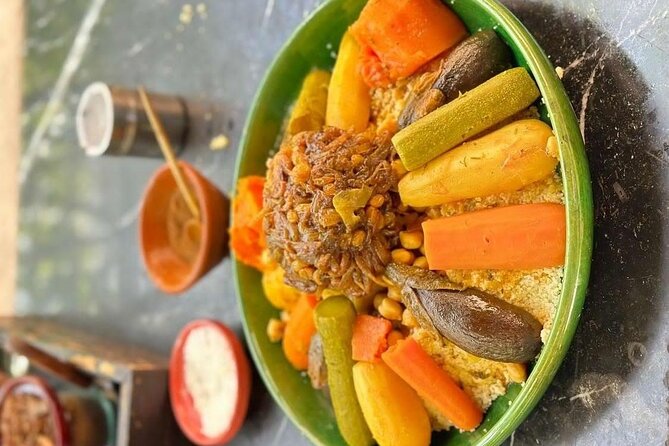
- Small group size (max 12) makes it easier to ask questions and actually cook
- Market shopping helps you learn ingredients in context, not just on a plate
- Farm-to-table setting includes a garden stroll, plus tea and sweets before cooking
- Outdoor cooking teaches technique where it matters, including cooking on coal-style heat (as described in reviews)
- Chef Abdelhak and team bring strong instruction, with sous-chef Fathima often mentioned for support
- Half-day format gives you lunch-like satisfaction and still leaves your afternoon open
From Koutoubia to the Medina Market: The Morning Rhythm
Your experience starts at Koutoubia Marrakesh 40000 and ends back there. The schedule is about 5 hours, which is a sweet spot in Marrakech: long enough to learn real technique, short enough that you’re not stuck in one activity all day.
If pickup is offered for your option, it takes the edge off logistics. Either way, you’ll begin with a short guided walk through the old Medina alleys toward a local market. This part matters more than you might expect. Walking with a guide helps you understand how Marrakech food culture works day-to-day, not just as a tourist photo stop.
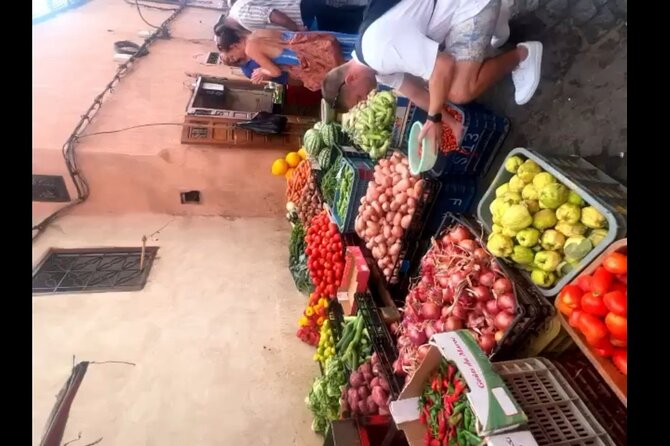
You’re also free to take pictures and videos in the market. That’s handy, because the market is where you’ll see the ingredients that later show up in your tajine: herbs, spices, produce, and proteins in their real trading environment.
You can also read our reviews of more tours and experiences in Marrakech.
Picking Ingredients Like a Local (Without Feeling Lost)
The market stop is the heart of the learning. You’re not just watching someone else shop—you’re getting to buy what will go into your cooking.
Based on the class flow, you’ll typically shop for things like:
- fresh vegetables and herbs
- fruit (often for balance and sweetness, depending on what you choose)
- proteins such as chicken or meat
- spices and spice blends
This is where the class earns its keep. If you only learn recipes, you can still end up with bland results later. But if you learn what ingredients look like and why they’re chosen, you build a framework you can use again at home.
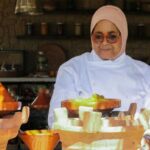
A lot of the praise in the reviews points to this exact moment: the experience feels welcoming from the first minute, and the chef explains culture and cuisine right where ingredients are sold. Chef Abdelhak (sometimes written as Abdel) is repeatedly mentioned as friendly and funny, and in one review his English stood out as excellent. Another name that comes up is Fathima, described as support behind the scenes—so you can expect the group to stay organized while you shop.
The Farm Reset: Tea, Garden Walk, Then the Cooking Starts
After the market, you head back to the farm. This transition is smart. The market can feel intense; the farm brings you back to calm.
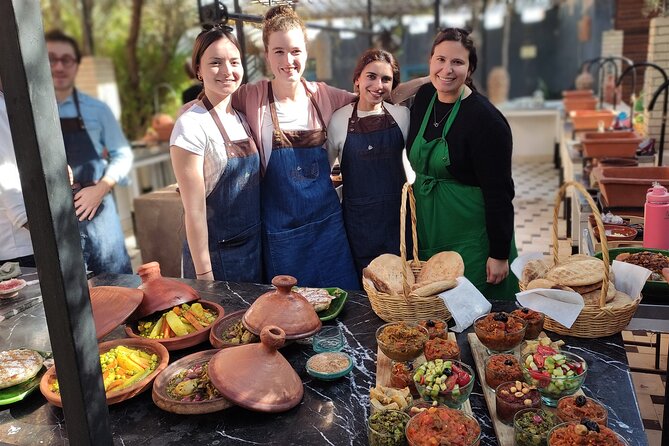
Before cooking, you’ll have Moroccan tea and sweets, plus a tour on the property among trees and vegetation. The tea isn’t just a break—it’s a cultural moment. In Morocco, hospitality and pacing are part of the meal experience. You’ll get time to settle in, meet the rest of your small group, and get focused before food starts happening.
Then you move into the cooking area. You’ll be given an apron, which sounds minor, but it helps you feel ready to do the work instead of acting like a spectator.
The “farm” detail is also a practical win: you’ll be cooking outdoors, likely with open heat and traditional tools. Reviews mention cooking outside on coal, and that style of cooking changes how food responds. Even if you don’t become a “tajine professional,” you’ll leave with a better sense for timing, heat control, and the way Moroccan spices bloom.
Making Your Tajine: Hands-On Technique You Can Reuse
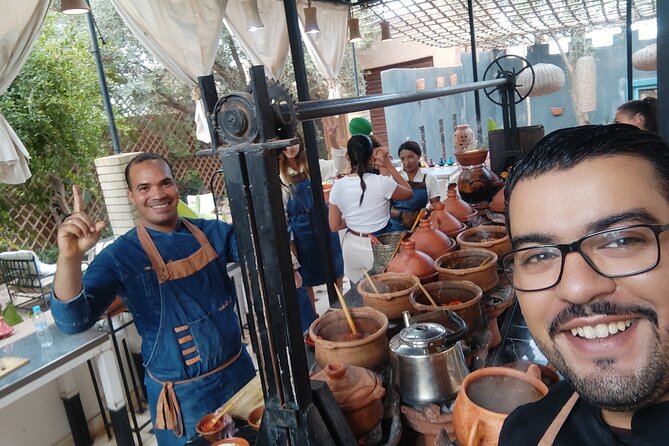
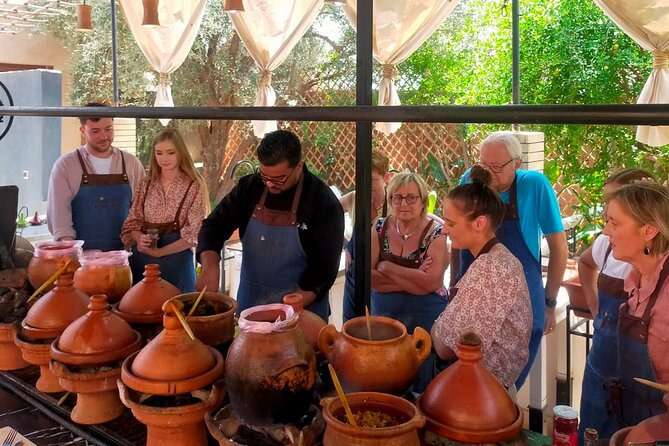
The main activity is hands-on tajine cooking. That means you get your hands into the process—prep, seasoning, assembly, and cooking steps—guided by the chef.
Here’s what you should expect to learn as you work:
- how Moroccan spice mixes are used (and which ones matter)
- traditional preparation methods
- what makes a tajine taste Moroccan beyond just salt and heat
Reviews mention that the chef explains staple spices, plus preparation and history. That history can help you remember the “why,” not just the “what.” And it’s easier to recreate flavors when you understand the logic behind them.
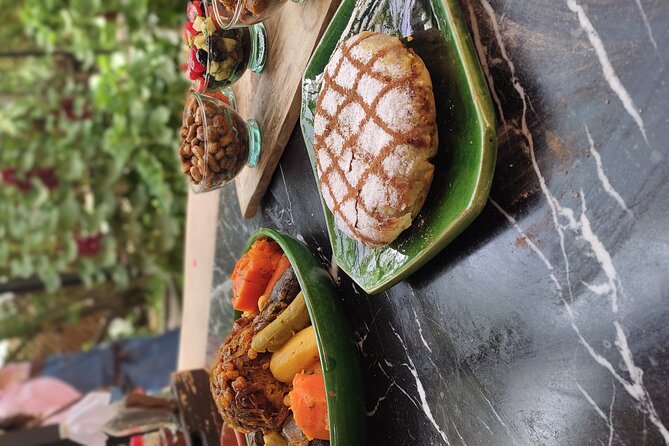
It also sounds like the class isn’t always a one-dish-only situation. Some reviews describe making multiple items such as tajines, plus couscous and salads. Another review notes options for sweet or savory tagines and couscous. I wouldn’t count on a specific menu for every group, but you can feel confident that the class is designed to be more than a single plate.
You’ll also likely learn useful ingredient details. One review specifically mentions using Ras El Hanout spice mix and preserved lemons. You might not get the exact same ingredients each time, but it’s a good sign that the class aims at authentic Moroccan flavor-building rather than generic seasoning.
More Than a Recipe: Why the Culture Talk Makes the Meal Better
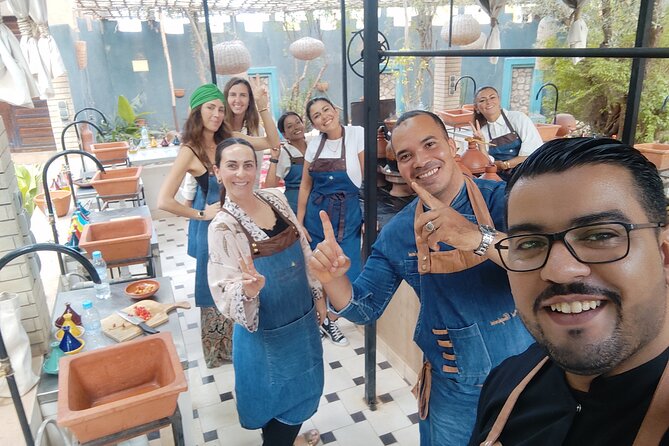
This isn’t only a cooking workout. It’s also a culture lesson that stays grounded in food.
The best part is that the cultural explanations happen at the right moments:
- when you see spices and produce at the market
- when you’re cooking with traditional methods at the farm
- while you’re eating what you made (or at least moving into that eating moment)
That makes the information stick. It’s also why many reviews call this the best activity during a Marrakech week. People don’t usually rave about cooking classes that feel scripted and distant. This one appears to succeed because it’s structured around real Moroccan steps, not just demo-style “watch and taste.”
The chef’s personality shows up too. Abdel is described as welcoming, entertaining, and patient, and the sous-chef support (Fathima) seems to keep things flowing. That matters for you: when instruction is clear and the kitchen runs smoothly, you can concentrate on learning instead of scrambling to keep up.
What You’ll Eat—and What to Think About Back Home
You’ll cook and then dig into what you made. With the half-day format and the way the farm setup works, the meal feels like a lunch experience—something you can build your afternoon around.
As for quantity and variety, reviews mention generous portions and multiple salads or side dishes in some groups. Again, your exact spread can vary by class, but the pattern is consistent: tajine is the centerpiece, and sides like salads and couscous often show up alongside it.
When you’re planning your day in Marrakech, this matters:
- You’ll likely be full after the meal, so don’t overbook dinner plans.
- Since the rest of your day is free after the class, you can save your biggest sightseeing push for later in the day—especially if you want a slower pace after the morning market and cooking.
The “takeaway” value is practical. If you want to repeat this at home, focus on the technique you learn: how spices are combined, how you balance salt and acidity, and how you manage cooking heat. Even when you can’t reproduce the exact equipment, the method transfers.
Price and Logistics: Does It Feel Like Good Value?
The price is $75.60 per person for about 5 hours. That sounds like a lot until you break down what’s included in the experience style.
You’re paying for:
- a guided market walk and ingredient shopping
- instruction while you cook
- tea and sweets on the farm
- a small group experience (max 12)
- pickup offered on some options
- a true setting change—from Medina to farm—so the experience doesn’t feel cramped
This class also runs on the kind of structure that costs real money: you’re not only tasting food; you’re learning in a space that supports cooking outdoors and managing groups safely.
Also, it’s a good sign that it’s booked regularly (the average booking lead time is listed as 37 days). Popular cooking classes tend to have better organization because they refine the flow over time.
One more logistics note: the meeting point is near public transportation, which can help if you’re staying somewhere you can reach easily. And the activity uses a mobile ticket and returns you to the start point, so you’re not stuck figuring out transportation after you’re done.
Who Should Book This Tajine Class (and Who Might Not Love It)
Book this if you want:
- a hands-on Moroccan tajine experience, not a passive food tour
- a market-to-farm flow that teaches ingredients in context
- smaller group energy where you can ask questions
- a class that also talks about cuisine culture while you cook
You may want to skip it (or at least consider timing carefully) if:
- you’re traveling during weather that’s likely to disrupt outdoor plans, since the experience requires good weather
- you hate walking in the Medina alleys before you get to the farm
- you want a full-day itinerary with constant movement (this one is half-day with free time after)
It’s especially well-suited for couples, small friend groups, and solo travelers who want a social environment without the chaos. Reviews also mention it working well for families with teens, which suggests the instruction stays approachable.
Should You Book Farm to Table Marrakech?
I’d book it if your goal is to leave Marrakech with both a memorable meal and practical cooking skills. The market shopping plus the farm cooking setup makes the experience feel complete—like you learned the ingredients, then built the dish with them, then enjoyed what you made.
The strongest reasons to book:
- Small group (12 max) and hands-on teaching
- Market-to-cooking flow that explains Moroccan flavors in context
- Positive focus on authentic spices and methods, with Chef Abdelhak and support from Fathima mentioned often
- Half-day timing that keeps the rest of your day open
If you’re unsure, do this simple check: are you excited about walking through a busy market and cooking outside? If yes, this class is a great use of a Marrakech morning. If no, you’ll probably prefer a cooking experience that stays fully indoors.
FAQ
Where do we meet for the cooking class?
The meeting point is Koutoubia Marrakesh 40000, Morocco. The activity ends back at the same meeting point.
How long does the experience last?
It lasts about 5 hours (approx.).
Is pickup offered?
Pickup is offered (depending on your selected option).
How big is the group?
The group size is limited to a maximum of 12 travelers.
Do I need to prepare or plan anything in advance?
No—there’s no need to prepare or plan in advance. You meet your guide and start the experience.
Is the class held outdoors?
Yes. You’ll cook at the outdoor kitchen on the farm.
What happens if the weather is poor?
This experience requires good weather. If it’s canceled due to poor weather, you’ll be offered a different date or a full refund.