REVIEW · TAURANGA
Boutique tour , Mt Maunganui, NZ farm, Rotorua lakes/geothermal
Book on Viator →Operated by Arrow Tours · Bookable on Viator
Three worlds of New Zealand, in one day. From Mt Maunganui sand to kiwi vines and Rotorua’s steaming lakes, you’ll ride in an air-conditioned minivan with port pickup and drop-off built in.
I love the small group cap of 18 and how the route fits a ship day without feeling chaotic. I also like the climate-controlled comfort, which matters once you swap Bay of Plenty breezes for Rotorua’s heat.
The trade-off is time: many stops are just 10–25 minutes, so you’ll need to keep moving and accept that a few places are time-permitting.
In This Review
- Quick takeaways
- How the day is built: beach, orchard, lakes, and steam
- Comfort and port pickup from Tauranga
- Mt Maunganui Main Beach: Bay of Plenty in a 15-minute hit
- Te Puke kiwi orchard: seeing kiwifruit on the vines
- Mangorewa River scenic route: native fauna and Pacific views
- Ohinemutu and Government Gardens: lake culture plus royal-name landmarks
- Kuirau Park mineral foot soak and the Tikitapu walk
- Lake Rotorua lunch break: use the 30 minutes well
- Lake Tarawera views and the Redwoods isite stop if time allows
- Okere Falls and Wai-O-Tapu: geothermal highlights, time-permitting
- What’s extra: Whakarewarewa geothermal village add-on
- Price and value: what $137.50 buys you in real time
- Who this tour fits best (and who should skip it)
- Should you book this Tauranga-to-Rotorua tour?
- FAQ
- Is port pickup and drop-off included?
- How long is the tour?
- What is the group size?
- Is lunch included?
- Does the tour include Whakarewarewa geothermal village?
- Can I cancel for a full refund?
Quick takeaways
- Port-to-van convenience: pickup at Port of Tauranga and return back to the meeting point.
- Small-group feel: maximum 18 people, in an air-conditioned minivan.
- Farm to geothermal in one loop: Mt Maunganui, Te Puke kiwi orchard, then Rotorua lakes and mineral parks.
- Kuirau Park is built in: you get that mineral water foot soak without paying for the full geothermal village add-on.
- Timing decides the last stops: Okere Falls and Wai-O-Tapu are offered if there’s time.
How the day is built: beach, orchard, lakes, and steam
This is the kind of day trip I like most for New Zealand: you don’t just see one “theme.” You start on the beach at Mt Maunganui, then you jump into kiwifruit country near Te Puke, and finish with the geothermal pulse of Rotorua—lakes, gardens, steam, and photo stops.
It’s also designed to keep your energy matched to the day. The itinerary uses short stops in the places that are best for a quick hit: viewpoints, gardens, and small walks. Then you get one simple chance to slow down at lunch in downtown Rotorua (though lunch itself isn’t included).
If you want to linger for hours at any single spot, this won’t be your best match. But if you want the highlights and you like checking boxes that actually look different from each other, the timing makes sense.
You can also read our reviews of more tours and experiences in Tauranga.
Comfort and port pickup from Tauranga
The real win here is the logistics. You’re picked up at the Port of Tauranga and dropped back there at the end. That’s what turns a port day from stressful to simple, especially when cruise schedules are tight.
You ride in a climate-controlled vehicle, so you’re not cooking on a hot day or freezing on a coastal breeze. And with a maximum of 18 people, it’s not the huge-bus experience where you wait on ten different return times.
Guide quality seems to be a strength, too. Names that have come up include Toby, Kerry, Terry, Thierry, Roger, Ross, and Mark. What stands out in those reports is not just facts—it’s how guides manage the pace and make the route feel personal. You should still expect a “moving day” feel, but with local context.
Mt Maunganui Main Beach: Bay of Plenty in a 15-minute hit
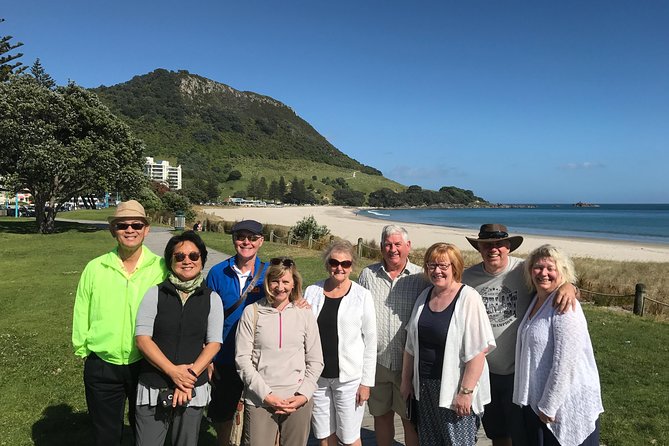
You start at Mt Maunganui Main Beach, with a quick 15-minute stop. It’s short, but it’s the right kind of stop for perspective. You get the Bay of Plenty coastline setting right away, so the rest of the day feels grounded in the region.
The stop is also paired with context about the area—Captain Cook called this region the Bay of Plenty. Even in a short window, that kind of nugget helps you look at the beach with more than just postcard eyes.
Practical note: this is a quick moment, so bring a hat and give yourself time to walk a bit for photos. Don’t plan on this being your main swim stop; it’s a “get your bearings fast” stop.
Te Puke kiwi orchard: seeing kiwifruit on the vines

Next up is Te Puke, home of kiwifruit growing. The tour visits one of the original kiwi orchards and keeps the stop to about 20 minutes.
What makes this worth it is seeing fruit on the vines rather than just buying a bag in a supermarket. The orchard stop is built around how the plants are trained and cared for, and there’s often tasting involved. One highlight from guides and operations here is the chance to sample both green and yellow kiwifruit varieties when available.
Keep expectations realistic: this isn’t a long farm stay. It’s a focused orchard window where you get the “how it’s grown” basics and enough time to take in the scale of the vines.
Mangorewa River scenic route: native fauna and Pacific views
From Te Puke, you head toward Rotorua via a scenic route that includes a stop at the Mangorewa River for about 50 minutes.
This is one of those quietly useful stops. The itinerary frames it as an area with examples of native fauna and views down from the elevated central plateau toward the Pacific Ocean. In other words, it’s not just transport between towns—it’s part of the scenery story of the day.
If you like photos, this is the kind of stop where the extra time pays off. It’s also a good chance to stretch your legs after the orchard.
Ohinemutu and Government Gardens: lake culture plus royal-name landmarks
Rotorua starts coming into focus with Ohinemutu, a lakeside area with steaming pools and a historic church setting. The stop is about 20 minutes, and entry is by donation.
What I find especially compelling is the mention of modern royal connection: Prince William and Kate were formally greeted at the old church. That gives you a surprising bridge between Rotorua’s deep cultural roots and a wider world.
Then you shift to Government Gardens for about 25 minutes. This is where the day turns calmer: you browse the gardens and focus on areas like Rachel’s Pool and the Blue Baths. It’s a nice break from geothermal chaos—more walking, less rush.
If you tend to move slowly, this pair of stops is a good moment to slow down without derailing the schedule.
Kuirau Park mineral foot soak and the Tikitapu walk

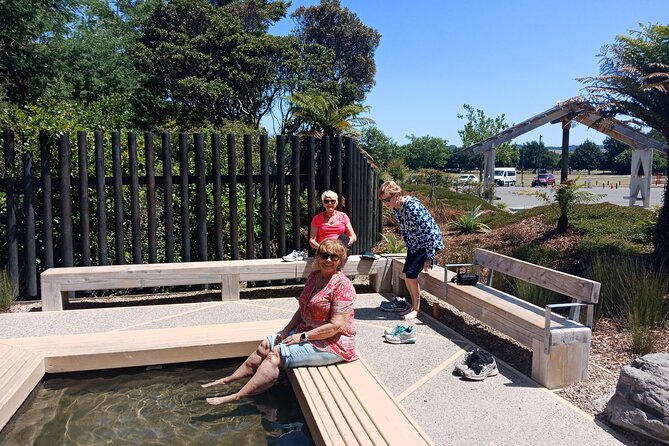
One of the most enjoyable parts of the day is Kuirau Park. You get about 20 minutes, and the highlight is a relaxing foot soak in Rotorua’s famous mineral waters. The park also features steam pools and landscaped gardens.
This is a great stop if you want geothermal without committing to a full paid village experience. It’s also a good “choose-your-own pace” moment: you can soak, walk, and watch steam behavior without needing a long guided lecture.
Then you move to Tikitapu Nature Walk for about 25 minutes. The walk is described as immediately adjacent to the road, so you get that “different world” feeling fast—rainforest ferns, tall native trees, and the soundscape of the area.
A key practical point: comfortable shoes matter here. It’s not described as a strenuous trek, but it’s a nature walk, not a photo-only stop.
Lake Rotorua lunch break: use the 30 minutes well
At Lake Rotorua, the tour allows about 30 minutes, and you choose one of three cafes in downtown Rotorua. Lunch is not included, so you’ll pay your own meal and drink.
I like this setup because it keeps you flexible. If you need something quick, you can grab it. If you want a proper sit-down, you can usually do that too within the timeframe—especially since you’re in a downtown area with more options.
To make the lunch time count, decide before you get off the van what matters most: a hot meal, a view, or something fast for photos afterward. With a schedule this packed, indecision is what steals time.
Lake Tarawera views and the Redwoods isite stop if time allows
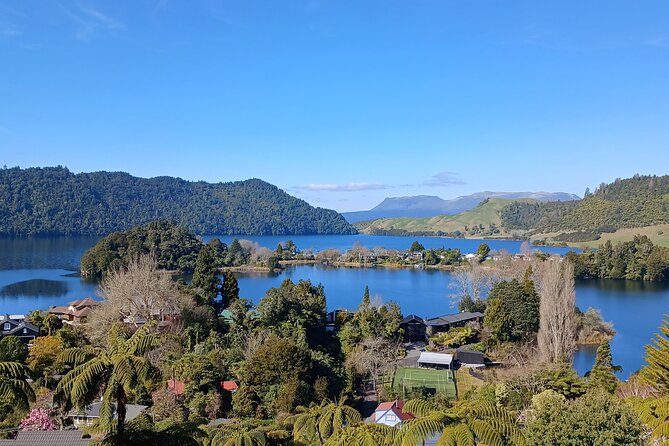
After lunch, the day pivots to more scenery. You drive past the blue and green lakes around Lake Tarawera for a quick 10-minute photo vista of the lake and Mt Tarawera. The description notes that a clear blue day offers the best photo opportunity.
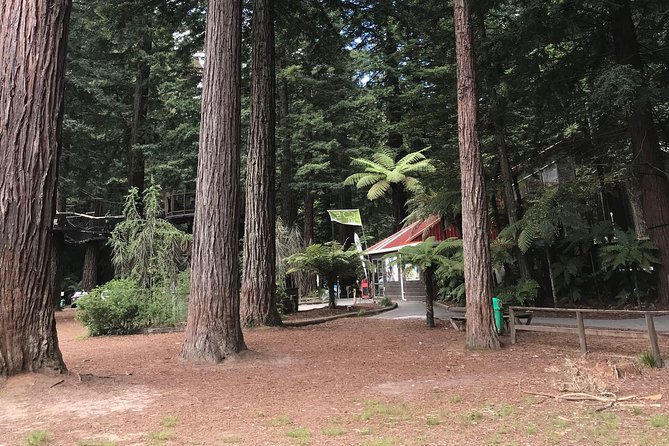
Then there’s Titokorangi Redwoods isite Visitor Information Centre. This is about 15 minutes and includes a stroll through a Redwood forest planted in the early 1900s. The itinerary also flags that you may not have time for this part, so it’s best to treat it as a bonus.
If you’re a “walk in the trees” person, this is a pleasant palate cleanser between geothermal and gardens. If you’re rushing for the last big sights, don’t hinge your day on it.
Okere Falls and Wai-O-Tapu: geothermal highlights, time-permitting
Two geothermal stops are offered if time allows: Okere Falls and Wai-O-Tapu.
At Okere Falls (about 15 minutes), the tour notes steep stairs that can be wet, and it may include a look at the power of the Kaituna River. There’s also a mention of inflatable rafts if you’re in the right place for it. This stop feels more active—movement, water power, and that classic Rotorua-energy sound.
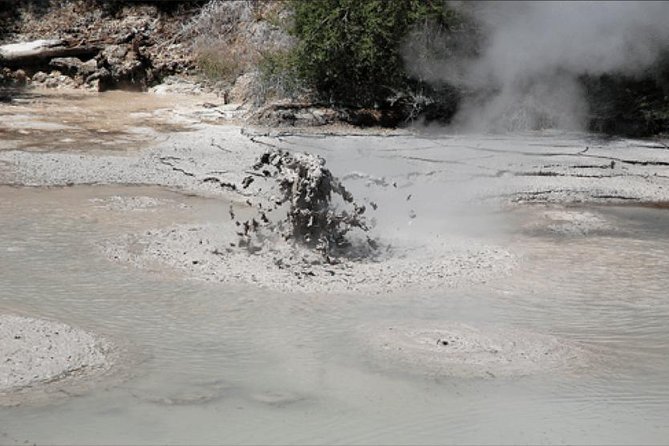
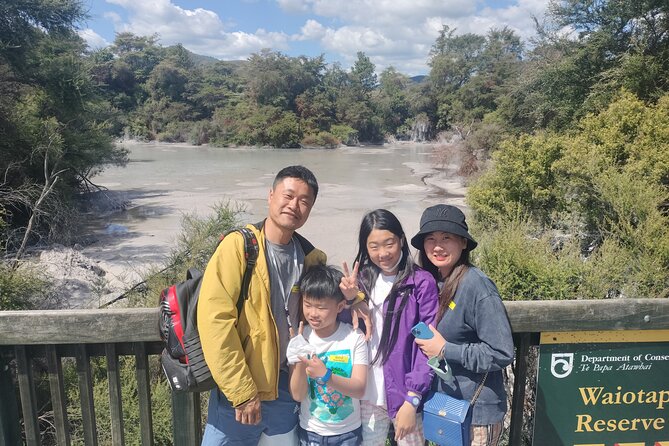
Then comes Wai-O-Tapu if there’s time. It’s a 25-minute drive to the Taupo Volcanic Zone area, where you see boiling mud pools—one of Rotorua’s signature visuals. This is the kind of site that usually deserves more than a quick walk, so expect that you’ll see the major highlights rather than every nook and cranny.
One reality check I think you should keep in mind: Rotorua geothermal areas aren’t isolated wilderness. Even in the best settings, there’s commercial and residential development around the geothermal fields. If you need untouched-feeling nature, adjust your expectations and focus on the steam, color, and textures.
What’s extra: Whakarewarewa geothermal village add-on
The tour doesn’t include Whakarewarewa geothermal village. If you want that must-do type of geothermal village experience, it’s available as an add-on tour (listed as Whaka P5) for $40.00 per person.
This is how the day stays efficient. Instead of trying to fit a full geothermal village visit inside every schedule, the tour builds in alternatives like Kuirau Park and other geothermal views and gardens. You can choose deeper culture-and-geothermal content if you specifically want it.
A good strategy: if you’re the type who loves Maori cultural context, consider the add-on. If you mainly want scenery and quick geothermal moments, the included parks may be enough for your first Rotorua taste.
Price and value: what $137.50 buys you in real time
At $137.50 per person, you’re paying for several things at once: port pickup/drop-off, a guide, and air-conditioned transport across multiple regions in one day.
The value works best because many of the stops are effectively “quick view” locations with admission not required for the main sights listed. That means your money goes into the guided routing and the convenience of being transported between Tauranga, Te Puke, and Rotorua—rather than piling up entrance fees at every step.
Duration is about 6 to 7 hours, so you’re also getting a full working-day experience without needing to arrange separate tickets, rental cars, or timing. For cruise passengers, that convenience usually matters more than saving a few dollars on admission.
Just don’t expect a slow travel pace. This is a day built for variety, not for long linger time.
Who this tour fits best (and who should skip it)
This tour fits you if you want a structured, time-efficient highlights day and you like seeing different sides of New Zealand in one loop: beach at Mt Maunganui, farm life near Te Puke, and Rotorua geothermal parks and lakes.
It’s also a solid match if you’d rather ride in comfort than self-drive while planning turn-by-turn navigation. Port pickup and the small-group max of 18 help a lot.
Skip it if you’re the kind of person who hates tight schedules or wants hours at one site. Also skip or plan carefully if you’re laser-focused on a single geothermal attraction that you’d rather explore slowly, since this day’s stops are short by design.
Should you book this Tauranga-to-Rotorua tour?
If your goal is a first-time Rotorua “greatest hits” day that still feels organized, I’d book it. The combination of port pickup, small group size, and a mix of beaches, orchard scenes, and geothermal stops is exactly how to make a limited-time visit count.
Book it especially if you like the idea of Kuirau Park foot soaking, quick Rotorua lake and garden moments, and a chance at Wai-O-Tapu or Okere Falls depending on timing. If you know you want the full Whakarewarewa geothermal village experience, plan to add the $40 per person option—or keep this tour as your teaser and do a deeper geothermal day separately.
FAQ
Is port pickup and drop-off included?
Yes. You’re picked up at the Port of Tauranga and the tour ends back at the meeting point.
How long is the tour?
It runs about 6 to 7 hours.
What is the group size?
The tour has a maximum of 18 travelers.
Is lunch included?
Lunch is not included. You’ll stop for about 30 minutes at one of three cafes in downtown Rotorua.
Does the tour include Whakarewarewa geothermal village?
No. Whakarewarewa geothermal village is not included, but you can add an optional Whaka P5 tour for $40.00 per person.
Can I cancel for a full refund?
Yes. You can cancel up to 24 hours in advance for a full refund.