REVIEW · UBUD
Farm-to-Table Balinese Cooking Experience
Book on Viator →Operated by Genuine Bali Experience · Bookable on Viator
Cooking in Bali starts at the market. This Ubud experience pairs a guided ingredient hunt with a hands-on class led by a local expert, using organic farm-fresh ingredients for traditional dishes. I like that you pick your own produce from local vendors, and you finish by eating the lunch you cooked, not a random buffet. The only real thing to watch is value: at $47.31 per person, it can feel steep for Bali if you compare it to cheaper cooking classes.
You also get a few details that make it easier to enjoy: pickup and drop-off in the Ubud area, a small group capped at 15, and a recipe PDF to take home. You’ll spend part of the time cooking with countryside views, then visit a Balinese family in their home to see daily life up close. One consideration: the experience depends on good weather, so plan for possible rescheduling if conditions are poor.
In This Review
- Key highlights at a glance
- Why the market start changes the whole cooking lesson
- Market tour in practice: what you’ll choose and how to use it
- The hands-on Balinese cooking class: organic ingredients and real technique
- A Balinese family home visit: daily life context you can feel
- Lunch you make: where the lesson lands
- Time, pickup, and the small-group feel in Ubud
- Price check: is $47.31 good value for Bali?
- Who should book this, and who might want to skip
- Should you book this farm-to-table Balinese cooking experience?
- FAQ
- How long is the cooking experience in Ubud?
- Where does the tour take place?
- What is included in the price?
- Is pickup offered?
- How many people are in the group?
- What do I do at the start of the experience?
- What ingredients are used for cooking?
- Do I eat during the tour?
- Is this tour dependent on weather?
- What is the cancellation policy?
Key highlights at a glance
- Market-to-kitchen start: choose ingredients from local vendors with a guide
- Organic, farm-fresh cooking: traditional dishes made with organic produce
- Views while you cook: enjoy the surrounding countryside as you learn
- Home visit insight: spend time in a Balinese family home for daily-life context
- Recipe PDF included: take instructions home for follow-up cooking
Why the market start changes the whole cooking lesson
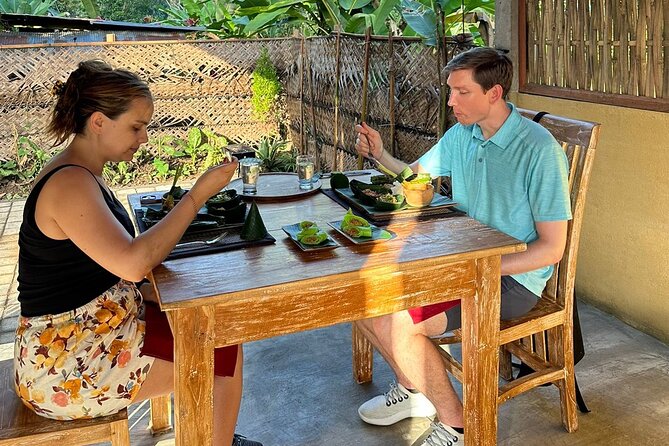
In most cooking classes, you arrive, you’re handed ingredients, and you follow along. Here, the experience begins with a guided market tour where you select the ingredients yourself. That small shift matters because you learn what the ingredients look like, how they smell, and why they’re chosen for specific dishes, not just how they’re cooked.
I also like that it’s framed as farm-to-table rather than just “we cook local food.” You’re using organic, farm-fresh produce harvested from the farm, so the cooking lesson connects the flavors on your plate to what’s grown nearby. It’s a practical way to understand Balinese cuisine beyond taste—your brain starts linking ingredient choices to final results.
The only caution is mental: you’re paying for more than chopping. You’re paying for guided shopping, instruction, lunch, and pickup in the Ubud area. If you’re only looking for a quick cooking session, you may decide it’s not worth the full package.
You can also read our reviews of more tours and experiences in Ubud.

Market tour in practice: what you’ll choose and how to use it
The market portion is built around one core activity: you hand-pick fresh ingredients from local vendors with a guide. That’s your chance to ask questions about ingredients and how they fit into Balinese cooking. Even if you can’t identify everything on sight, you’ll get direction on what to look for and how selection ties to flavor.
Here’s how to get more from this part. Before the tour, think about what you actually like eating—spicy food, herbs, rice-based meals, or lighter flavors. Then, while you’re choosing ingredients, notice what looks fresh and what’s already getting used in the market. You’ll carry those observations into the cooking class, and it makes the lesson feel way more grounded.
Also, keep in mind that markets can be crowded and active. Wear comfortable shoes and plan to move around a bit. And if you have dietary needs, this is the moment to raise them so the guide can help you navigate what you’re selecting and cooking later.
The hands-on Balinese cooking class: organic ingredients and real technique
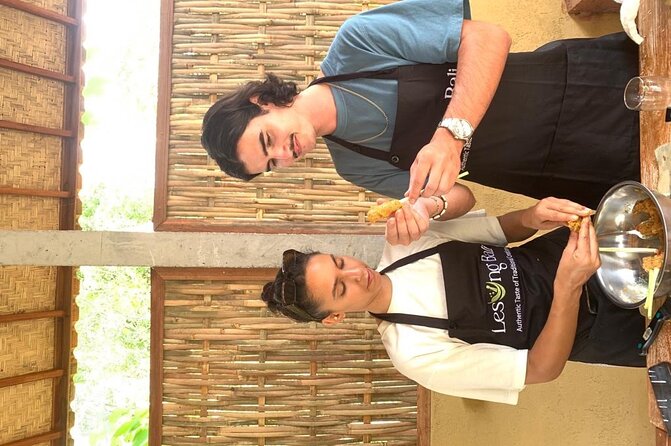
After the market, you shift into the cooking portion with a local expert teaching you traditional dishes. This is where the “farm-to-table” promise becomes tangible. The ingredients are organic and farm-fresh, and you’re cooking with an eye toward Balinese flavors and methods rather than generic international techniques.
You’ll also cook with views of the lush countryside, which changes your energy. Food lessons go better when you’re not stressed. Being in a calm setting makes it easier to concentrate on the hands-on steps—mixing, grinding, timing, and tasting as you go.
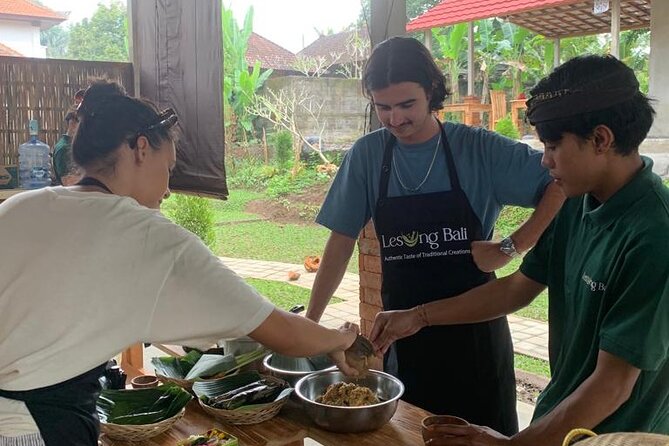
What you should expect from a class like this is simple but important: you do the work. That means you’ll build a stronger sense of how ingredients combine and what to adjust. If you’re the type who enjoys learning by doing—rolling, chopping, seasoning, and tasting—this format usually lands well.
One more practical note: a recipe PDF is included. That matters more than it sounds. You don’t just leave with memories; you leave with instructions you can actually use, even if your notes from the class are limited.
A Balinese family home visit: daily life context you can feel
The experience includes a visit to a local Balinese family in their home. This isn’t just photo time. The point is insight into day-to-day life and the island’s unique way of living.
Why this part is valuable: cooking classes can sometimes feel like a performance, where you learn flavors but not the surrounding culture. A home visit bridges that gap. You’ll see how people live, and that background helps you understand why food and tradition connect the way they do in Bali.
How to make this section worthwhile is straightforward: ask respectful questions and listen more than you talk. If you’re curious about family routines, local food habits, or everyday rituals, that’s the kind of context that sticks. And since this is a home, keep your behavior low-key and follow the guidance of your host.
If you prefer purely hands-on activities, this may feel slower than the kitchen portion. But it also tends to be the part that makes the experience feel more real.
Lunch you make: where the lesson lands
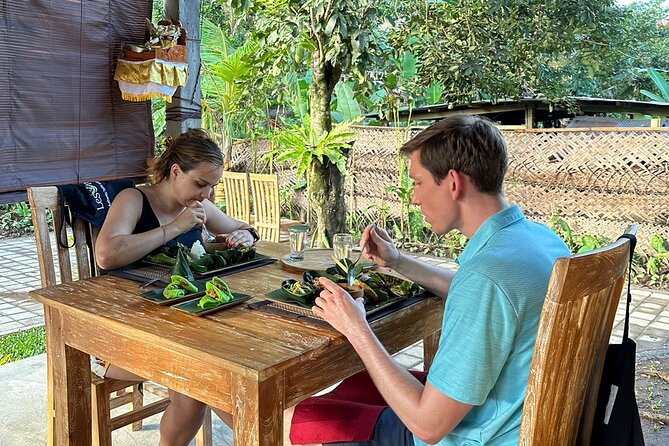
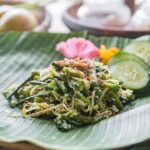
At the end, you sit down to enjoy the delicious lunch you prepared. This is the payoff: you taste what you cooked while the techniques are still fresh in your mind. It’s also where you can confirm whether your ingredient choices from the market made sense, especially if you paid attention to the guide’s suggestions earlier.
Lunch inclusion is a big part of the value equation. Many cooking classes sell “instruction” and then charge extra for food. Here, lunch is part of the package, plus bottled water. That means you’re not scrambling for lunch plans in Ubud that can cost more than expected.
Want to get more from the meal? Eat slowly. Notice texture, heat level, herb flavor, and how salty or aromatic each dish feels. Then connect it back to what you did during cooking. That’s the difference between remembering a good meal and learning how to reproduce it later using the recipe PDF.

Time, pickup, and the small-group feel in Ubud
The total time is about 3 hours 30 minutes. You’ll also have pickup and drop-off in the Ubud area, which is a quiet but real quality-of-life perk. Ubud traffic and short distances can still eat your time, so having transport included helps you stay focused on the experience instead of logistics.
The group is capped at a maximum of 15 travelers. That smaller size typically supports better interaction with your guide and instructor. In a class, it can mean the difference between feeling like you’re part of the lesson versus being a spectator at workstations.
You’ll also receive a mobile ticket, and confirmation is received at booking. Practical? Yes. It also reduces last-minute uncertainty, which matters when you’re coordinating a day in Ubud.
Weather is also a factor. The experience requires good weather, and if it’s canceled due to poor conditions, you’ll be offered another date or a full refund. Since you’re outside for at least part of the day, it’s smart to keep your schedule flexible around that risk.
Price check: is $47.31 good value for Bali?
Let’s talk money like a grown-up. The listed price is $47.31 per person, and it includes lunch, bottled water, pickup and drop-off in the Ubud area, plus a recipe PDF. It also includes the guided market tour and instruction for cooking traditional Balinese dishes using organic produce. That’s not just a cooking class. It’s a full half-day culinary experience with multiple components.
Here’s where value can go either way. If you compare it to the cheapest cooking classes that only cover one dish and don’t include lunch or transport, then yes, the price can feel high. One concern that has come up is that some people ended up paying a higher amount due to currency or final charge differences, with totals reported around AUD180. So, if you’re budgeting tightly, double-check the final price in your currency before you commit.
Still, if you’d otherwise pay for market guidance, pay for lunch, and arrange transport yourself, the math shifts. You’re paying for convenience and for a structured experience that’s built around ingredient selection, cooking practice, and eating what you made.
My practical advice: treat the price as fair if you want the full flow—market, cooking, lunch, and a home visit. Treat it as a maybe if your main goal is simply cooking a single dish and you’re fine doing the rest independently.
Who should book this, and who might want to skip
This experience fits best if you want a more grounded “food + culture” day in Ubud. You’ll enjoy it most if you like learning through doing, like tasting as you cook, and like understanding where ingredients come from. The market start and organic focus give you more than just a recipe.
It’s also a good match for couples, friends, or small groups who want a calm, structured day. With pickup in the Ubud area and a small group of 15, you won’t feel lost or stuck in a huge crowd.
You might want to skip or look for alternatives if you’re extremely price-sensitive. If you see cooking classes as something you can do anywhere, and you don’t care much about a guided market tour, the package may feel like more than you need. Also, if you’re traveling at a time when weather can be unpredictable and you don’t have schedule flexibility, keep the weather requirement in mind.
Should you book this farm-to-table Balinese cooking experience?
I’d book it if you want a true half-day food experience where you choose ingredients, cook with organic produce, eat what you made, and add a cultural home visit. The included lunch and Ubud pickup make it easier to trust the day won’t fall apart into separate plans.
I’d pause before booking if the idea of paying a premium for a guided package doesn’t match your budget. Confirm the final cost in your currency, and compare it with simpler classes that may not include lunch or transport.
If you can handle a weather-dependent schedule and you want more than just cooking, this is a solid pick for Ubud.
FAQ
How long is the cooking experience in Ubud?
It runs for about 3 hours 30 minutes.
Where does the tour take place?
The experience is in Ubud, Indonesia.
What is included in the price?
Lunch, bottled water, pickup and drop-off in the Ubud area, and a recipe PDF are included.
Is pickup offered?
Yes. Pickup and drop-off are provided for locations within the Ubud area.
How many people are in the group?
The group size is capped at a maximum of 15 travelers.
What do I do at the start of the experience?
You join a guided market tour and hand-pick fresh ingredients from local vendors.
What ingredients are used for cooking?
The cooking uses organic, farm-fresh produce harvested from the farm.
Do I eat during the tour?
Yes. You’ll sit down for lunch at the end and eat what you prepared.
Is this tour dependent on weather?
Yes. The experience requires good weather. If it’s canceled due to poor weather, you’ll be offered a different date or a full refund.
What is the cancellation policy?
Free cancellation is available up to 24 hours before the experience start time for a full refund. If you cancel less than 24 hours before, the amount paid is not refunded.