REVIEW · UBUD
Small-Group Farm Tour & Balinese Cooking Class in Ubud with Kadek
Book on Viator →Operated by Traveling Spoon · Bookable on Viator
If you like food that starts in the soil, you’ll enjoy this. This Ubud farm tour + cooking class is built around picking ingredients, then turning them into a real Balinese meal you eat right away. I especially liked the hands-on ingredient gathering with straw hats and the fact that you take home a small recipe book for later. One consideration: it’s an outdoor, working-farm day, so expect muddy paths, heat, and a need for decent walking shoes.
The cooking portion also feels personal, even with a small shared group. You’ll learn 2–3 dishes in a traditional community-style outdoor kitchen, with Kadek’s approach bringing both structure and local flavor. If you’re sensitive to heat or want a totally indoor experience, this might not be your best match.
In This Review
- Key Points to Know
- A Farm Walk That Actually Feeds Your Cooking
- The Cooking Class: A Traditional Outdoor Kitchen, Not a Classroom
- What You’ll Cook: Typical Dishes and What They Teach
- The Meal Experience: Eat What You Made, With Local Timing
- Price and Value: What You’re Really Paying For
- Small-Group Size: Why Max 10 Matters in Practice
- What to Bring (So the Day Feels Good)
- Who Should Book This Cooking Day in Ubud
- Should You Book Kadek’s Farm Tour & Balinese Cooking Class?
- FAQ
- How long is the farm tour and cooking class?
- Is pickup and drop-off included?
- How many people are in the group?
- Is the class private?
- What will I cook?
- Do I get to eat the food I cook?
- Can I get a vegetarian option?
- Are there any dietary or allergy notes?
- What should I bring for the outdoor farm part?
- Is alcohol included?
- How flexible is cancellation?
Key Points to Know
- Farm walk for your exact ingredients: you gather spices and produce you’ll cook with
- Traditional outdoor kitchen setup: a community-style space for hands-on learning
- 2–3 dishes during the class: enough variety to sample Balinese flavors without rushing
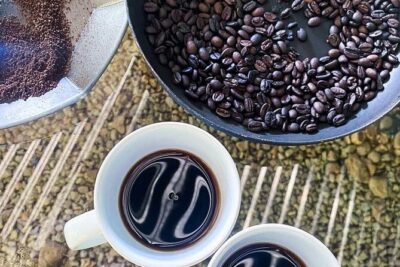
- You get dessert and drinks too: kolak plus Balinese coffee or lemongrass tea
- Take-home recipe book: practical notes so you can cook again after your trip
A Farm Walk That Actually Feeds Your Cooking
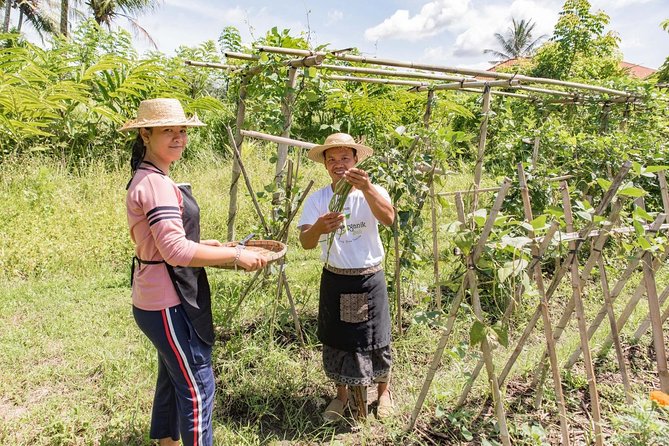
This experience starts with a simple promise: you’ll cook with what you collect. Your host for the day is Kadek, and you begin at the meeting point in Petulu (Maybank KCP Gianyar, Jl. Raya Ubud No.115). From there, you’re set up for the farm walk with straw hats, which is a small detail that matters in Ubud’s heat.
The farm tour lasts about 30–45 minutes, and it’s not a polished “show garden.” You walk through tall bushes and muddy ground while choosing ingredients like beans and lemongrass. That muddy part is the trade-off for authenticity. If you go prepared with shoes you don’t mind getting dirty, the experience feels more real, less staged.
While you’re walking, you’re also training your eye. You start to recognize how Balinese cooking depends on fresh aromatics and spices, not just sauces. You’ll see how ingredients grow and how they get used, which makes the later cooking steps make more sense. For me, that connection is what transforms a cooking class from a performance into a skill.
Before you start cooking, you get a refreshing drink and wet towels to wipe off the farm dust. It’s a nice reset after the walk, and it helps you feel ready for the next stage.
You can also read our reviews of more tours and experiences in Ubud.

The Cooking Class: A Traditional Outdoor Kitchen, Not a Classroom
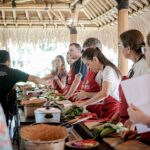
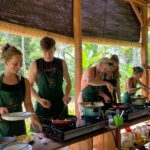
After the farm tour, you move to the cooking portion, which takes place in a traditional Balinese style outdoor community kitchen. This part is about learning with your hands, not just watching. The class runs about two hours, and you’ll typically learn 2–3 authentic dishes.
You’ll work outdoors, which changes the vibe. You’re cooking in real conditions: warm air, outdoor sounds, and a kitchen setup designed for community cooking. You don’t need to be a confident cook, but you do need to be willing to get involved.
What makes this class feel more than basic instruction is the pace and attention. The experience is described as a small-group setting, with a private class feel that focuses on personalized instructor attention. With a maximum of 10 travelers, you’re less likely to get lost in the crowd. That small size matters when questions pop up mid-step, like how long something should simmer or when to adjust seasoning.
In one of the most memorable parts of Balinese cooking, there’s also a ritual element. Kadek offers the meal to nature first, which is part of the local rhythm. Practical result: Kadek will not join you for the meal immediately. You’ll eat, and he handles the ritual timing first. It’s not a downside so much as a reminder that food here isn’t treated like a factory line.
What You’ll Cook: Typical Dishes and What They Teach
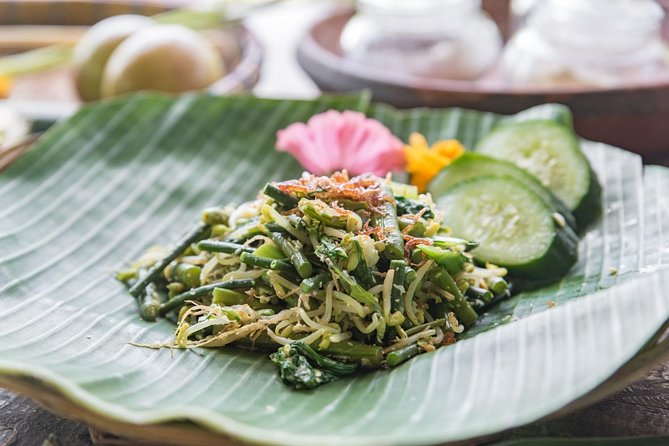
You may cook a mix of dishes like these (the exact menu can vary during the class):
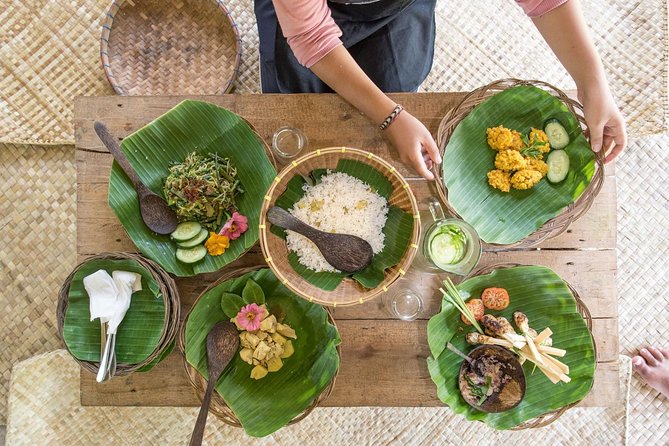
- Nasi Sela: rice with sweet potato
- Garang Asem: chicken cooked with Balinese spices
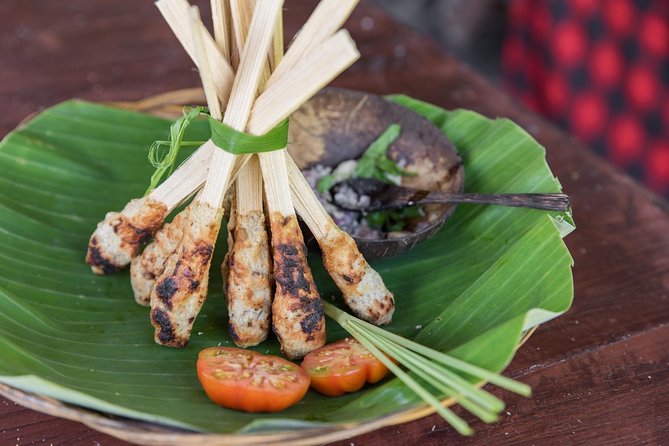
- Tuna Satay: traditional Balinese fish kebabs
- Sayur Urab: green vegetables with coconut and spices
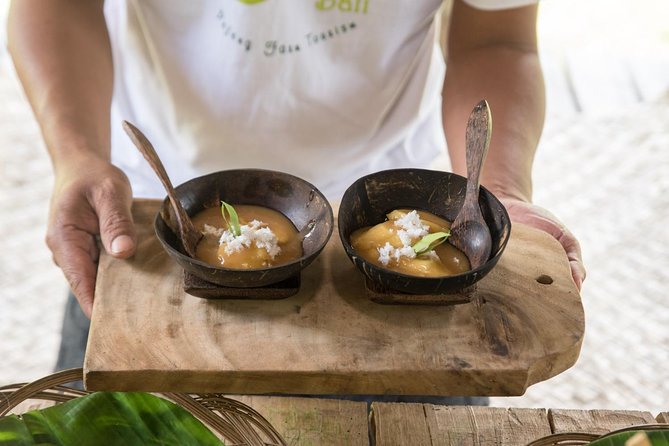
- Kolak: banana dessert
- Balinese coffee or lemongrass tea
Even if you don’t know the names, the dishes have a teaching purpose. You’ll taste the range of Balinese flavor profiles: spiced, aromatic, and often built around fresh herbs and coconut. If you’re the type who gets bored when a class teaches only one dish, the 2–3 dish structure is a good balance. You get variety without feeling like you’ve spent the whole time chopping and never tasting.
I also like that the desserts aren’t an afterthought. Kolak (banana dessert) gives you a sweet finish that fits the rest of the meal, and the pairing with Balinese coffee or lemongrass tea makes the ending feel complete.
The Meal Experience: Eat What You Made, With Local Timing
This is not a “watch you cook then leave” situation. You eat the meal you prepared at the end of the class. That matters because cooking classes often fail at the last step: the food gets served, but you don’t get the full reward of your work.
Here, the meal is part of the structure. There’s also a cultural pace to it: Kadek’s nature-offering ritual happens first, and you start eating afterward without waiting for him. That may sound odd on paper, but in practice it keeps the day moving and respects the ritual order.
A detail I’d call out: you’ll often have small-group conversation with your instructor team and the pace stays friendly. The day doesn’t feel like a scripted tourist procession. And based on the spirit of the project, the young cooks and hosts bring energy without turning it into a performance.
Price and Value: What You’re Really Paying For
At $49 per person, this is one of those deals where the value comes from what’s included—not just the number. You get:
- a farm tour plus a cooking lesson
- a home-cooked meal
- local alcohol (listed as 1–2 glasses)
- round-trip transfers from Ubud hotels
- all taxes/fees/handling charges
- gratuities included
- mobile ticket
Transfers are the quiet value booster. Ubud can be a hassle if you’re paying for every ride separately, and pickup smooths the day. The tour says hotel pickup and drop-off are included only if you’re staying in Ubud, with specific pickup coverage around Hanoman Street, Monkey Forest Street, and Jl. Raya Ubud. If you’re outside those areas, the pickup point shifts to in front of Maybank Gianyar (Jl. Raya Ubud No.115, Petulu).
When you factor in transfers, drinks, and a take-home recipe book, the class feels more like a complete activity package than a basic cooking demonstration. You’re paying for the time, the instruction, and the ingredients-to-meal flow.

Small-Group Size: Why Max 10 Matters in Practice
The experience is capped at 10 travelers, and that’s not just a number. It affects how your class goes minute-to-minute.
In a larger group, cooking classes tend to turn into “wait for your turn.” In a smaller setting, you can actually get help while you’re cooking. That’s especially useful for dishes that require timing, like when to simmer spices or how to shape kebabs for even cooking.
This setup also makes the farm tour better. When you’re walking through bushes and muddy sections, you don’t want to get stuck behind people or lose track of your guide. Straw hats and a clear gathering pace help everyone stay together.
What to Bring (So the Day Feels Good)
This is an outdoor experience on a working farm. You’ll want to show up prepared rather than hoping for the best.
The essentials recommended for this activity include:
- bug spray
- sunscreen
- a hand towel or tissues
- clothes and shoes appropriate for walking and cooking outdoors
Here’s the practical twist from the farm reality: even with towels and drinks, you’ll likely get your shoes dirty. Plan to wear something you can rinse or tolerate being a little worse for wear. Also, if you sweat easily, bring something light and breathable. The straw hat helps, but the heat is still real.
Who Should Book This Cooking Day in Ubud
This fits best if you want an honest, active food experience rather than a quick tasting tour.
You’ll likely love it if:
- you enjoy hands-on cooking
- you like understanding ingredients before you cook them
- you want a meal you can repeat later using a take-home recipe book
- you prefer smaller groups with real instructor attention
It may not be ideal if:
- you hate outdoor cooking in heat
- you want an indoor, low-walking activity
- you’re unable to manage muddy paths on a working farm
Should You Book Kadek’s Farm Tour & Balinese Cooking Class?
I’d book it if you’re in Ubud and you want something that connects food to place. The farm walk isn’t just a warm-up—it feeds the cooking steps. And the structure is satisfying: gather ingredients, learn 2–3 dishes, eat what you made, then take a recipe book home.
The only real reason to skip is if you’re not comfortable with an outdoor working-farm day. If you’re okay with heat and a bit of mud, this is one of the more practical and value-packed cooking classes around: you leave fed, informed, and able to cook again.
FAQ
How long is the farm tour and cooking class?
It runs about 5 hours total.
Is pickup and drop-off included?
Yes, round-trip transfers are included only if you’re staying in Ubud. If you’re outside Ubud or not within the listed pickup areas, the pickup point shifts to the Maybank Gianyar address (Jl. Raya Ubud No.115, Petulu).
How many people are in the group?
The experience is a small group with a maximum of 10 travelers.
Is the class private?
It’s described as a private class with personalized instructor attention, and it still operates as a small-group experience (max 10).
What will I cook?
You’ll learn 2–3 dishes. Examples listed include nasi sela, garang asem, tuna satay, and sayur urab. You also end with kolak and Balinese coffee or lemongrass tea.
Do I get to eat the food I cook?
Yes. You’ll have a home-cooked meal at the end of the class.
Can I get a vegetarian option?
Yes. A vegetarian option is available, but you need to request it at booking.
Are there any dietary or allergy notes?
If anyone in your party has allergies, dietary restrictions, or cooking preferences, you should advise at the time of booking.
What should I bring for the outdoor farm part?
They recommend bug spray, sunscreen, and a hand towel or tissues, plus clothes and shoes suitable for walking and cooking in a working farm.
Is alcohol included?
Local alcohol is included, listed as 1–2 glasses.
How flexible is cancellation?
Cancellation is free, and you can cancel up to 24 hours in advance for a full refund.