REVIEW · ACCRA
1 Day cocoa farm tour
Book on Viator →Operated by Happy eagle tourism management · Bookable on Viator
You can practically smell chocolate before the day even starts. This private cocoa farm tour from Accra takes you to Asamankese, where you’ll see how Ghana’s cash crop grows, gets harvested, dried, and processed. It’s the kind of trip that turns a chocolate bar into something real in your hands.
Two things I really liked: you get to walk through the farm’s cocoa canopy, and the guide explains the full path from pod to peas in plain, practical terms. I also love that lunch and snacks are included, so the day doesn’t turn into a constant stop for food.
One thing to consider: this experience needs good weather, and if conditions are poor you may have to switch dates or get a refund. If you’re traveling on tight timing, that’s the one variable to keep in mind.
In This Review
- Key things to know before you go
- Getting from Accra to Asamankese: the 7:30am start that pays off
- Asamankese farm time: where cocoa farming fits into Ghana’s everyday life
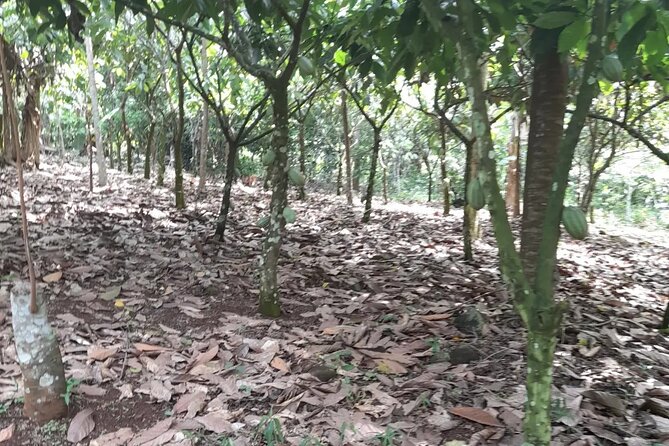
- Walking under the cocoa canopy: what you notice when it’s not staged
- From pod to peas: harvesting, drying, and seeing the transformation
- One of Ghana’s oldest farms: why age matters on a working plantation
- Lunch and snacks on the farm: a real break, not an afterthought
- Cocoa products you won’t find in a corner shop
- A private tour with a patient guide: how it feels in real time
- Price and value: why $349.94 can make sense for a farm day
- Timing, weather, and how to plan your day around cocoa
- Should you book this cocoa farm tour from Accra?
- FAQ
- What time does the tour start and where do I meet?
- How long is the cocoa farm tour?
- Is lunch and snacks included?
- Is this a private tour?
- Will I get to taste cocoa?
- What happens if the weather is poor?
Key things to know before you go
- Private guide + private group means you’re not rushed and you can ask questions as you go
- Asamankese farm visit includes history and a close look at how cocoa is worked on the ground
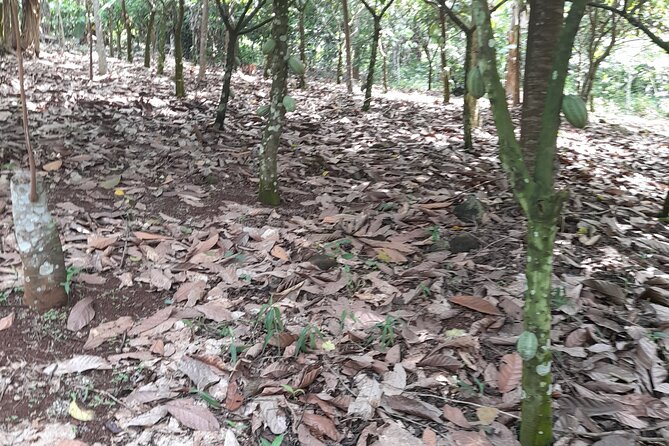
- Walking under the canopy is part of the magic, with the sounds and routines of daily processing
- Cocoa tasting is included—you’ll get to try what you just learned about
- Lunch and snacks are included, so you can focus on the experience instead of meals
Getting from Accra to Asamankese: the 7:30am start that pays off
This tour starts early, with a 7:30am start from the meeting point on Fantail Street in Accra. If you’re the type who hates losing a half-day to traffic, starting at this hour helps. It also gives you more daylight for the farm walk and the processing sights.
Pickup is offered, which is a big deal on a farm tour. You don’t have to solve local directions while you’re half-awake and carrying a camera. You’ll just show up, meet your guide, and head out to the cocoa-growing area.
The drive into the countryside is part of the change of pace. Once you’re in the region near Asamankese, the day becomes more about rural life than city timekeeping. That first shift sets expectations: this isn’t a quick photo stop. It’s a working farm experience.
You can also read our reviews of more tours and experiences in Accra.
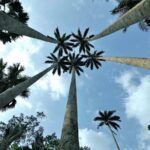
Asamankese farm time: where cocoa farming fits into Ghana’s everyday life
Your main time is spent around Asamankese, where you’ll learn the farm’s history and see its setting. The experience is timed to give you a real sense of place, not just a checklist of sights. You’re on the ground among the trees and the tools people use to keep the farm producing.
One of the best parts of going to a cocoa farm in Ghana is understanding cocoa as a livelihood, not a novelty. The tour focuses on the significance of cocoa to Ghana’s economy, which helps you interpret what you see later. When you learn why farmers work certain ways—harvesting, drying, protecting plants—it suddenly makes practical sense.
It also helps that you’re not going with a giant crowd. This is a private tour, so your guide can adjust pacing and answers based on your questions. You’ll get a more personal feel for how cocoa farming works day to day.
Walking under the cocoa canopy: what you notice when it’s not staged
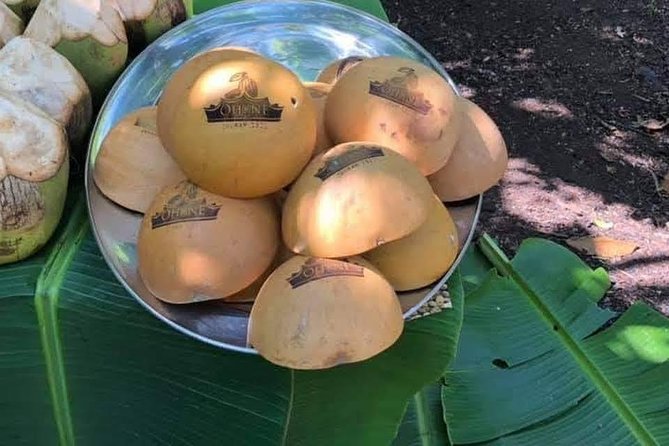
There’s a specific moment on this kind of tour that’s hard to fake: walking under the cocoa trees and realizing how different the air feels under the canopy. Guests describe the ambience as great, and you can tell why. The shade changes the vibe from bright and hot into something calmer and cooler under the leaves.
As you move through the farm, you’re also seeing the “small” processing sounds and routines that don’t exist in a supermarket. One standout detail from customer feedback is the husking sound as dried leaves are worked. That’s the kind of sensory clue that makes the story feel true.
This is also where the guide’s explanations matter. People highlight that the guide is friendly and well informed, including one review that specifically mentions a guide named Bless. When someone like Bless is patient and keeps things understandable, cocoa farming doesn’t feel like a lecture. It feels like a walkthrough.
From pod to peas: harvesting, drying, and seeing the transformation
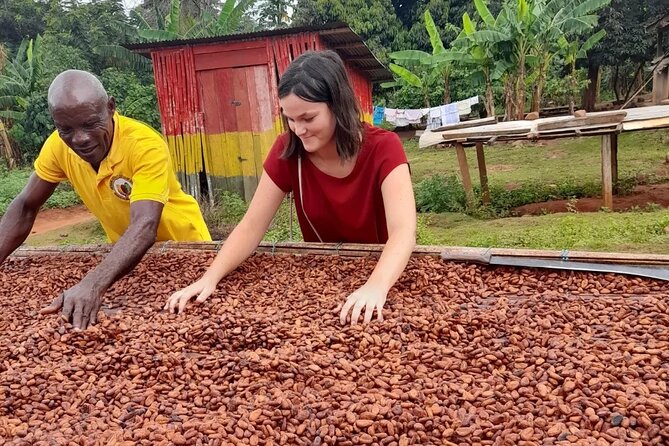
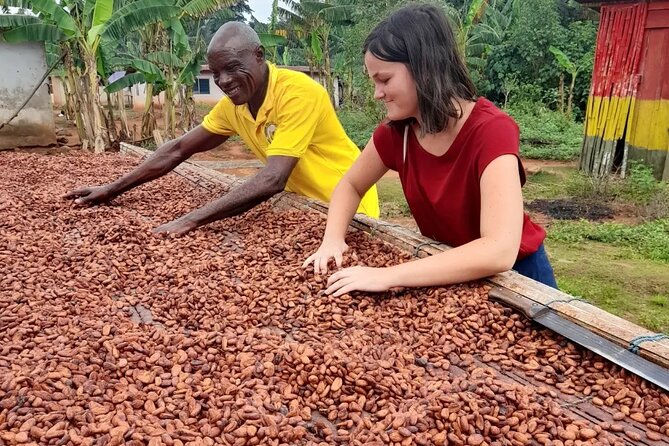
This tour is built around one central idea: chocolate begins long before the factory. You’ll see how cocoa is harvested and dried, and you’ll follow how it becomes the beans, or peas, that later show up in chocolate-making.
The practical value here is that you stop thinking of cocoa as one product. You start seeing steps: growth and harvesting of pods, then processing after harvest, especially drying. When you watch those stages in context, you understand why drying and preparation matter for flavor and storage.
And yes, you’ll get to taste cocoa. Multiple reviews mention trying cocoa, with people calling it delicious. That tasting moment is useful because it gives your brain a reference point for everything you just saw. It’s easier to remember the process when you can compare it to a real bite.
One of Ghana’s oldest farms: why age matters on a working plantation
You’ll visit one of Ghana’s oldest cocoa farms, which adds weight to what you learn. Older farms tend to preserve methods, routines, and a kind of lived-in expertise that comes from years of doing the work. Even if you don’t get a timeline lesson, you can feel the familiarity in how the farm operates.
This is also where you’ll get a clearer picture of rural life in Ghana beyond the trees. The focus isn’t just on the crop; it’s on how farmers protect and manage the plants and how the farm fits into community rhythms. If you want “authentic” in the real-world sense—working landscapes and everyday practices—this part delivers.
For me, the older-farm angle turns the tour from a general cocoa explanation into something more grounded. It’s not only about what cocoa can do. It’s about how people keep it going generation after generation.
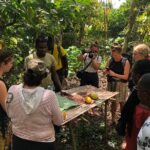
Lunch and snacks on the farm: a real break, not an afterthought
You’ll get a delicious lunch and snacks included, which matters more than it sounds. On a long morning-and-afternoon outing, the worst thing is food that’s rushed or far away from the experience. Here, you can eat and keep your momentum without losing hours.
Because lunch is included, you don’t have to decide where to go next while you’re already thinking about cocoa pods and drying racks. You can stay present for the rest of the day—especially after the tasting, when you’re likely to be more curious about what you just experienced.
Keep in mind that farms are active spaces. Your lunch break is still “on” the trip, not a separate tour day. That can be a plus if you like the farm mood and don’t want to jump back into a car every time you need a meal.
Cocoa products you won’t find in a corner shop
One promise of this tour is seeing other cocoa products that can be hard to find elsewhere. That fits with what a farm tour is supposed to do: move beyond the raw crop and show how cocoa becomes multiple forms.
This is also where your curiosity pays off. When you’re shown different products, you start noticing how people treat cocoa differently depending on the end use. Even without turning it into a chemistry lesson, it’s practical.
If you love food, this is the part that helps you connect the dots. If you’re not a food person, it still gives you a better souvenir than a generic bag. You learn what you’re looking at and why it exists.
A private tour with a patient guide: how it feels in real time
The private format changes the whole tempo. With only your group, you’re not stuck waiting for slower walkers or worried about catching up to faster ones. Your guide can take their time explaining, and you can ask the questions that pop up while you’re standing among cocoa trees.
Reviews highlight patience and friendliness, and one solo traveler specifically mentioned how patient the guide was. People also mention getting extra attractions as a bonus, which suggests the tour isn’t treated like a rigid script. That kind of flexibility can make a farm feel more alive and less performative.
If you’re the sort of traveler who likes to understand what you’re seeing, a private guide is worth it here. Cocoa farming has enough moving parts—harvesting, drying, processing—that a little extra attention from someone like Bless makes the difference between seeing and understanding.
Price and value: why $349.94 can make sense for a farm day
At $349.94 per person, this isn’t a budget activity. But you’re paying for a few things that normally cost money separately: private guiding, pickup offered, a full farm day (about 6 hours 30 minutes), and included lunch and snacks.
You’re also getting access to a working farm setting where your time includes sensory learning: canopy walking, harvesting and drying observations, and tasting cocoa. That combination is hard to replicate on your own if you don’t know local operators and don’t have a guide to translate the process.
There’s also a practical value angle: the tour includes a stop focused on farm history and beauty, plus your farm walk and processing sights. If you’d otherwise spend that day piecing together transport, local entry points, and a guide, the bundled price starts to look less random.
Timing, weather, and how to plan your day around cocoa
This experience requires good weather. That’s not a throwaway line; it’s a real planning factor for outdoor farm walking. If conditions are poor, you’ll be offered a different date or a full refund. So keep your schedule flexible if you can.
The early start helps, but weather is still king on a farm. If you can choose dates, pick one with the best forecast you can find and avoid booking the tour as your only option in a weather-sensitive window.
Plan for a day that’s mostly outside and focused on walking and observation. Even though the total time is around 6.5 hours, it doesn’t feel like a short drive-and-tour. It feels like you’re there to understand the process, and the pacing reflects that.
Should you book this cocoa farm tour from Accra?
I think you should book if you want chocolate’s origin story with real farm context. This tour is strong on the stuff that matters: the canopy walk, the step-by-step look at harvesting and drying, the chance to taste cocoa, and the included lunch and snacks that keep the day comfortable.
Book it especially if you like food travel that actually explains how things work, not just where they come from. And if you prefer a private experience—so you can ask questions and move at your pace—this format fits well.
You might skip it if you’re locked into a strict schedule and can’t handle a weather-related switch. Also, if you’re looking for a quick sightseeing hit with minimal walking, a cocoa farm day may feel more involved than you want.
If you can handle an early start and enjoy hands-on learning, this is a genuinely satisfying Ghana day. You’ll leave with cocoa knowledge you can taste, not just photos you can scroll past.
FAQ
What time does the tour start and where do I meet?
The tour starts at 7:30am, and the ticket redemption point is Fantail Street, Accra, Ghana.
How long is the cocoa farm tour?
The duration is about 6 hours 30 minutes.
Is lunch and snacks included?
Yes. Lunch and snacks are included during the tour.
Is this a private tour?
Yes. It’s a private tour/activity, meaning only your group participates.
Will I get to taste cocoa?
Yes. Guests mention that they get to try some cocoa during the tour.
What happens if the weather is poor?
The experience requires good weather. If it’s canceled due to poor weather, you’ll be offered a different date or a full refund.