REVIEW · SORRENTO
Authentic cooking class on a farm with a view of Sorrento.
Book on Viator →Operated by DeA in Cucina · Bookable on Viator
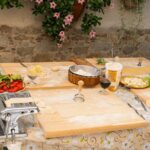
A 300-year-old kitchen with a Sorrento view. What makes this cooking class special is the farm-at-home feel and the chance to make fresh pasta and tiramisu from scratch in a small group. I also like how hands-on it is, with a real family teaching vibe. One drawback to plan for: the meeting point can be a bit tricky to find at first.
If you want Italian food that doesn’t feel like a staged demo, this is one of the best formats on the Sorrento side of the map: short, focused instruction, then you eat what you make. I especially value the farm connection, since you’re not just tasting Italy, you’re using ingredients from the estate when they’re available. The class runs about 3 hours, so it’s a great use of time if you don’t want to spend your whole day traveling.
In This Review
- Key things to know before you go
- A 3-Hour Farm Cooking Class With Views Over Sorrento
- Meeting at Hotel Plaza and Getting to a Family Farm Home
- The Sorrento Coast Stop: Why the View Is Part of the Lesson
- What You’ll Cook: Pasta From Scratch and Tiramisu the Real Way
- Fresh pasta first
- Stuffed pasta second
- Tiramisu to finish
- The Farm Ingredients and Family Drinks That Turn It Into a Meal
- Small Group Size: How You Actually Learn Pasta Technique
- Price and Value: What $155.77 Buys You in Sorrento
- Who This Cooking Class Is Best For (and Who Might Want a Different Plan)
- Final Thoughts: Should You Book This Farm Cooking Class?
- FAQ
- Where do I meet for the cooking class?
- Where does the experience end?
- How long is the cooking class?
- What is the maximum group size?
- What dishes will we make?
- Is the class taught in English?
- Will I receive a ticket on my phone?
- When will I get confirmation?
- Can I cancel for a full refund?
- How far in advance should I book?
Key things to know before you go
- Small group (max 8) means more hands-on time and easier questions during pasta steps
- Fresh pasta plus stuffed pasta plus tiramisu gives you a full, satisfying meal you can replicate at home
- English instruction keeps the technique clear without needing school-level Italian
- Farm setting with Sorrento-coast views turns a cooking class into a proper afternoon out
- Mobile ticket makes check-in simple once you arrive
- Easy to love, easy to miss: you may need a minute to locate the start point at Hotel Plaza
A 3-Hour Farm Cooking Class With Views Over Sorrento
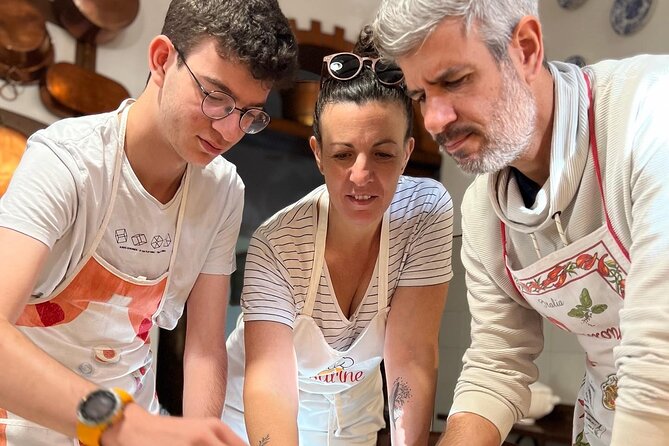
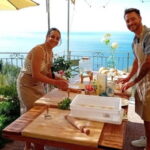
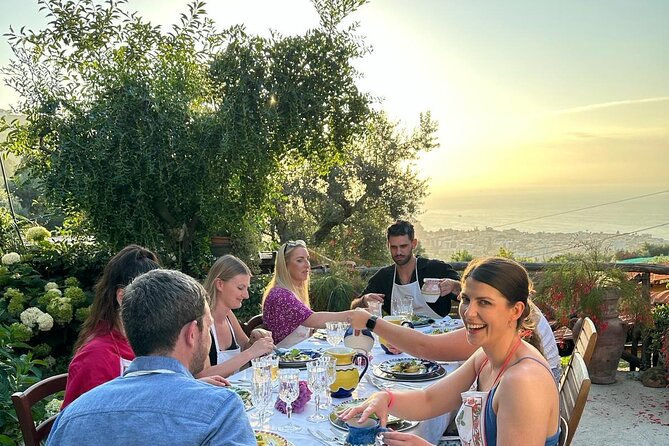
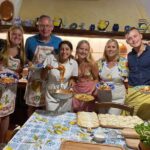
This is the kind of Sorrento experience that hits the sweet spot between cooking lesson and local life. You’re not just making food in a classroom—you’re in a family home setting on a farm, with the Sorrento area in view.
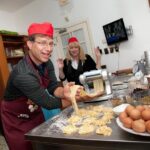
The biggest payoff is how much you do in just a few hours. You’ll learn dough and shaping for fresh pasta (like tagliatelle or fettuccine), then move into stuffed pasta (ravioli or cappelletti), and finish with tiramisu. When the group eats together, the meal feels like the point, not the wrap-up.
The second big win is the teaching style. From the tone of the instruction, it’s interactive—more like family banter than a scripted lecture. That matters because pasta-making is equal parts technique and timing, and you learn faster when you can ask questions and correct small moves.
You can also read our reviews of more tours and experiences in Sorrento.
Meeting at Hotel Plaza and Getting to a Family Farm Home
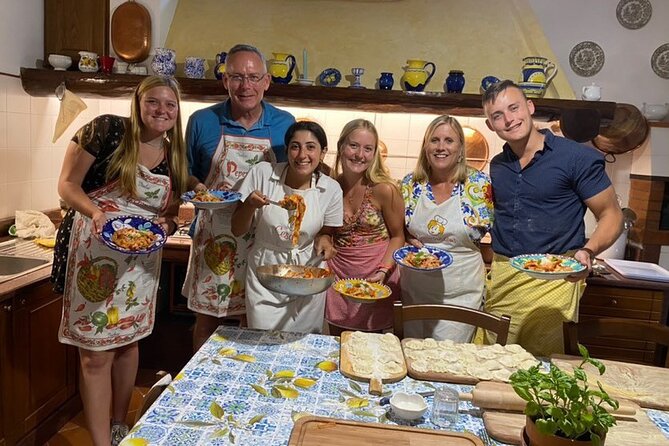
You start at Hotel Plaza, Via Fuorimura, 3, 80067 Sorrento. The experience ends back at the same meeting point, so you’re not left hunting transport at the end of a full stomach.
One practical note: the start point can be a little awkward to locate if you’re new to the area. I’d give yourself a small buffer time so you’re not rushing. Once you’re on track, the rest of the timing is straightforward—this is built as a half-afternoon plan.
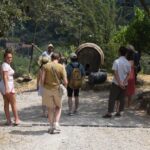
As for the farm itself, it’s described as a family-owned home with deep roots, including a home that’s said to be around 300 years old. In sessions like this, you’re usually led from the meeting point to the family property, and that short transfer is part of the flow. If you want calm, plan to arrive a few minutes early and let the group find its rhythm.
The Sorrento Coast Stop: Why the View Is Part of the Lesson
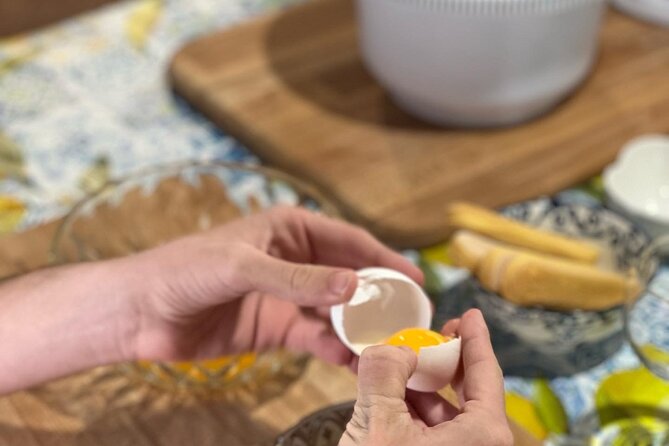
Even though this experience centers on cooking, there’s a Sorrento Coast stop as part of the day. In plain terms: you get a sense of place before you start working.
That matters more than it sounds. When you’re standing in a view area and then shifting into a farm kitchen, the food stops feeling abstract. You start connecting ingredients to the climate and the landscape that shaped them—lemons, olive oil, herbs, and the kind of seasonal produce that shows up in Italian home cooking.
If you’re a photo person, you’ll likely want to slow down here. If you’re not, you’ll still benefit. A short break helps you reset before pasta work, which is mostly hands, but also patience.
What You’ll Cook: Pasta From Scratch and Tiramisu the Real Way
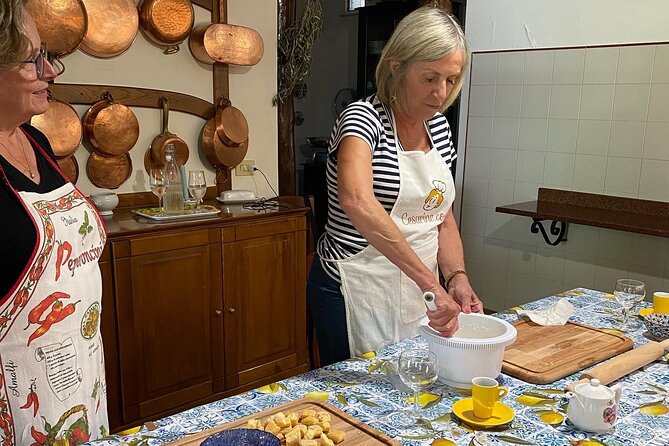
Here’s the menu structure you should expect, based on the course outline and what people commonly make:
- Fresh pasta course (examples include tagliatelle or fettuccine)
- Stuffed pasta course (examples include ravioli or cappelletti)
- Dessert: tiramisu
What I like about this combo is that it covers three different skills sets:
- Rolling and cutting or shaping egg pasta
- Stuffing, sealing, and forming individual pieces
- Building tiramisu with correct assembly and texture
For you, the goal is not just to eat well that day. It’s to leave with a clear mental map of the process. Pasta is technique-heavy, but it’s also forgiving if you know what to look for: dough feel, thickness, and whether the seals hold.
Fresh pasta first
You’ll work with dough that becomes pasta like tagliatelle or fettuccine. Expect step-by-step help so you understand the order of operations: mixing, kneading, resting (so the dough behaves), rolling, then shaping.
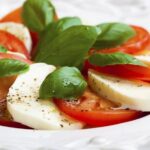
Stuffed pasta second
Next comes ravioli or cappelletti. This stage is where people often get the most satisfaction, because the finished pieces look like what you’d see in a trattoria. The key is sealing—learning how to close them cleanly so they don’t fall apart when cooked.
Tiramisu to finish
Dessert is tiramisu. It’s not just a sweet ending here; it’s a chance to see how Italian home cooks think about structure and timing. You’ll make it yourself, then eat it while it’s fresh enough to taste like it should.
A note from real-world impressions: some sessions also include additional pasta styles and family recipes. For example, people have specifically named things like tagliatelle a la nerano. Even if your exact pasta choices vary, the core skills stay the same.
The Farm Ingredients and Family Drinks That Turn It Into a Meal
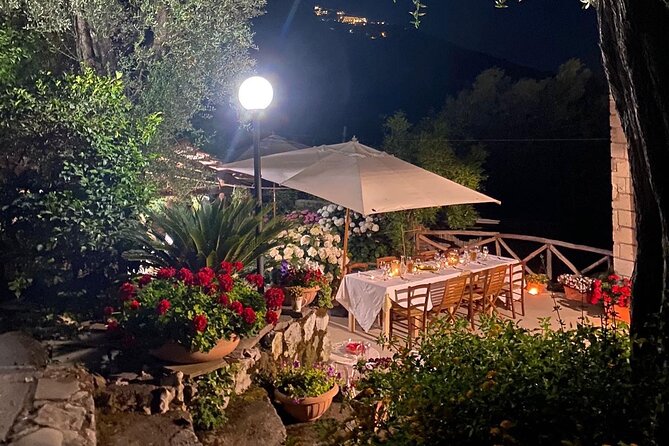
The cooking class shines because it connects food with origin. You’re not only using ingredients; you’re hearing about them in a farm context.
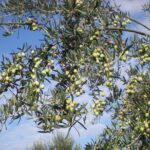
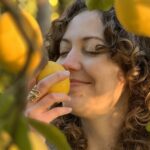
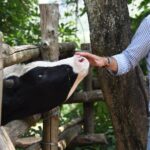
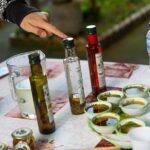
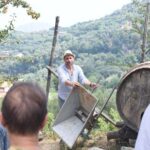
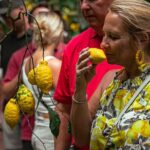
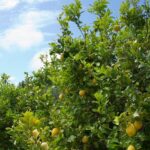
From the details shared in recent feedback, farm tours can include meeting animals (a cow named Maria comes up), picking lemons, sampling grapes, and tasting things like olive oil and farm-made wine. Not every part of that has to happen in every session, but the farm connection is consistent: the hosts want you to feel where the ingredients come from.
Some sessions also include local drinks with the meal. People have mentioned local white wine and family-made limoncello. If you’re the type who prefers a strict non-alcohol routine, just tell your host ahead of time. This is a family-style setting, so they’ll usually guide you toward a comfortable version of the experience.
Even simple elements matter. A strong Italian coffee shows up at the end of the farm visit in some versions of the day, and it rounds out the meal like a real household finish.
Small Group Size: How You Actually Learn Pasta Technique
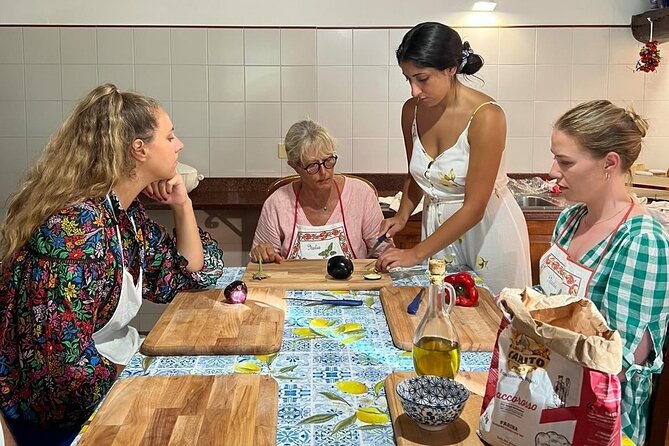
With a maximum group size of 8 travelers, the class stays human-scale. That number matters in a cooking lesson because pasta doesn’t wait for the clock. When there are fewer people, you get the kind of attention that helps you correct a mistake before it becomes a plate of frustration.
You’re also more likely to hear the small tips that make a difference, like how the dough should feel, how to handle portions of filling, and how to judge when something is ready. Those are the details that let you recreate the dishes later.
It’s also easier to interact. People in this class describe the vibe as warm, fun, and full of banter. That’s not just entertainment—it’s motivation. When you’re laughing while learning, you absorb more.
Price and Value: What $155.77 Buys You in Sorrento
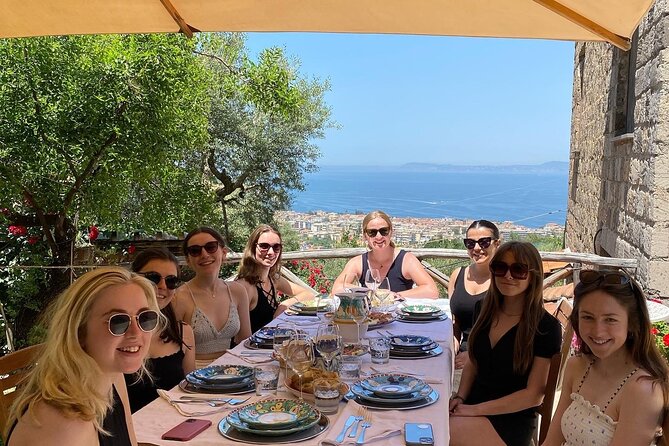
At $155.77 per person for about 3 hours, this isn’t a budget activity. But it’s priced more like an artisan food experience than a mass-tour.
What you’re paying for:
- Hands-on instruction for multiple dishes (not just one recipe)
- A small group format that supports real learning
- A farm setting tied to ingredient stories
- A full meal you eat at the end—pasta and tiramisu you made
If you compare it to the cost of eating out plus paying for a cooking class elsewhere, the math can work surprisingly well. You’re not just paying for ingredients; you’re paying for time with a teacher, a workspace, tools, and guidance.
And the value gets even better if you’ve been craving a break from tourist-heavy meals. This class feels local because it’s hosted in a home kitchen. You leave with a meal in your stomach and a technique in your head.
Who This Cooking Class Is Best For (and Who Might Want a Different Plan)
This experience is ideal if you:
- Want a practical cooking lesson, not a passive show
- Love pasta and want to learn the steps you can repeat at home
- Prefer small groups and personal attention
- Are traveling with someone who enjoys food as a shared activity
You might want to consider other options if:
- You’re short on time and can only fit in a very fast activity
- You don’t want to do hands-on food prep at all
- You need a perfectly simple, easy-to-find meeting location without any navigation challenge
In terms of energy, it’s a hands-on afternoon. You’ll work, eat, and enjoy the setting. It’s not a long museum day. It is a real meal day.
Final Thoughts: Should You Book This Farm Cooking Class?
If you want an Italian cooking experience that feels like a family event—small group, real food-making, and a farm setting with Sorrento-coast views—I think this is an easy yes.
Book it if fresh pasta and tiramisu are on your must-do list and you like the idea of learning technique you can use later. Book it early too. This one tends to sell out: on average, it’s booked about 69 days in advance.
Just go in prepared to do a bit of navigation at the start. Once you’re there, the time moves fast in the best way, and you’ll leave with pasta skills plus the kind of meal you’ll remember long after the plates are cleared.
FAQ
Where do I meet for the cooking class?
You start at Hotel Plaza, Via Fuorimura, 3, 80067 Sorrento NA, Italy.
Where does the experience end?
It ends back at the same meeting point where you started.
How long is the cooking class?
The class lasts about 3 hours (approx.).
What is the maximum group size?
The class has a maximum of 8 travelers.
What dishes will we make?
You’ll make fresh pasta (such as tagliatelle or fettuccine), a stuffed pasta (such as ravioli or cappelletti), and tiramisu.
Is the class taught in English?
Yes, it is offered in English.
Will I receive a ticket on my phone?
Yes. It includes a mobile ticket.
When will I get confirmation?
You’ll receive confirmation at the time of booking.
Can I cancel for a full refund?
Yes, you can cancel up to 24 hours in advance for a full refund.
How far in advance should I book?
On average, this experience is booked about 69 days in advance, so it’s smart to reserve early.
You Might Also Enjoy


More Tour Reviews in Sorrento
- Sorrento Farm and Food Experience including Olive Oil, Limoncello, Wine tasting
★ 5.0 · 2,524 reviews