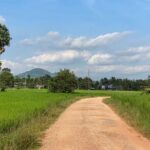
REVIEW · SIHANOUKVILLE
Kampot/Cambodia pepper farm . Cave. lake. Kep Crab market & more.
Book on Viator →Operated by Om pheary · Bookable on Viator
Kampot in one tuk-tuk day sounds simple, then it hits. This private route with Pheary (Om pheary) is built around what Kampot actually produces and how the countryside feels, from a Hindu cave temple to the pepper workings at La Plantation. I especially like that tuk-tuk transport keeps you moving without the hassle, and that admission fees are included so the price stays predictable. One thing to consider: it’s a long 7 to 8 hours, so if you hate road time, plan for breaks and don’t book it back-to-back with another big activity.
You get a true local guide, not just a driver reading off a screen. Pheary grew up in Kampot, and the day shows it—he’s the one steering you toward the famous spots and adding a little extra so it feels like a conversation with the area, not a rushed checklist. The trade-off is that the route covers several different environments, so wear shoes you’re comfortable in and expect some uneven paths around the cave area.
In This Review
- Key highlights you’ll care about
- A Kampot and Kep day led by Pheary’s local know-how
- Stop 1: Phnom Chhnork (Phnom Chhngok) Cave Temple—spiritual and rocky
- Stop 2: Brateak Krola Lake—the “Secret Lake” feel
- Stop 3: La Plantation (Fair Spices)—pepper farming you can see
- Stop 4: Salt fields—seeing another Kampot product up close
- Stop 5: Kep Crab Market—browse the real mix and set expectations
- Price and what you’re really getting for $38 per group
- Timing, pickup from Sihanoukville, and how the day flows
- Who this tuk-tuk Kampot and Kep circuit suits best
- My quick decision guide: should you book this one?
- FAQ
- How much does the tour cost?
- What’s the tour duration?
- Is pickup available?
- Where does the tour start?
- Is this a private tour?
- What stops are included?
- Are admission tickets included?
- What’s included in the price besides transport?
- What’s not included?
- How does confirmation work after booking?
- What’s the cancellation policy?
Key highlights you’ll care about
- Pheary’s Kampot roots: grew up there, so you’ll get practical context, not only facts.
- Cave temple + Secret Lake: two nature-and-spiritual stops close enough to make sense in one day.
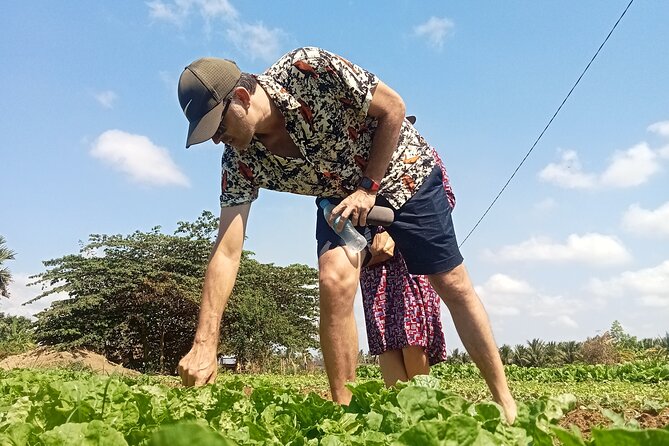
- La Plantation (Fair Spices): a sustainable spice stop, with a production-focused visit.
- Salt fields time: a quick look at one of Kampot’s other signature products.
- Kep Crab Market: a real market stop where you can browse beyond just the seafood idea.
- Private group setup: up to 3 people, so it stays personal and flexible.
A Kampot and Kep day led by Pheary’s local know-how
This tour is set up as a private tuk-tuk circuit starting from Sihanoukville and focused on Kampot and Kep. The big value is how tightly the day is packed with places that explain Kampot’s identity: caves and temples, water and “secret” lakes, pepper and spice production, salt pans, and the market culture in Kep.
At $38 per group (up to 3), it’s not priced like a one-stop sightseeing ride. It’s closer to a full day outing that already includes tuk-tuk transport, cold water and coconut fruit juice, and admission fees for each listed stop. That matters because admission add-ons are where budget days quietly blow up.
The other advantage is the pacing. The stops are short enough to keep energy up—about 45 minutes to 1 hour 30 minutes each—yet long enough for actual looking, not just photo moments. And since it’s private, you can match the pace to your group.
You can also read our reviews of more tours and experiences in Sihanoukville.
Stop 1: Phnom Chhnork (Phnom Chhngok) Cave Temple—spiritual and rocky
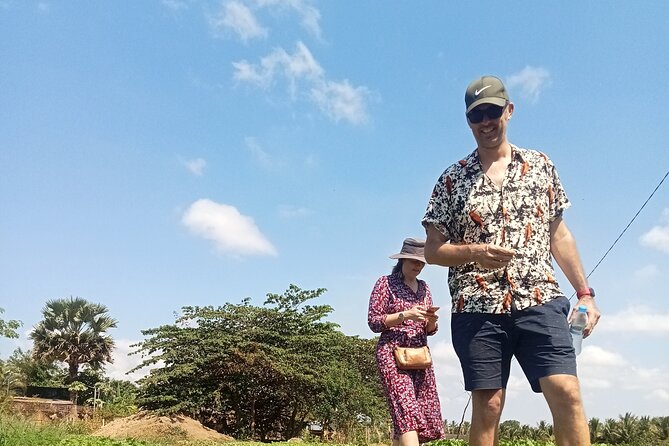
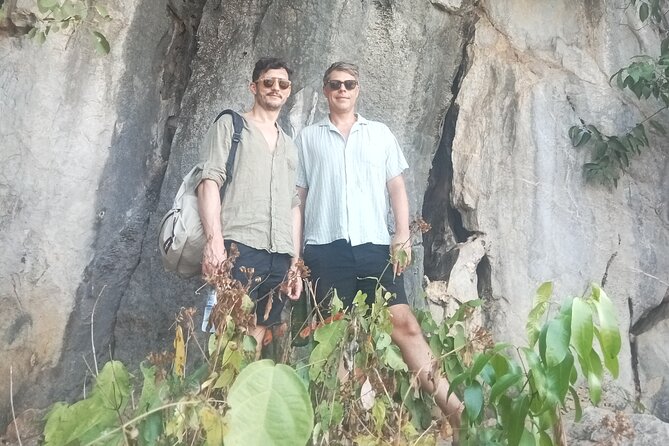
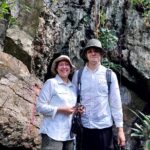
Your first major stop is Phnom Chhnork Cave Temple in Kampot Province, about 5 miles (8 km) northeast of Kampot. This is a Hindu cave temple, and the setting is the point: it’s the kind of place where you naturally slow down because the environment commands attention.
What I like about this start: it frames the day with something deeply tied to place. You’re not just driving past “scenery.” You’re walking into a site that mixes religion, rock, and local tradition.
What to expect in practice:
- A visit around 1 hour.
- A cave setting, so it can feel cooler and dimmer than outside.
- You’ll likely do some steps/uneven ground while moving through the temple area.
Possible drawback: cave temples can be tricky if you’re sensitive to enclosed spaces, or if you dislike walking on uneven surfaces. If that’s you, choose supportive footwear and go steady.
Stop 2: Brateak Krola Lake—the “Secret Lake” feel
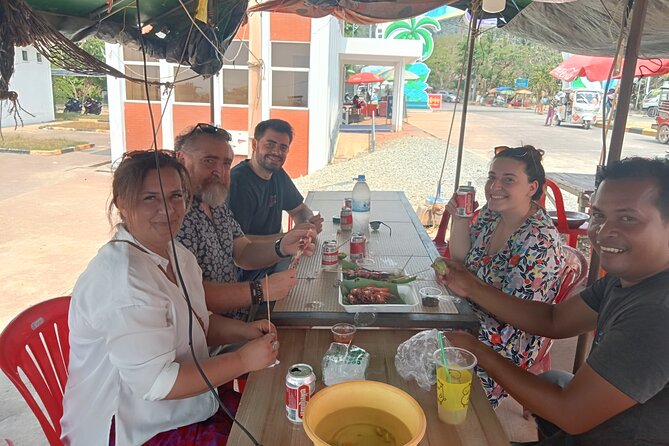
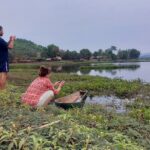
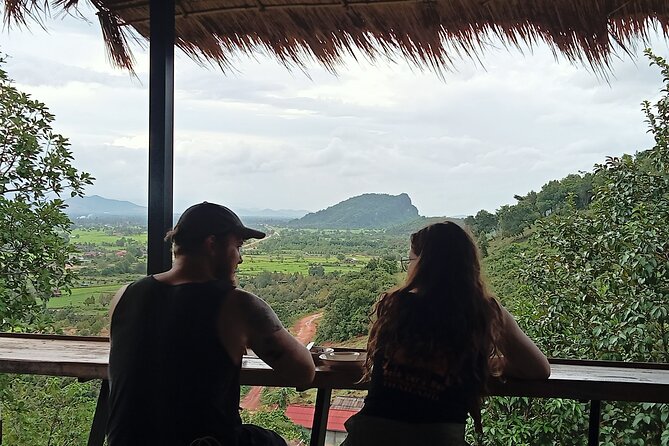
Next up is Brateak Krola Lake, sometimes nicknamed the Secret Lake. It sits in southern Cambodia near the border with Vietnam, and it’s the day’s water-and-breathing stop.
This is where the tour gives you a reset. After the cave temple’s enclosed, religious atmosphere, the lake gives you open space and a different kind of quiet. Even though the stop is only about 45 minutes, it’s long enough to actually enjoy the view and slow down your pace.
What makes this stop worth your time:
- It’s called a secret-style destination, so you’re not just seeing what everyone sees.
- It balances the day: cave and market later, then pepper and salt in between.
Practical note: bring patience for the road legs between stops. The lake itself is the highlight; the journey between spots is part of the overall experience.
Stop 3: La Plantation (Fair Spices)—pepper farming you can see
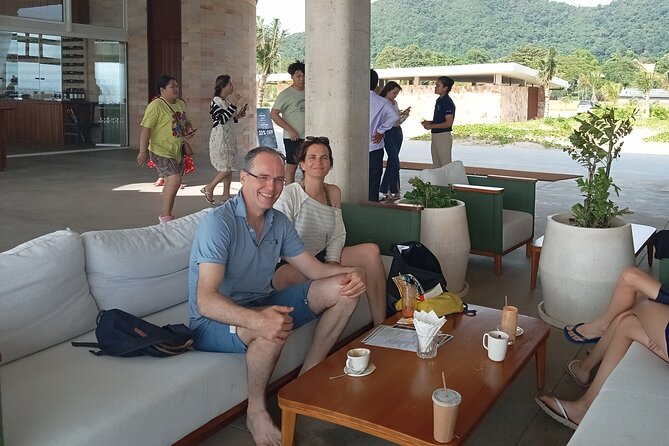
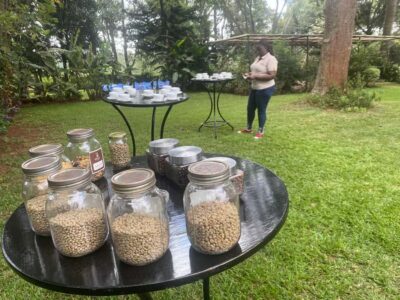
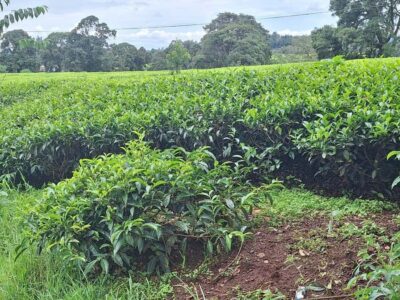
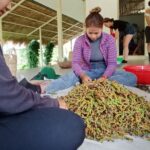
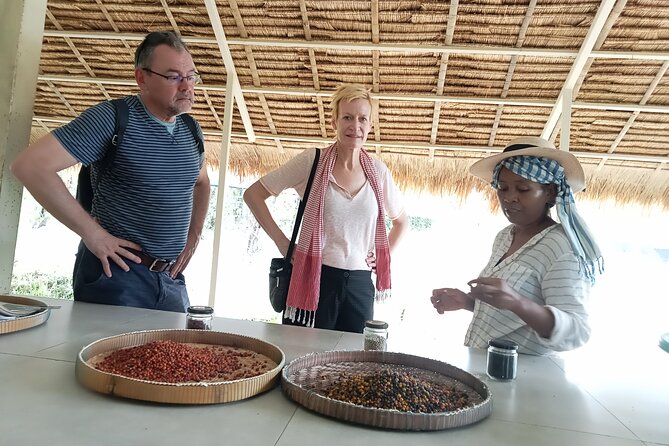
Then comes one of the most practical parts of the day: La Plantation, a fair-spices producer and sustainable agro-tourism project. This is where “Kampot pepper” stops being a product label and becomes a living process.
The stop is up to 3 hours, which is a lot compared to the other segments. That extra time is key because pepper isn’t something you can understand from a quick glance. A proper spice visit works best when you can watch how things are grown and processed and ask questions.
What I like here:
- It’s described as sustainable agro-tourism, so you’re not only shopping. You’re seeing how production fits into the land.
- Spices are mentioned as products that show up in fine delis around the world. That gives you a sense of scale—this is not only for tourists.
What you might find enjoyable:
- Learning the difference between tasting pepper and understanding where it comes from.
- Watching the working side of agriculture, not just the “pretty farm” side.
Possible drawback: 3 hours can feel like a lot if you’re tired from the morning or not interested in agriculture. If you love food, spices, and how products are made, you’ll be in your element.
Stop 4: Salt fields—seeing another Kampot product up close
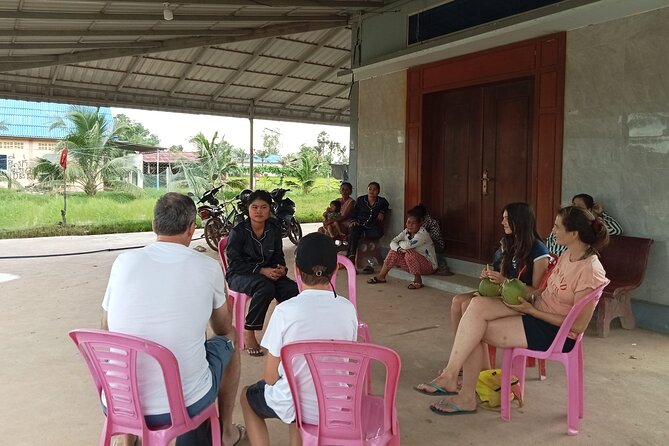
After pepper, you pivot to another Kampot staple: salt. The tour heads to the salt fields, described as vast salt pans stretching along the coastline south and southeast of Kampot.
This stop is about 45 minutes, and I think that’s the right amount. Salt fields are often huge in concept, but the practical viewing time works best when it’s short and well focused. You’ll get the visual scale without turning the day into a long, repetitive walk.
Why this stop adds value:
- It rounds out Kampot’s identity. Pepper is famous, salt is the quieter co-star.
- It gives you a different kind of “production landscape” (literally coastline salt pans), so the day feels educational instead of only aesthetic.
Consideration: salt fields can be very bright and reflective. If you’re sensitive to sun glare, sunglasses help.
Stop 5: Kep Crab Market—browse the real mix and set expectations
Finally, you reach Kep Crab Market for about 1 hour 30 minutes. The market is described as a mix: you’ll find clothes, fruits and vegetables, and pepper, among other items.
Here’s how I’d frame it for your expectations. Yes, it’s a crab-themed market, but the experience isn’t only about one seafood product. The value is in the browsing—the feel of everyday commerce, the variety, and the chance to pick up small items linked to the region’s flavors.
What I like about ending here:
- It’s a “buy and snack vibes” kind of stop after the production tour. You can connect what you learned earlier to what you see now.
- The longer time (1.5 hours) gives room to wander at a natural pace.
Possible drawback: if you expect a tightly curated seafood-only market, this stop may feel more mixed than that. It’s a real market with real variety, which is exactly why it can be fun—but it’s not styled only for visitors.
Price and what you’re really getting for $38 per group
At $38 per group (up to 3), you’re paying for a full, coordinated day: private tuk-tuk transport, multiple scheduled stops, and free entry fees for each listed location. On top of that, you get cold water and coconut fruit juice included.
The best part is how the price stays predictable because admissions are included. In Cambodia, separate ticket costs can add up quickly on day trips. Here, the cost is set for the core route.
One more cost detail to watch: there’s an extra $5 charge if you’re staying outside Kampot, defined as more than 5 km from the Durian round about. If your hotel is far from Kampot center, ask early so you don’t get a surprise when you meet the driver.
Timing, pickup from Sihanoukville, and how the day flows
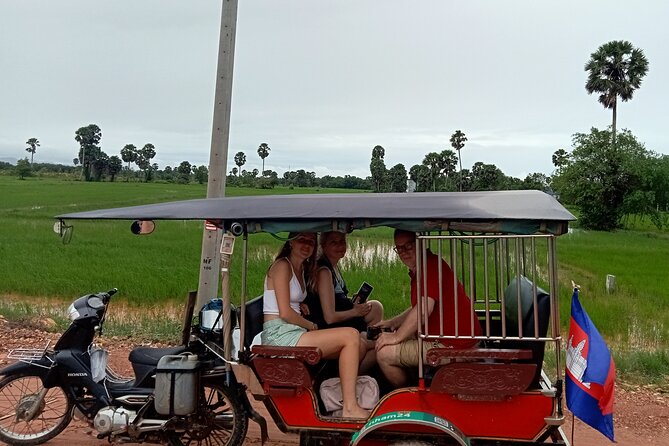
This is a 7 to 8 hour day, starting from Sihanoukville. Pickup is offered, and you’ll receive a mobile ticket. The experience is private, so only your group rides.
A practical way to think about timing:
- The day front-loads the nature/temple side (cave temple and Secret Lake).
- Midday shifts to hands-on food production (Fair Spices at La Plantation).
- Late day returns to products and culture (salt fields, then Kep market).
Because the duration is long, treat it like a whole-day plan. Eat something light before pickup. Bring sunscreen and keep water in mind even though cold water is included.
Free cancellation is available if you cancel far enough ahead (24 hours before the start time). If your schedule is uncertain, that flexibility is useful.
Who this tuk-tuk Kampot and Kep circuit suits best
This tour fits well if you want a day that mixes nature, food production, and market life without juggling multiple companies. I’d especially recommend it if:
- You’re interested in Kampot pepper and want more than a store stop.
- You like seeing how real products are made, not only tasting the finished version.
- You want a private day with local guiding from someone who knows the area.
It may be less ideal if you hate driving time or you’re trying to squeeze in a tightly packed itinerary with no buffer. Cave temple walking and sun time at salt fields can also be uncomfortable for some, so plan accordingly.
My quick decision guide: should you book this one?
Book this tour if you want a story-driven day. Cave temple to Secret Lake to pepper farm to salt fields to Kep market gives you a clear sense of how Kampot and Kep connect—spiritual places, agricultural production, and everyday life.
Skip it (or consider another option) if you want only one type of experience, like purely city sightseeing or purely nature trekking. This is a mixed route by design, and the trade is you’ll spend time in the tuk-tuk between stops.
Also, if your pepper interest is strong, that 3-hour La Plantation block is the anchor. It turns the day from “nice stops” into “something you can take home,” especially if you like learning how food and spices are produced.
FAQ
How much does the tour cost?
It costs $38 per group, for up to 3 people.
What’s the tour duration?
The experience runs about 7 to 8 hours.
Is pickup available?
Yes, pickup is offered.
Where does the tour start?
It’s listed for Sihanoukville, Cambodia.
Is this a private tour?
Yes. It’s a private tour/activity, and only your group participates.
What stops are included?
You’ll visit Phnom Chhnork (Phnom Chhngok) Cave Temple, Brateak Krola Lake (Secret Lake), La Plantation (Fair Spices), Salt Fields, and Kep Crab Market.
Are admission tickets included?
Yes. Free entry fees and admission tickets for the listed stops are included.
What’s included in the price besides transport?
Included items are cold water and coconut fruit juice, tuk-tuk transport, and free entry fees.
What’s not included?
There’s an extra charge of $5 if you stay outside Kampot, defined as more than 5 km from Durian round about.
How does confirmation work after booking?
You receive confirmation at booking time in most cases, or as soon as possible if booked within 2 hours of travel, based on availability.
What’s the cancellation policy?
You can cancel for a full refund up to 24 hours before the experience start time. Within 24 hours, there’s no refund.