REVIEW · SIHANOUKVILLE
KAMPOT- Pepper farm ..salt fields.Kep/Crab market & more……..
Book on Viator →Operated by Kampot Adventure tour · Bookable on Viator
Kampot countryside in one laid-back ride. This day trip strings together a pepper farm tasting, a tuk-tuk countryside loop, and Khmer sights with an English-speaking driver and guide. You get a rare mix of hands-on farm time and scenic stops, without it turning into a sprint.
I also like the guide style here—people such as Tango (and sometimes Nak, depending on who you get) share what you’re seeing in plain, useful language. The Phnom Chhngok Cave Temple stop lands because someone helps you time it, understand what it is, and get the most out of the cave.
One possible drawback: pickup can be tighter than you expect. Pickup is offered, but there’s an extra $5 if you’re more than 4 km from Durian roundabout, and if you’re on a cruise you’ll want to confirm you’re close enough to Kampot town to join.
In This Review
- Key highlights you’ll care about
- A tuk-tuk day you can pace yourself
- La Plantation pepper farm: where tasting is the point
- Brateak Krola Secret Lake: seasonal views with human context
- Phnom Chhngok cave temple: Funan brick, Shiva dedication, and real atmosphere
- Salt fields near Kep and Kampot: evaporation you can see
- Kep crab market and Kampot-pepper seafood break
- Price and logistics: what $50 gets you (and what to double-check)
- Who this tour fits best
- Should you book this Kampot countryside day?
- FAQ
- FAQ
- How much is the tour?
- How long does the tour take?
- Is this tour private?
- What’s included in the price?
- Do I get pickup?
- Which places are included in the day?
- Is pepper tasting part of the experience?
- Can I cancel for free?
Key highlights you’ll care about
- Kampot pepper tasting at La Plantation with time for a real agro-tourism visit (not just a quick photo stop).
- Brateak Krola Secret Lake that changes with the seasons, with context about how it was built.
- Phnom Chhngok Cave Temple built from Funan brick and dedicated to Shiva, plus a local guide can help inside the cave.
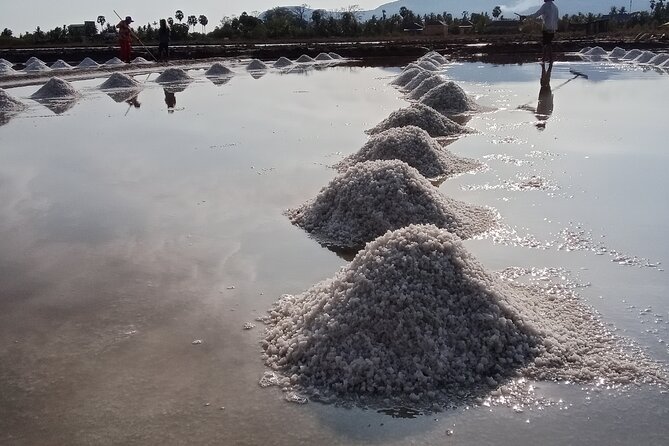
- Salt fields near Kep and Kampot where salt is produced by evaporation—simple, visual, and very hands-on to observe.
- Kep Crab Market + pepper-style seafood with a good chunk of time to eat and roam.
A tuk-tuk day you can pace yourself
This is a countryside day from Sihanoukville that stays focused on the Kampot region—rural roads, small villages, and viewpoints that don’t require hiking boots. The vehicle is a tuk-tuk, and the experience is built around an English-speaking driver and tour guide. You’re not stuck with a headset bus tour. You move with the road, the weather, and what you want to see.
The tour is also small by design: it’s private for your group, up to 3 people. For couples, solo travelers, or small groups splitting the cost, that matters. It helps you ask questions, make a quick detour, or spend a little longer at a stop that really clicks.
Timing-wise, plan on about 6 to 8 hours total. The pacing works best if you keep expectations simple: this is a “see a lot, enjoy the ride” day, not a deep-study course on Cambodian agriculture or architecture.
You can also read our reviews of more tours and experiences in Sihanoukville.
La Plantation pepper farm: where tasting is the point
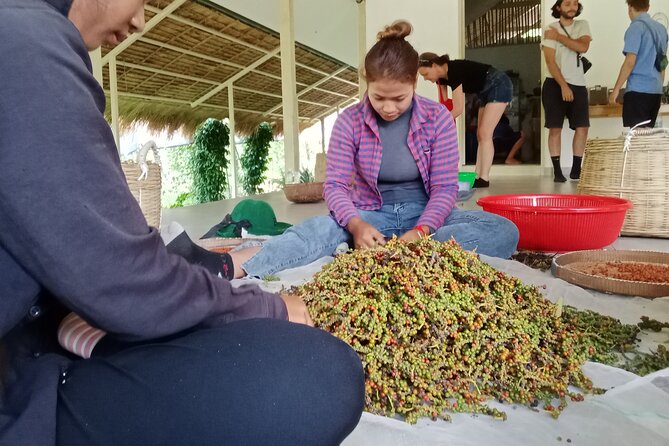
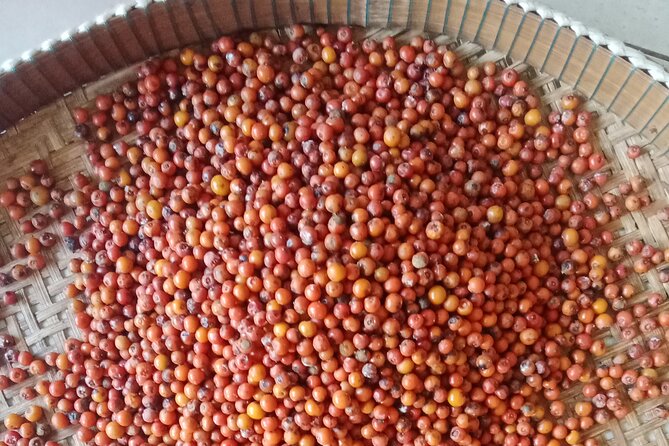
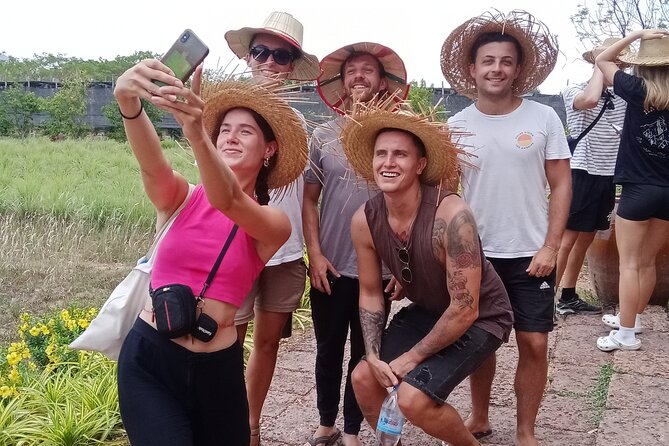
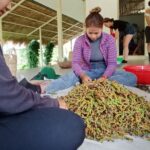
The pepper farm visit is the heart of the day. At La Plantation, you’ll get a proper look at how pepper farming is presented as sustainable agro-tourism, with time for a guided tour and Kampot pepper tasting. If you like food souvenirs, this is one of the most practical stops in the whole route because you taste first, then you can decide what to buy.
What I like about this style of stop is that it connects flavor to place. Kampot pepper has a reputation, but you don’t just hear about it—you see the farm setup and learn the basics behind the crop. That turns the tasting from a gimmick into something you can actually use at home when you cook.
There’s also a European-style shop on site. That’s helpful if you want a safer, easy buy (packaged spices) without hunting around later. If you’re the type who likes to ask about what grows well locally, this is a strong place for it.
Practical note: plan for rural walking. It’s not described as a strenuous trek, but you’ll still want comfortable shoes, especially if the ground is dusty.
Brateak Krola Secret Lake: seasonal views with human context
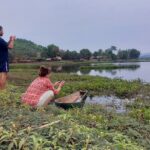
Next up is the Brateak Krola Lake, often called the Secret Lake. This isn’t a typical postcard lake. It’s man-made, and it grows and shrinks with the seasons, so the view changes depending on when you go.
The day’s value here is perspective. You get a short stop (about 30 minutes), but you’re not just looking at water—you’re also hearing what shaped this place in the first place. The information shared includes the fact that the lake/dam was built using slave labor during the Khmer Rouge rule. That’s heavy context, and it’s worth taking seriously instead of brushing it off as trivia.
If you like scenery, you’ll enjoy the way the lake sits in the wider countryside. If you’re more practically minded, you’ll appreciate learning how local land and water get engineered for survival and production.
Phnom Chhngok cave temple: Funan brick, Shiva dedication, and real atmosphere
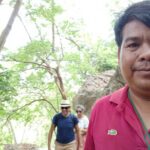
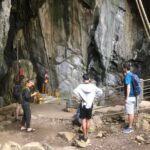
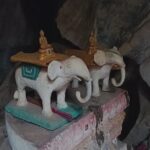
The Phnom Chhngok Cave Temple stop is the day’s most dramatic setting. This is a Hindu cave temple in Kampot Province, described as built in the 7th century from Funan brick and dedicated to Shiva. It’s also noted as being built before Angkor Wat, which gives you a neat historical anchor without turning it into a museum lecture.
The reason this stop often feels special is the way cave temples work: you go from bright daylight to enclosed space, and the atmosphere shifts fast. One practical tip that helps—if offered by your guide—is to use a local guide inside the cave area. There’s mention of paying about a dollar for local guidance, and that kind of help can make the visit smoother, especially if you want to understand what you’re seeing without getting lost.
Time here is about 45 minutes. That’s usually enough to see the main features without feeling rushed, but it’s not long enough for a slow, detailed wandering. If you want photos, take them early after you arrive, then switch into walking-and-looking mode.
Salt fields near Kep and Kampot: evaporation you can see
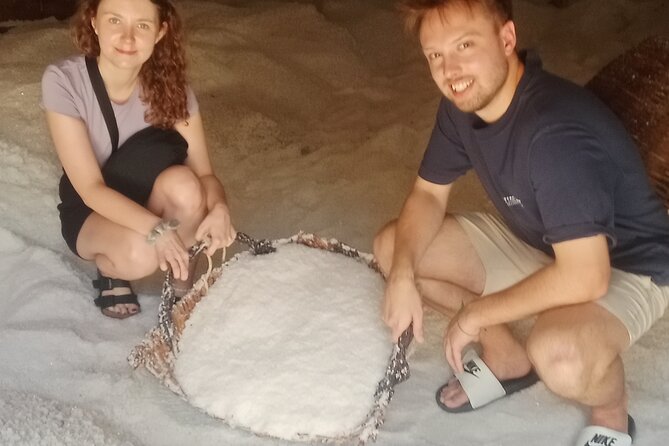
Then you get to one of the most visual stops of the day: the salt fields around Kep and Kampot. The production method is described as an evaporation technique used during the local dry season. In plain terms, you’re watching nature do part of the work, while people manage the rest.
This stop is about 30 minutes, so you’ll want to arrive ready to look. Salt fields can look similar from a distance, but up close you start noticing the patterns, the shallow water/evaporation setup, and the way the work is laid out across the land.
What makes it worth doing on a day trip is that it connects directly to coastal life. Kep and Kampot are tied to sea air and farming rhythms, and the salt fields are a clear example. It’s one of those “small time investment, big understanding” stops—especially if you’ve been spending most of your Cambodia time in temples and cities.
Bring sun protection. Even in less-than-perfect weather, this kind of open-air stop can get bright.
Kep crab market and Kampot-pepper seafood break
If you’ve got an appetite, this is the payoff. At the Kep Crab Market, you’ll spend about two hours, which is great because it gives you time to browse and then actually eat without feeling like it’s a drive-by.
The plan is to join fresh seafood cooking that’s tied to Kampot pepper, using a local style. That matters because Kampot pepper isn’t just a souvenir here—it shows up in how people season food.
After eating, you can relax on the Kampot beach area as part of the break. This is also where the day’s rhythm shifts from rural stops to a more laid-back coastal vibe. And because the tour mentions ending with a sunset stop, you can use this part of the day to set yourself up for cooler evening light.
Food note: since the details of what you order aren’t fixed in the tour data, your best move is to tell your guide what you like (crab-focused vs. mixed seafood) and ask what’s typically cooked with Kampot pepper that day.
Price and logistics: what $50 gets you (and what to double-check)
The price is $50 per group (up to 3 people), with the tour based in the Kampot region around a 6 to 8 hour day. For a private tuk-tuk tour with transport plus entry fees and water included, that’s generally strong value—especially if you’re splitting the cost with a partner or friend.
What’s included:
- Entry fees
- Transport
- Water
What can add cost:
- An extra $5 pickup and drop-off if you’re over 4 km from Durian roundabout.
Pickup is offered, and you’ll get a mobile ticket. Also, the tour is often booked about 7 days in advance, so if you’re traveling near the busy season or have a tight schedule, don’t wait.
One more thing to confirm early: if you’re coming from a cruise or a location far from Kampot town, pickup may be a problem. There’s an example of a cruise passenger being too far from the Kampot-based pickup area to join. If that’s your situation, message in advance and ask where the pickup point will be and how long the drive will take.
Who this tour fits best
This is a great fit if you want:
- A one-day overview of Kampot countryside without complicated planning
- Strong food tie-ins (pepper tasting, pepper-seasoned seafood)
- English-speaking guidance that explains what you’re looking at, not just where to stand for photos
It’s especially useful for people who dislike long museum-style pacing. This day moves, but not too fast. You get multiple stops—pepper farm, secret lake, cave temple, salt fields, then Kep market—so you leave with a sense of how the region works: agriculture, water engineering, religion/architecture, production, and coastal food.
It may be less ideal if:
- You want just one or two stops and a lot of time at each.
- You’re extremely time-sensitive and need guaranteed pickup with no extra drive time (check your pickup location carefully).
Should you book this Kampot countryside day?
I’d book it if you’re in the area and want an efficient, food-friendly way to see what Kampot looks like outside town. The strongest reasons are the pepper farm tasting and the mix of rural sights—Secret Lake, Phnom Chhngok Cave Temple, and the salt fields—plus the Kep Crab Market meal that gives the day a satisfying ending.
If you’re short on time, this route is a practical way to pack a lot in while keeping the vibe relaxed. Just confirm pickup distance (especially if you’re not staying near Kampot town or you’re arriving via cruise), and you’ll be set for a memorable Cambodian countryside day.
FAQ
FAQ
How much is the tour?
It costs $50 per group, up to 3 people.
How long does the tour take?
Plan for about 6 to 8 hours.
Is this tour private?
Yes. It’s private, so only your group participates.
What’s included in the price?
Entry fees, transport, and water are included.
Do I get pickup?
Pickup is offered. If you’re more than 4 km from Durian roundabout, there’s an extra $5 for pickup and drop-off.
Which places are included in the day?
The tour includes a pepper farm at La Plantation, Brateak Krola Secret Lake, Phnom Chhngok Cave Temple, salt fields, and the Kep Crab Market.
Is pepper tasting part of the experience?
Yes. The pepper farm visit includes Kampot pepper tasting and a farm tour.
Can I cancel for free?
Yes, you can cancel for a full refund up to 24 hours in advance. If you cancel less than 24 hours before, there’s no refund.